

Mountains in the Koran and their Geological Significance
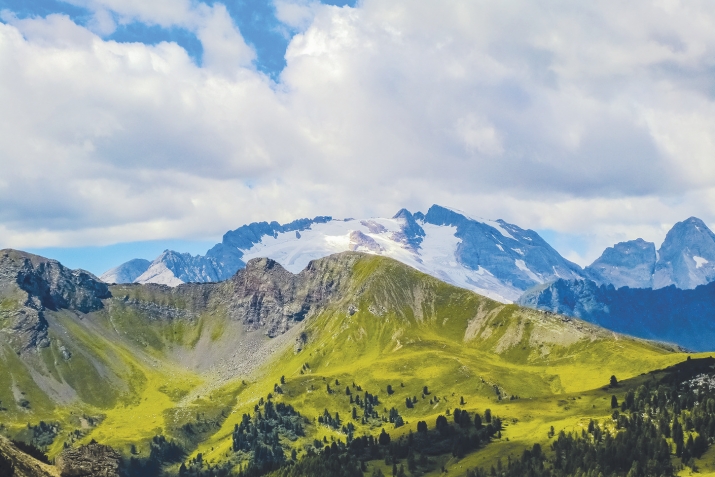
Mountains are among the most majestic and impressive natural forms, captivating humanity for centuries.
However, the Koran places particular emphasis not only on their beauty but also on their geological role. One ayah states (the meaning of the commentary): “And We have placed mountains on the earth, that it may be established by them…” (Sura Al-Anbiya’, ayah 31).
This ayah emphasizes the ability of mountains to warn of various Earth movements, an important aspect of their geological nature. This assertion, little known to people at the time the Koran was revealed, is now confirmed by recent geological discoveries.
The Geological Role of Mountains
According to geological research, mountains are formed as a result of the dynamic collision of vast layers of the Earth’s crust. When two such layers collide, the stronger one is crushed beneath the other. The surface layer begins to form folds, leading to the formation of mountains and plateaus. At the same time, the underlying layer continues to move downward, creating deep, elongated formations beneath the Earth’s surface.
Scientific sources confirm this, stating that “on continents with developed mountain networks, their penetration into the Earth’s crust is observed.” This emphasises that mountains not only rise above the Earth but also have significant depths, extending into the planet’s interior.
The Koran also mentions the phenomenon of mountain building, comparing it to pillars (the meaning of the commentary), “Have We not made the earth a bed and the mountains stakes?” (Sura An-Naba’, ayah 6). This expression indicates that mountain formations stabilise the Earth’s crust and prevent displacement of the magma layer on the surfaces and between other layers.
Isostatic Equilibrium
Mountains act like “nails” that firmly hold the layers of the Earth’s crust together. This process is known in geology as “isostatic equilibrium”, meaning that mountains maintain the overall equilibrium of the earth’s crust using the forces of gravity acting upon them beneath the surface. This underscores the vital importance of mountains in maintaining geological stability.
Thus, the very feature of mountains that has been confirmed in modern geological and seismic research was mentioned in the Koran much earlier. This underscores the wisdom and omniscience of Allah ﷻ, as the Creator of all things. Mountains, not only as beautiful natural formations, play a vital role in the health of our planet, further confirming the harmony between science and faith.
