

It is Faith That Transforms Character and One’s Outlook on the World
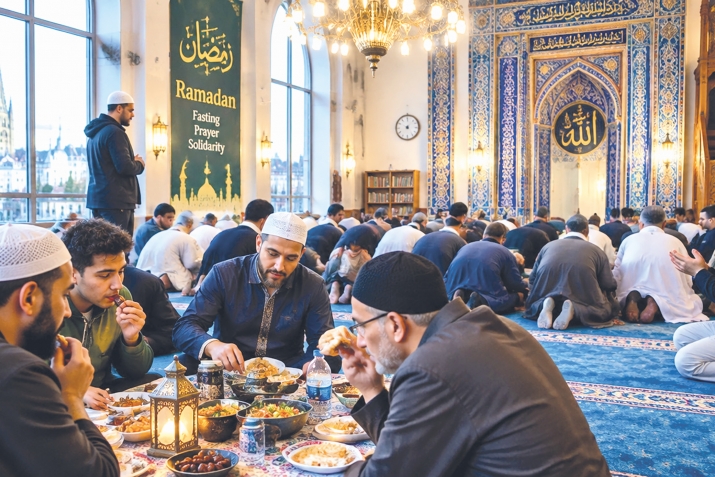
When a person embraces Islam or begins to practice his faith with depth and conscious intent, something far more profound occurs than a mere external change in lifestyle.
He embarks on a path of fundamental transformation of his inner essence: a process known in religious tradition as tazkiyat an-nafs, or the purification of the soul.
This process reaches into the very depths of one’s character, reshaping one’s value system, mental habits and perspective on all of existence. In this sense, Islam is not merely a set of rules but a living system for the cultivation of the spirit, one that, step by step, refines the chaotic impulses of human nature into a harmonious and integrated personality.
From the Slavery of Passions to the Freedom of Conscious Awareness
One of the first and most noticeable shifts is the attainment of self-mastery. Often, an individual lives as a captive to fleeting desires, anger, resentment and fear: his actions serving as little more than reactions to external stimuli. Islamic spiritual practice, anchored by the five pillars, functions as a school of self-discipline.
Daily prayer, performed at strictly appointed times, regardless of one’s mood or how busy one might be, trains both heart and body to submit to a higher order rather than to momentary whims. Fasting during the month of Ramadan serves as an intensive exercise of the will, demonstrating to the individual that he possesses the power to govern his own primal instincts, such as hunger and thirst. This realisation grants a person immense strength and confidence; he is no longer a slave to his own “wants” but rather a conscious agent fulfilling the will of the Creator. Such inner freedom, liberation from the tyranny of one’s passions, is the primary and essential step toward the transformation of character. A person ceases to be a plaything in the hands of his emotions, gaining instead an inner core and peace of mind.
Cultivating Responsibility and a Sense of Duty
Islam instills in a person a profound sense of responsibility that extends far beyond his own personal interests. One begins to perceive oneself not as an isolated individual, but as part of a vast whole: the community, humanity and the entire universe, to which one is accountable.
The awareness that every action will be accounted for on the Day of Judgment does not breed paralyzing fear; rather, it fosters a state of constant inner focus and mindfulness. This concept is known as ihsan – worshipping God as if you see Him before you. It transforms one’s entire life into a conscious act of service. A person begins to be mindful not only of his actions but also of his words and even his thoughts, recognising that everything carries weight. One becomes responsible for how one speaks to one’s parents, how one treats a neighbor, whether one is honest in business dealings and whether one’s presence causes harm to the environment. One’s character becomes more composed, serious and reliable.
Overcoming Pride and Cultivating Humility
Pride, arrogance and egocentrism are like rust that corrodes the heart. Islam combats these traits methodically and consistently. Five times a day, a Muslim performs prostrations, touching his forehead to the ground – the lowest point of creation. This physical act serves as a powerful psychological and spiritual remedy. It reminds a person of his true standing before the majesty of the Creator, humbles the spirit and breaks down arrogance.
From Resentment to Forgiveness and Patience
Life is full of injustices, grievances and trials. A typical human reaction to adversity or wrongdoing is to respond with anger, resentment, a desire for revenge or despondency. Islam offers a different, higher strategy for conduct, rooted in the concepts of sabr (patience) and ‘afw (forgiveness).
In Islam, patience is not a passive submission to evil, but an active, conscious strength of spirit. It is the capacity to maintain clarity of mind, faith and a tranquil heart when faced with hardships: placing one’s trust in God and believing in the wisdom of His divine decree. The prophets, whose stories are recounted in detail in the Koran, serve as the ultimate models of such patience. Following their example teaches a person to endure the blows of fate with dignity, without breaking or falling into despair.
Regarding grievances, the Koran and the Sunna encourage believers to practice forgiveness, even when the opportunity for retaliation exists. The principle “let forgiveness be your guiding rule”, does not imply an endorsement of evil; rather, it means refusing to allow another person’s wrongdoing to poison one’s own heart. This approach fundamentally transforms a person’s character: he ceases to be a reactive being whose life is dictated by the actions of others and, instead, becomes, in his own right, a source of peace and goodness.
Forming a Holistic and Harmonious Worldview
Ultimately, Islam transforms a person’s very relationship with the world. The world ceases to be merely an arena for a blind struggle for survival or a platform for consumption. The beauty of nature, the intricate design of the universe, the alternation of day and night: all of these serve as reminders to the believer of the wisdom, power and mercy of Allah ﷻ.
This perspective infuses life with profound meaning and spirituality. Work, creativity, starting a family, caring for one’s offspring and the pursuit of knowledge: all of these become acts of worship, provided they are undertaken with the right intention and in accordance with divine principles. The divide between the “spiritual” and the “secular” vanishes. One’s entire life becomes a unified act of service, with one’s character serving as the primary instrument on this path.
In this sense, Islam acts like a master sculptor who takes the raw stone of human nature and chips away everything superfluous: pride, anger, greed, impatience. Through this process, the noble traits originally inherent in the human being, justice, mercy, generosity, patience, courage, and humility, gradually emerge. It is a long and demanding journey, yet it leads to a genuine transformation: one does not lose one’s individuality but rather discovers one’s best, truest self.
