
They are impossible to destroy...
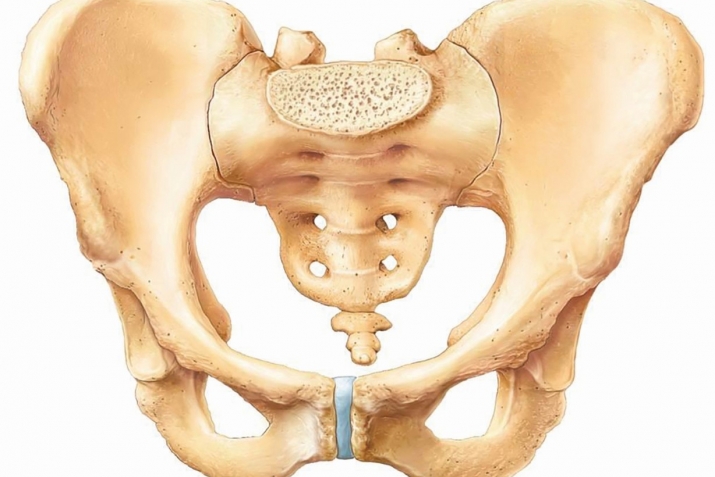
The human body is the most amazing creation of the Supreme Creator on the planet. With its incredibly complex structure, the human body still baffles the scientific community. Each individual organ or part of the body has its own unique feature. Today we would like to dwell on a phenomenal discovery –that the cells of the coccyx cannot be destroyed or damaged.
This scientific fact was established in 1931 by the German embryologist Hans Spemann, who in 1935 even received the Nobel Prize for the discovery of the “primary organizer”.
All organs and parts of the body originate from the coccyx, in the language of embryology - the so-called “primary organizer”. This “primary organizer” leads to cell proliferation and tissue differentiation, which leads to the development of the nervous system in its original form. Dr. Spemann, having crushed the “primary organizer”, transplanted it again. And, to everyone’s surprise, the crushing did not affect the experiment - the second embryo was formed, no matter what. In 1933, Spemann and other researchers repeated the experiment again but this time they boiled the “primary organizer” before grinding it. As a result, it was discovered that the formation of the second embryo was not affected by high temperature of water. Thus, it was established that the coccyx cells, or “primary organizer”, cannot be destroyed.
Later, Yemeni researchers - Dr. Osman al-Jilani and Sheikh Abdul-Majid al-Zandani - decided to continue the experiments with the coccyx in the month of Ramadan 2003. They completely burned the material under study in a gas flame. Then the remaining particles were placed in sterile flasks. Professor of histology and pathology, Dr. Salih al-Olaqi, studied the contents of the flasks in the most famous laboratory in Yemen. He found that the flame had absolutely no effect on the bone tissue cells. It turned out that only fatty tissue and bone marrow burned in the gas flame, while the coccyx cells remained whole and unharmed.
The results of all the experiments showed that the coccyx cells do not smolder in the ground and do not disappear completely.
Science does not stand still. And in order to discover something new and amazing, it is not at all necessary to travel to other galaxies in an attempt to explore new planets. Everything amazing and impressive is closer than we think - within ourselves. And, learning more and more new depths of our body, scientists have come to the conclusion: the human body, like a complex rebus, is completely impossible to fully comprehend. The sensational results of these scientific studies have once again confirmed the truth of what is given in the Holy Scripture and the sayings of God’s Messenger ﷺ.
To be continued...