
Social Media and Children
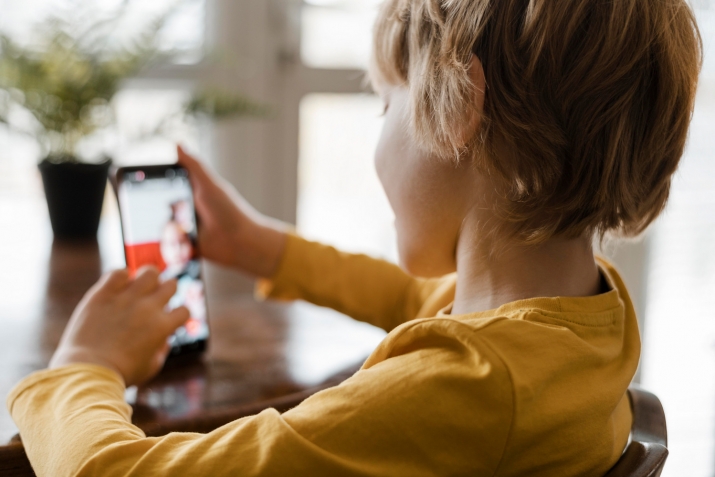
Social media have opened up for us countless opportunities for engaging with diverse communities and cultures.
This has led to a number of positive consequences, including intellectual and cultural openness, broadening horizons and stimulating scientific research.
Furthermore, social media meets various user needs, emotional and cognitive, and promotes psychological and social harmony. They allow people to communicate, build relationships, share experiences and interests through posts, messages, file sharing and image exchange in a virtual environment.
These platforms have become an integral part of social life, deeply permeating all layers of society. Many of us rely on them for all aspects of social activity, both formal and informal.
However, it is important to remember that these tools must stay under our control: we use them, not they us; we control them, not they us. We should interact with them as needed and not succumb to the imposition of alien values.
Negative Impact on Social Relationships
At the same time, social media has a negative impact on social connections and interactions between people, reducing the quality of family and interpersonal communication. It impairs face-to-face social interaction skills for many people.
Research shows that excessive social media use weakens social ties and reduces communication within the family, reducing the number of visits and meetings with relatives, as people limit their communication to social media and instant messaging apps.
This tendency often increases psychological alienation in society, especially among young people, impairs face-to-face communication skills and can lead to social isolation.
Furthermore, social media allows young people, and especially children, to adopt behavior patterns that are inconsistent with religious and traditional norms of society.
Key Negative Consequences for Social Identity
- Isolation and Family Disorder
The internet and video games consume much of a child’s time, distancing him from family, friends and real-life interactions. This hinders the development of essential social skills. Even when family members are physically present, the emotional and spiritual connection between them weakens: everyone is immersed in their phones, oblivious to those around them.
Internet abuse contributes to the development of individualism, loneliness and isolation among adolescents and young adults, hindering healthy social and emotional development, which is no less important than cognitive activity and intellectual growth.
- Multiple Reference Points
One of the most dangerous problems is the blurring of behavioral guidelines. While a person’s value system was previously shaped by family and the society in which he lives, it has now been influenced by globalisation. As a result, young people are losing clear criteria for right and wrong, acceptable and unacceptable.
For example, a young person may commit an act condemned by his peers but supported on social media. This partially explains why some people deviate from traditional values and societal norms.
- The Influence of Unrealistic Content
The internet exposes children and adolescents to fantastical and unreliable information, which hinders their thinking and social adaptation and fosters irrational beliefs, especially regarding interpersonal relationships, lifestyles, habits and traditions of other societies.
- Neglect of Parenting
Parents addicted to social media often neglect their responsibilities to raise and guide their children. In turn, children immersed in the virtual world fail to show respect and obedience to their parents.
Our children are the future and foundation of society and protecting them is the shared responsibility of families, schools, the state and every individual. We must protect them from ourselves and from those who seek to turn them into unstable, useless creatures controlled by soulless technology.