

Discoverer of Microbes: Muhammad ibn Hamza Akshemeddin
Discoverer of Microbes: Muhammad ibn Hamza Akshemeddin
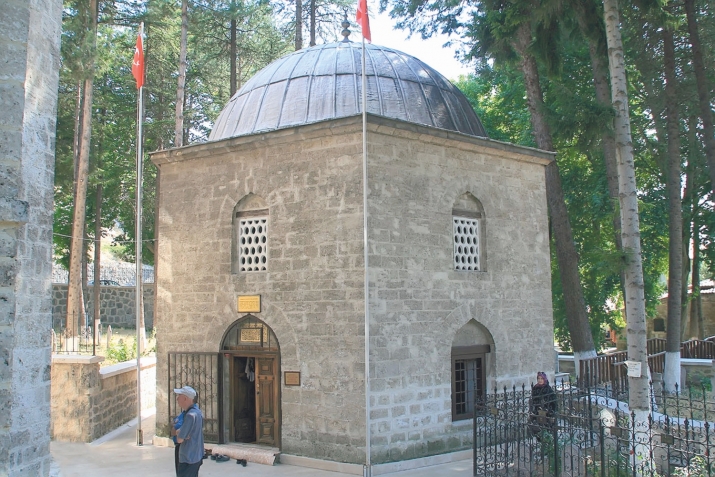
In the modern world, it is generally accepted that great scientific discoveries belong to Western scientists. However, few know or remember the successes of traditional Muslim research and achievements.
The discovery of microbes is attributed to the Islamic scholar Muhammad Shams al-Din ibn Hamza (Akshemeddin) (1389–1459). He is famous primarily as the spiritual mentor of Sultan Mehmed II, the conqueror of Constantinople. Akshemeddin was an outstanding figure and a versatile scientist. A century before the Italian physician Girolamo Fracastoro, who only began to consider microbes, Muhammad Shams al-Din had already discovered them and described them in detail.
Muhammad Shams al-Din was born in Sham (now Syria and surrounding states). Aksheikh or Akshemseddin translates as “White Sheikh” or “White Shams al-Din”. He was given this nickname because of his gray beard and hair, as well as his habit of always wearing white clothes.
Akshemseddin had a brilliant education. He mastered religious sciences, mathematics, astronomy, biology and medicine. The White Sheikh is widely known as the most talented physician of his era. He not only diagnosed illnesses but also prepared his own medicines to cure the sick.
He is the author of the great work “Maddat al-Hayat” (“The Substance of Life”), which was used as a textbook in medical schools throughout the Ottoman Empire. The scholar also wrote many other popular medical works.
Thousands of people died from infectious diseases in those days. White Shams al-Din, by persistently studying these diseases, concluded that infection is transmitted from person to person through “invisible seeds”. Muhammad ibn Hamza made a profound discovery: “Diseases affect people because of invisible, tiny living organisms – microbes.”
At the time of Akshem al-Din’s discovery of microbes, the microscope had not yet been invented. It is worth noting that it was only 400 years later that the French biologist and chemist Louis Pasteur, using a microscope, “discovered” microbes. And 450 years later, the German biologist Robert Koch (1843–1910) was called the founder of microbiology.
It is known that Akshem al-Din researched cancer, a disease then known as “seratan”. He treated the Kadiasker Suleyman Çelebi, son of the Grand Vizier Çandarlı Khalil Pasha, who had cancer. The White Sheikh diligently studied plants and made medicines from them himself.
Muhammad Shams al-Din ibn Hamza, a great Islamic scholar, was a healer not only of bodies but also of souls, a spiritual mentor and a sheikh of the tariqa, a murshid. He was nicknamed “tabibi arvakh” (“healer of souls”). As mentioned, he was the teacher of the famous Sultan Mehmed II, who conquered Constantinople. It was his grace and guidance that helped the Sultan gather a vast army and defeat the Byzantine Empire.
