
If one man is no man, then who is?
Proverbs and sayings are a treasure trove of folk wisdom but sometimes their true meaning is lost over the centuries.
The familiar expression “One man, no man” is precisely such a case. I think many will be surprised to learn that this proverb has an important continuation, which allows us to view its meaning in a different light.
Ploughman or warrior
Folklorists have traced the origins of this phrase, where literally every word reveals the profound wisdom of our ancestors. It is believed that the proverb originally sounded like “one in the field is not a ratai”. “Ratai” is an obsolete word meaning “plowman”. In this sense, the meaning is simple and practical: one person cannot plow an entire field. Or, more broadly, achieving a great goal requires the efforts of a significant number of people. This idea is consistent with the principle of collectivism, which is why the proverb has often been used by its adherents in modern history.
Over time, due to its similarity in sound, “ratai” likely evolved into “ratnik” (the obsolete “warrior”), and then into “warrior”. This meaning became the most common. It harks back to ancient warrior culture, where the outcome of a battle was decided not by personal valor, but by the cohesion of the squad. “Together we are strong!” goes the modern equivalent of this thought. And no matter how much individualists (to which, I confess, the author of this article belongs) would like to argue with this slogan, experience shows that in most cases, the average warrior is not a legendary hero but a mere mortal. However, this does not exclude the possibility that some outstanding warriors and commanders are capable of single-handedly defeating an entire army, as is often the case in history. But, as we know, the exception only proves the rule.
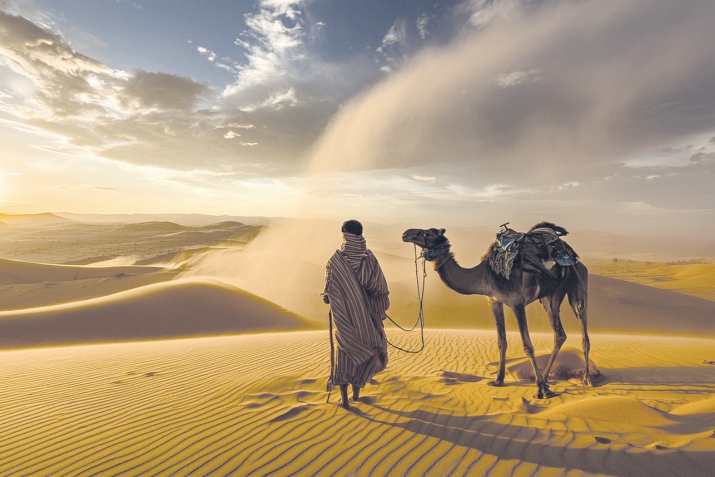
And now for the most interesting part. During the period of feudal fragmentation, or more precisely, towards its end, the proverb supposedly acquired a continuation: “One in the field is not a warrior, but a traveler.” This meant that a person walking alone poses no threat and is not a legitimate target for attack and therefore can freely move from one point of the country to another (which previously would have been unsafe, as they inevitably became involved in battle). The unspoken law of the “field”, be it a battlefield or the endless steppe (the word “field” itself comes from the Proto-Slavic meaning “open, free, empty”), dictates that a lone traveler should be sheltered and fed, not attacked.
There is another explanation, more in line with modern thinking. The proverb, “One man is not a warrior in the field, but a traveler,” calls on people to define their social role: either seek out a team of like-minded people and colleagues to realize their plans, or find their own unique path, risking their safety, peace of mind and finances for the sake of a pioneering mission. Perhaps they are currently wasting their time on the wrong things, the proverb suggests.
A Stone at the Crossroads
Whether the historically correct version is correct, one thing is clear: our ancestors had a keen sense of the difference between being part of a group and being an independent explorer.
Furthermore, it can be said that in one situation, the same person can find themselves part of a large army, and in another, a lone traveler. Collective prayer, helping those in need through shared efforts, jointly encouraging what is good and condemning what is bad, all these are manifestations of the power of community.
The Prophet Muhammad ﷺ said, “Believers, in their mutual love, mercy and compassion for one another, are like a single body: if one part of the body is afflicted by illness, the whole body responds with insomnia and fever.” (Narrated by Al-Bukhari and Muslim). If anyone in the community needs help, support, or even basic compassion, they can always count on their brothers and sisters in faith.
History knows great examples of such unity. Recall the Battle of the Trench (Khandaq), when the entire adult male population of Medina worked together to dig a deep trench to protect the city. The Prophet ﷺ personally participated in this work, shoulder to shoulder with other Muslims. Victory that day was achieved not by individual merit or bravery, but by unity, solidarity and reliance on Allah ﷻ. Although, of course, the idea of digging a trench, which was innovative for that region, was proposed by a very specific individual, Salman al-Farisi, who chose this strategy, recognising that a traditional battle in the open (in the field) would be disadvantageous to the Muslims due to the enemy’s superior numbers.
In worldly and spiritual affairs that require shared efforts, one truly is no warrior, for the strength of believers lies precisely in their brotherhood. However, there are spheres where man stands before the Creator completely alone and here he is not a warrior, but a traveler.
Faith itself is a deeply personal connection between a servant and his Lord. While worshiping, performing prayer, fasting, or reciting dhikr (praise of God), a person, even in a crowd, remains alone with God in their heart. Moral choice is also individual. The moments when we decide whether to tell the truth or lie, to be patient or express anger, these are our personal responsibility. The most important stage, which each person must endure alone, is the end of his life’s journey and the interrogation on the Day of Judgment. A person comes into this world alone and leaves it alone, facing his Lord alone to answer.
In these moments, a person’s strength as a traveler is revealed in his sincerity, in the awareness that Allah ﷻ sees him always and everywhere, in his ability to make important decisions, trusting in the Almighty but at the same time making every possible effort.
Muhammad’s ﷺ solitude in the cave of Hira before the revelation of the prophethood is also a kind of journey for the traveler seeking truth through worship and reflection.
World history offers many examples of how a person chooses one manifestation over another. Alexander the Great was a brilliant military leader but his enormous conquests were only possible thanks to a united phalanx, a disciplined army and talented commanders. Alone, he would have been nothing more than a dreamer with grand plans, but without the strength to implement them.
The Art of Balance
These examples reflect the universality of ancient wisdom: to achieve great things, one must be able to be both a solitary traveler, capable of bold vision, and a warrior, able to rally like-minded people around oneself. The life of a believer is the art of balancing these two roles.
- Be a strong traveler to become a useful warrior. Only those who have strengthened their faith in solitude can be a support for the community. As the righteous predecessors said, “Correct yourself in solitude, and then you will be able to correct people in society.”
- Draw strength from the community for your journey. The support of brothers and sisters in faith helps you stay on track and provides rest and inspiration on the path that brings you closer to the Creator.
- Remember the ultimate goal. Both warrior and traveler ultimately strive for the same thing: the pleasure of their Creator. Earthly battles and difficulties are only stages along this path.
In daily affairs, in the struggle for justice and in organizing life according to the laws of the Creator, a person is not a warrior, but part of an army of believers. But in our hearts, in our faith, in our personal conversion to God, each of us is a traveler, alone but confidently walking along the path destined for us. In this solitude lies our greatness. After all, a traveler who knows his destination and trusts his one and only Leader gains strength that no earthly army can give.