

The Contribution of Abu al-Hasan Thabit ibn Qurra to Science
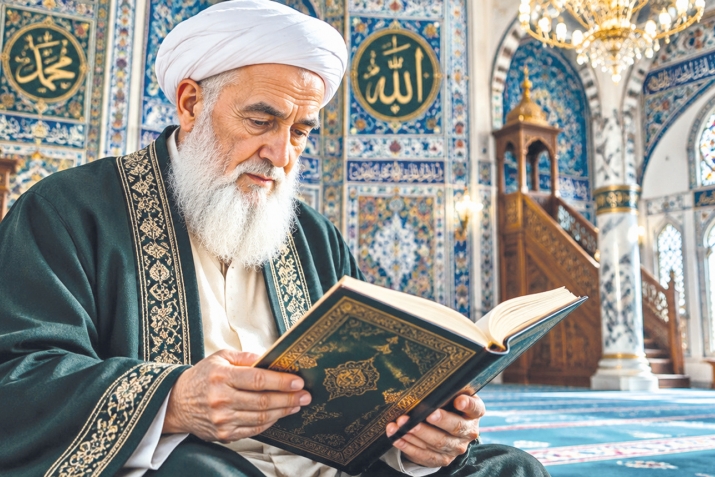
The Golden Age of Islam was an era of remarkable scientific minds, among whom Abu al-Hasan Thabit ibn Qurra (836–901 AD) stands out for his profound influence on the fields of mathematics, astronomy and physics.
He was a key scholar at the renowned “House of Wisdom” in Baghdad.
To this day, 44 of Thabit’s treatises, covering mathematics, mechanics, physics, astronomy, geography, music theory and philosophy, have been preserved. In addition, 17 of his treatises on medicine and veterinary science are also known to exist.
Physics
Ibn Qurra’s most significant contributions were in the study of physical phenomena. He challenged Aristotle’s views on the “natural place” of elements, arguing instead that their motion is determined by weight. He posited that all processes in the universe are governed by two competing forces of attraction.
Thabit ibn Qurra is considered a founder of the field of statics, largely due to his 9th-century discoveries, most notably in his work “On the Properties of Weight and Imbalance”. He also synthesised the ideas of Aristotle and Archimedes to provide a proof for the principle of the lever and explored the concept of the equilibrium of forces.
Mathematics
Ibn Qurra was the first to formulate an equation for identifying “amicable numbers” – pairs of numbers where the sum of the proper divisors of each equals the other. In modern mathematics, these are known as “Thabit numbers”. He advanced number theory by establishing relationships between geometric quantities.
In his “Treatise on Secant Figures”, he provided a proof for Menelaus’s theorem, addressed a chess-related mathematical problem and calculated the volume of a paraboloid.
Astronomy
In the field of astronomy, Thabit ibn Qurra achieved significant success while serving as a personal astronomer at the court of the Abbasid Caliph al-Mu’tadid, a position that granted him the freedom to study the stars.
He succeeded in accurately calculating the length of the solar year, determining it to be 365 days, 6 hours, 9 minutes and 12 seconds. His works addressed the motions of the Sun and the Moon, sundials, the visibility of new moons and the nature of celestial spheres. Ibn Qurra expanded the theory of Ptolemaic spheres by adding an eighth sphere, the sphere of the fixed stars and proposed the “trepidation” hypothesis to explain the precession of the equinoxes.
His writings were translated into Latin and utilised by European scholars for many centuries. The ideas of Ibn Qurra served as an inspiration for prominent figures such as Nicolaus Copernicus and Pierre de Fermat.
In 1935, the International Astronomical Union honoured the legacy of Thabit ibn Qurra by naming a lunar crater after him.
