

The Koran in Russian Poetry
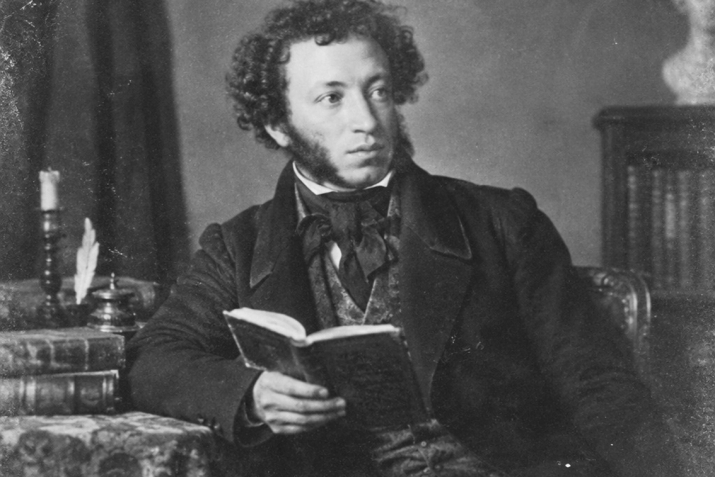
A number of Russian poets have devoted special attention to the Holy Book of Muslims in their work. The beautiful, unique, and unsurpassed style of the Koran served as an inspiration for classics of Russian literature.
The world-renowned Russian poet Alexander Pushkin wrote a series of poems titled “Imitations of the Koran”. According to the “Dictionary of Pushkin’s Language”, the Koran is mentioned a total of 17 times throughout the works of this literary giant, by comparison, the Bible is mentioned 13 times, and the Gospel 8 times.
Biographers attribute Pushkin’s interest in Islam to several factors. The first is his ancestry: his maternal great-grandfather was Abram Gannibal, who, according to the ethnographer Dmitry Anuchin, was an Ethiopian prince. He had been brought to the court of the Ottoman Sultan Ahmed III as an “honorable hostage”, was later purchased by a Russian representative and was subsequently gifted to Peter the Great.
Pushkin was also influenced by one of his teachers at the Lyceum, Professor Ivan Kaidanov. In his book, “Foundations of Universal Political History: Part I. Ancient History”, Kaidanov devotes significant attention to the history of Arabia, the emergence of Islam and the life of the Prophet Muhammad ﷺ. It is believed that this book served as one of Pushkin’s early textbooks from which he drew his historical knowledge.
Furthermore, the poet was deeply influenced by his personal exposure to the Muslim way of life among the peoples of the Caucasus and Crimea during his exile to Southern Russia between 1820 and 1821. It was here that he began writing “The Prisoner of the Caucasus” and the poem “The Fountain of Bakhchisaray”, the latter featuring an epigraph taken from the works of the Persian poet Saadi.
“The world of Islam entered the poetic realm of this classic of Russian literature not merely as a theme or a model to emulate but as one of the profound and vital sources of his creative work. This is evidenced by the frequent references to the Koran and the name of the Prophet Muhammad ﷺ in Pushkin’s literary works, letters and diary entries,” write researchers Yuri Gavrilov and Alexander Shevchenko in their book “Islam in the History and Culture of the Peoples of Russia”.
Presented below are several poems by Alexander Pushkin from his “Imitations of the Koran” cycle. The poet worked on them in the autumn of 1824 at his ancestral estate in the village of Mikhailovskoye. “I am labouring for the glory of the Koran,” he wrote in a letter to his brother Lev in November 1824.
Imitations of the Koran
The earth is unmovable – the vaults of heaven,
O Creator, are upheld by you,
Lest they fall upon the land and waters,
And crush us beneath themselves.
You lit the sun amidst the universe,
That it give light to the heaven and the earth,
Like flax soaked in oil,
It shines in the crystal of its lamp.
Pray to the Creator: He is mighty:
He guides the wind; on a sweltering day
He sends the clouds into the sky;
He gives the earth the sheltering boughs of the trees.
He is merciful: to Mohammad
He revealed the radiant Quran,
That we too might make our way towards light,
That the fog might fall from our eyes.
***
Trading your conscience for the poor man’s plight,
Do not bestow your gifts with measured hand;
A boundless generosity delights
The heavens above, beyond all mortal lands.
When comes the dreadful Day of Judgment near,
Like fertile fields beneath the sower’s care,
O fortunate sower, your harvest shall appear,
And hundredfold reward your labours bear.
But if, regretting earthly toil and gain,
You give the beggar alms both poor and small,
And clench your envious hand, unwilling to sustain,
Then know: your gifts shall perish, one and all.
Like handfuls of dust washed from a stone
By torrents of abundant rain,
Your offerings shall vanish, cast aside, disowned –
A sacrifice rejected by the Lord in vain.
The Prophet
Tormented by a thirst of spirit,
Through a desolate wilderness I strayed,
And there, where paths of fate converge,
A six-winged seraphim appeared.
With fingers light as dreams themselves,
He touched the pupils of my eyes;
My prophetic vision opened wide,
As an eagle’s eyes when fear takes flight.
He touched my ears, and they were filled
With tumult, ringing, distant sound;
And I heard the heavens tremble,
The angels soaring high above,
The sea-born creatures moving in the depths,
The tender vine sprouting from the ground.
Then to my lips he drew himself
And tore my sinful tongue away –
That idle tongue, deceitful, vain;
And in my frozen mouth he placed
The sting of the wise serpent,
With his bloodied hand of power.
Then with his sword he cleft my breast
And drew my trembling heart away,
And set a coal ablaze with fire
Within my opened chest to stay.
Like a corpse in the desert I lay,
And God’s own voice called out to me:
“Arise, O Prophet, see and hear.
Be filled with My will alone,
And, traversing seas and lands,
Burn human hearts with the living word.”
(1826)
