

The Importance of Studying the Biography of the Prophet Muhammad ﷺ
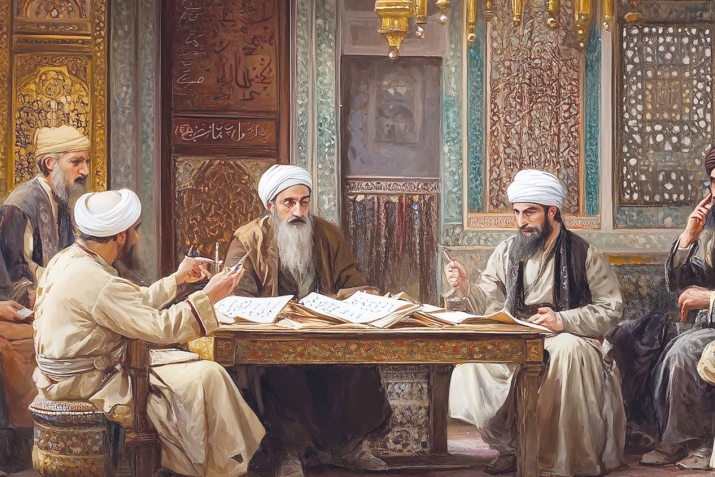
It is understood that the first individuals to undertake the written recording of the general biography of the Prophet ﷺ were ‘Urwah ibn al-Zubayr (who passed away in 92 AH), Aban ibn ‘Uthman (who departed this world in 105 AH), Wahb ibn Munabbih (110 AH), Shurahbil ibn Sa‘d (123 AH) and Ibn Shihab al-Zuhri (124 AH).
These men undoubtedly stand at the forefront of those who chronicled the life of the Messenger of God ﷺ. Their writings laid the foundation for this great scholarly endeavor and are considered the first step toward the writing and study of history as a whole. This is despite the fact that many events from the life of the Messenger of the Lord ﷺ are mentioned in the Koran and Hadith: sources that focus primarily on his sayings and actions, particularly those related to Islamic law.
However, their original writings were eventually lost to time and nothing has reached us except for scattered fragments, some of which were transmitted by al-Tabari. It is said that a portion of these records, specifically, part of what Wahb ibn Munabbih wrote, is preserved in the city of Heidelberg, Germany. Nevertheless, the subsequent generation took up what they had written and recorded the most important aspects in their own works, the majority of which have reached us by the will of the Almighty.
At the forefront of this generation stood Muhammad ibn Ishaq, who passed away in 152 AH. Scholars agree that the writings of Muhammad ibn Ishaq are considered the most authentic accounts of the Prophet’s ﷺ life produced during that era. Although his original book, “Al-Maghazi”, has not survived to the present day, Abu Muhammad ‘Abd al-Malik, better known as Ibn Hisham, who lived after him, transmitted a revised version of the work less than fifty years after Ibn Ishaq had written it.
Ibn Khallikan wrote, “Ibn Hisham compiled the biography of the Messenger of God ﷺ from Ibn Ishaq’s work on military expeditions. He revised and abridged its content. This book containing the biography of the Prophet ﷺ is widely available and is known as Sirah Ibn Hisham.”
In any case, the sources regarding the biography of the Prophet ﷺ upon which subsequent writers across various generations have relied are limited to the following list.
First: The Book of Allah the Almighty. It serves as the primary source for understanding the general characteristics and key periods of the Prophet’s ﷺ) life.
Second: The books of the Prophet’s ﷺ Sunna. These are works compiled by eminent scholars of Hadith: figures renowned for their truthfulness and reliability. These include the “Six Books” (al-Kutub al-Sittah), as well as Imam Malik’s “al-Muwatta’”, Imam Ahmad’s “Musnad”, and others.
These books focus primarily on the sayings and actions of the Messenger of God ﷺ. Essentially, they serve as sources of legislation rather than as historical chronicles. Consequently, in many of these works the hadith are organised into chapters based on themes of Islamic law.
In some books, hadith are arranged according to the names of the Companions who narrated them; none of these books follow a chronological sequence of events.
The third category consists of narrators who paid special attention to the biography of the Prophet ﷺ. Many Companions focused on this; indeed, any Companion present with the Messenger of God ﷺ during a specific event would invariably recount it repeatedly to other Companions and to those who came after them (the subsequent generation). However, initially, none of them sought to compile this biographical account into a single written work. It is therefore important to distinguish between the acts of recording, documenting and authoring a book.
The Scholarly Approach to Studying and Transmitting the Prophet’s Biography
Compilers of the Prophetic biography (known as Sirah) relied solely on objective and authentic (verified) facts, as well as the rules and criteria of the science of Hadith. This discipline involves scrutinising every narrator within the isnad (chain of transmission) and examining the matn – the actual text of the hadith. Throughout this process, they applied the selection criteria of Jarh wa Ta’dil – a specialised field dedicated to evaluating the acceptability or rejection of narrators based on their biographies and reputations. Only after these narrators had been rigorously vetted for authenticity against strict standards did the compilers proceed to write their accounts, presenting the material without inserting their own thoughts, preconceptions or personal impressions. They proceeded without any embellishment or alteration.
They believed that a historical event, knowledge of which is attained by applying these rules to the fullest extent, is thereby proven and indisputable, requiring no subjective interpretation. They held that such an event should appear before our eyes exactly as it truly occurred. They also considered the distortion of events to be an unforgivable act of betrayal, stemming from subjective fabrications and decisions that largely reflect public opinion and a blind, fanatical adherence to a chosen path.
Thus, it is only through an objective historical perspective that the authentic, scientifically grounded Sirah (biography) of the chosen Prophet ﷺ has reached us. This includes a complete and reliable account of his birth, infancy, childhood and youth; the supernatural signs that accompanied his early years and his life prior to the commencement of his prophethood and the receipt of clear Revelation. Furthermore, the Sirah details his character, truthfulness and trustworthiness; the miracles and supernatural phenomena granted to him by Allah and the stages of his call to the Almighty, undertaken in obedience to his Lord’s commands, spanning both times of peace and military campaigns.
In essence, the work undertaken by historians regarding the sequence of events in the Prophet’s ﷺ life consisted of transmitting these events in strict accordance with the principles of the science of hadith: a discipline that scrutinises the accuracy of narrators (including the chains of transmission and their continuity), their biographies and the texts of the narrations themselves.
As for the process of deriving conclusions, Sharia rulings, beneficial insights, principles and deeper meanings from these events, once the relevant narration has been definitively accepted, this constitutes a separate field of study distinct from the Sirah. Therefore, it should by no means be conflated with the Sirah itself. In truth, this is a distinct and independent branch of scholarship, constructed and developed according to its own unique parameters, agenda, and rules.
Indeed, a vast number of Sharia rulings (ahkam) have been derived from the events of the Prophet’s ﷺ life in accordance with these rules. These rulings encompass matters of creed and clear knowledge, as well as matters of legislation and practice. It is important to understand that these rulings and conclusions have come down to us as distinct from the historical narrative (Sirah). They are the product of scholarly effort within a separate discipline, one that developed largely upon a historical foundation established according to the aforementioned rules.
To be continued…
