
Performing salah to perfection
Describing the characteristics of God-fearing people, Allah says: “They are people striving to perform the five times daily prayers with hudhur (presence), fulfilling all its foundations and conditions, performing each bow and prostration to the utmost, and are consistent in it.”
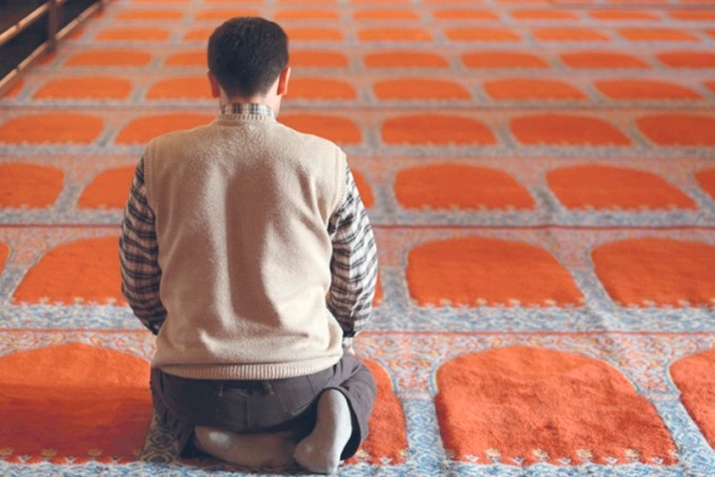
Performing salah to perfection is a reason for the descent of material blessings.
One of they who know Allah, the great scholar Ibrahim Naha’i said: “If you see that a person carelessly bows and prostrates in salah, then pity his family and children: they are threatened with poverty and their wealth is depleted.” Notice the significance salah has even for one’s worldly well-being.
Respected Muslims! Many complain that their affairs in this worldly life and at work are going badly. For the most part, they turn out to be people who do not perform their salah, and if they perform it, then they do so inattentively. There are even those who complain that there is not enough time to perform salah.
As has already been said, Allah provides for everyone, irrespective of whether they are believers or non-believers or are good or bad. But remember, there will be no blessing in the affairs of those who do not perform salah or observe the fast, who do not differentiate between what is permissible and forbidden, having forgotten their Islamic upbringing and their spiritual heritage. Such people’s wealth is deprived of blessing. They do not know and do not even have any inkling that while they acquire on one side, they lose in the other. The life of these people is spent in the pursuit of the worldly, which is actually fleeing from them. At the end of their days, after leaving all that they have earned to their inheritors, they go with nothing into a dark grave. Wealth, given in that way, if it is given at all, is called deceptive (istidraj). May Allah protect us from it.
Salah performed to Perfection
Khatam Al Asam, one of those who knows Allah, went to As ibn Yusuf. As asked him, “Do you know how to perform salah?”
Khatam answered, “I do.”
As then asked, “And how do you perform it?”
Khatam said, “When the time for salah draws close, I meticulously perform wudhu, I stand at the place for prayer and I get ready. Before my eyes is the Ka’ba, and Allah is looking at me: He knows, what I have in my heart. My legs are as if they are on the sirat, to the right of me is paradise, to the left is the fire, and behind me the angel of death is standing. My heart assumes that this is my last prayer. Then, with sincerity and hudhur (presence), I begin my salah for the sake of Allah, I meaningfully read al-Ham [sura al-Fatiha], humbly bow, and then, submissively pleading to Allah, I prostrate. Then I sit and read ‘at-Tahiyyat’ with my hope on the Most High. Likewise, with ikhlas and hudhur, I greet the Prophet (peace and blessings be upon him). While in a state between fear of the Most High and hope on Him, I leave the salah, saying salam. Then I get ready to be patient in all circumstances.”
Then As asked, “Is that the way you perform salah, oh Khatam?”

Then As wept, admitting that he had never performed Salah in that way. In the commandments regarding salah, the Most High Allah commands that it be performed regularly, not neglecting it or missing it, on time, and with jama’a (many scholars consider this to be a fardh kifaya [1], and Imam Ahmad says it is a fardh al-‘ain [2]), and with hudhur and khushu` [3].
After the Most High instructed us to perform salah in that way, people fell into different groups. Some did not accept the salah at all and their leader was Abu Jahl, may Allah deprive him of His mercy. Others recognized the salah as obligatory, yet did not take it upon themselves to perform it, and these were the people of the book, specifically, the followers of the Torah. People of a third group performed the salah at times, but would also neglect it, and these were the Munafiqun. One other group of people acknowledged the salah, they pledged to perform the salah and performed it, as Allah commanded, and were consistent in doing so. Their teacher was the Prophet (peace and blessings be upon him), and after him all his companions, may Allah be pleased with them. Ayats were sent down which told of Hell which had been prepared for, as well the hardships and struggles which awaited, every group in the Akhirah except for those who followed the Prophet (peace and blessings be upon him). And all of those groups have always had their followers.
Those in whose hearts the heavenly light of knowledge of Allah has penetrated, as a consequence of which they came to see the truth, they, having recognized the Prophet (peace and blessings be upon him) and followed him, are entering into Islam even today. They are the followers of the Prophet (peace and blessings be upon him). Dear Muslims! If that eternal joy, waiting for them and us, was just as visible and tangible as a salary, which we can receive in our hands today, then those who forgot about the next life and are distracted by this transient world would not have left it to us. We must be exceedingly grateful to Allah.
The Prophet (peace and blessings be upon him) says, “Whoever fails to perform one salah without reason until the time for its performance has run out will spend 80 years in hell.”
The Prophet (peace and blessings be upon him) also said, “One who abandons the jama’a, that is who does not attend the congregational prayer, is not my person and I am not his.”
One of the great scholars said, “He who does not attend the congregational prayer is worse than a drunkard, a murderer of an innocent person, one who tortures his parents and a blasphemer.” In the Gospel, the Torah, the Psalms and the Koran such a person is considered to be deprived of Allah’s mercy and the angels curse him. It is said, that he is not to be visited if he is sick and his funeral is not to be attended if he dies.
- Fardh al-Kifaya: An obligation, which at least one person in the community must perform and thus the rest of the community is relieved of the obligation to do so. If nobody performs it, then the whole community falls into sin.
- Fardh al-‘Ain: An obligation which is placed on all Muslims.
- khushu’: reverence, awe before the Most High.
FROM THE BOOK OF THE VENERABLE SHEIKH SAID AFANDI CHIRKAWI AD-DAGHESTANI AN-NAQSHBANDI “INVITATION TO HEED THE CALL OF THE QUR’AN” Translation from the Avar language book “Tanbih al Awam ila Da’wat al Qur’an”