

Did all the prophets perform the Hajj?
Did all the prophets perform the Hajj?
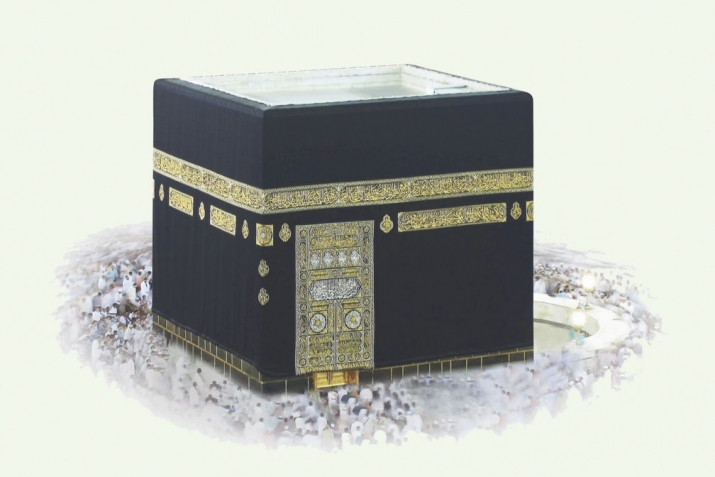
The venerable Kaaba has existed on earth since the time of the forefather Adam (peace be upon him), and many prophets (peace be upon them) made pilgrimages to this House of God. However, it is not known whether all the prophets and messengers (peace be upon them) made pilgrimages and whether this type of worship was written into their religion as obligatory?
There is slight disagreement among scholars regarding the issue of Hajj performed by all the prophets (peace be upon them). Thus, some believe that all the prophets and messengers, including Jesus (Isa) (peace be upon him), made the pilgrimage.
It was narrated from Abdullah bin Umar (may God be pleased with him) that the Messenger of God ﷺ said, “Last night I saw myself in a dream at the Kaaba, and I also saw a dark-skinned man, who in appearance was the best among the dark-skinned people, among those one saw. He had the most beautiful, well-groomed locks you’d ever seen, dripping with water. He walked around the House of God, leaning on two men (or: on the shoulders of two people). I asked, ‘Who is this?’ They told me, ‘This is the Messiah, the son of Mary.’ And then I found myself next to a man with short and curly hair and with a crooked right eye that looked like a bulging grape. I asked, ‘Who is this?’ and they answered me, ‘Antichrist.’” (narrated by imams al-Bukhari and Muslim).
Regarding the pilgrimage of the prophet Isa (peace be upon him), there is a slight disagreement: whether he did it earlier or will do so after the second coming.
From Abu Hurayrah (may God be pleased with him) it is reported that the Messenger of God ﷺ said, “I swear by the One in Whose Hand is my soul that Isa the son of Maryam will pronounce talbiyah in the Rawha gorge, wanting to perform Hajj or Umrah or both Hajj and Umrah together.” (Narrated by imam Muslim).
Another hadith says: from Ibn Abbas (may God be pleased with him) it is reported that the Messenger of the Almighty ﷺ said, “Seventy prophets prayed in the al-Haif mosque (located in the Mina valley), among them was Musa. It is as if I see him, how he is wearing two pieces of cotton clothing, how he is in a state of ihram, sitting on his camel from camels of Shanua...” (narrated by Imam at-Tabarani in the book “Mu’jamul-Kabir”).
Also, the Messenger of God ﷺ reported in reliable hadiths that prophet Musa (peace be upon him), as well as prophet Yunus (peace be upon him), made a pilgrimage to the House of God.
Some argue that all the prophets performed the Hajj except Hud and Salih (peace be upon them). It is reported of Urwah bin al-Zubair that he said, “There is none of the prophets who does not make a pilgrimage except Hud and Salih” (narrated by Imam al-Bayhaqi in “As-Sunan al-Kubra”).
But Hafiz Ibn Kathir mentions in the book “Al-Bidayah wa-n-Nihayat” that Hud and Salih (peace be upon them) also performed the Hajj.
God knows best.
