
Fire, Ash, Faith: A Tatar Ark in the Land of the Rising Sun
Fire, Ash, Faith: A Tatar Ark in the Land of the Rising Sun
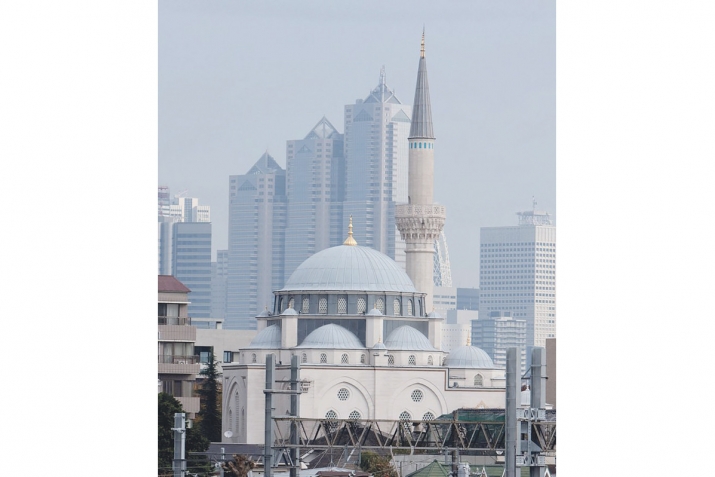
This story begins with silence.
With that special, ringing, dense silence that descends only after the final explosions have died down, entire neighborhoods have burned to the ground, and the wind has begun to lazily blow ash flakes across the scorched earth, like black, mournful snow.
Kobe. Spring 1945. American B-29 Superfortresses turned this bustling port metropolis into a red-hot frying pan. In a single night, incendiary bombs obliterated more than 60% of the city’s buildings. Whole streets of Japanese wooden houses, light and graceful, disappeared, as if they had never existed. But when the choking smoke finally cleared and the rescuers stepped onto the still-warm ruins, they froze, speechless. Amidst an apocalyptic lunar landscape, in the old Kitano-cho district, a snow-white minaret towered.
This is not a fiction to decorate a Friday sermon. This is a cold, engineering fact and a silent sign from above. Before us is the story of the Kobe Muslim Mosque – the very first mosque on the Japanese archipelago. The origins of this amazing saga lie not with the native Japanese but with Tatars who had lost their homeland.
It is common to think of Islam in Japan as something purely imported: Arabic or Turkish. However, the foundations of the first House of Allah ﷻ were laid by hands that knew not the desert heat but the icy cold of the Russian steppes. After the tragedy of the 1917 Revolution and the fall of Kazan, thousands of Muslim Tatars who rejected the new government scattered like bitter dust across the world. A significant number settled in the port city of Kobe. They were merchants engaged in silk, cotton, and tea; hardworking, honest and deeply religious people. For a long time, rented rooms in port warehouses served as their temple, where they spread prayer mats right between bales of goods.
But the Muslim community has the ability to grow even in exile. In 1928, the community, led by Tatar elders and supported by Indian and Turkish merchants, launched a fundraising campaign to build a real mosque. They did not need another prayer room partitioned off by a screen. They needed a fortress in a foreign land, a citadel of faith among Buddhist pagodas and Shinto shrines.
The Czech architect, Jan Josef Švahr, was hired as the architect. What is striking is something else: construction began in October 1935, that fateful moment when the Japanese Empire was already gathering momentum in its descent into militarism and inexorably preparing for a major war. It would seem the most inopportune time to build a temple of peace. But it was then, on a narrow street among the prim European mansions of the Kitano district, that walls of durable, reinforced concrete began to rise.
The minaret soared 17 meters into the air. Its crown was crowned with a golden crescent, avidly catching the meager rays of the Japanese sun. The interior decoration lacked the ornate luxury of Arab palaces, only strict geometric lines, ascetic white walls and a humble space for prostrations. The grand opening took place that same year, 1935. This was the first legally constructed mosque in Japan’s long history, complete with a full-fledged minaret reaching toward the clouds, where the call to prayer was officially and openly resounded. It was the starting point of a new era.
And then war broke out. Kobe burned, choked by a firestorm. Both the Tatar diaspora and the first Japanese followers of Islam, sheltering in dark bomb shelters, awaited news of the fate of their holy site with horror and trepidation. When they stumbled back to the smoldering ashes, they were met by walls. Whole, strong, fire-proof. The mosque stood.
But the Almighty, in His infinite wisdom, prepared a second great test for this building. In 1995, when the country had finally recovered from its wounds and believed in its economic miracle, a new disaster struck. The 7.3-magnitude Hanshin earthquake struck. The images from that time are heartbreaking: highway overpasses collapsed like toys, buses buried under tons of concrete rubble, and six thousand dead. Kobe was instantly reduced to ruins once again. And once again, amid the cracked and ruptured earth, the same minaret of the Kobe Mosque towered over the devastated city. The building stood firm, becoming a refuge for hundreds of affected neighbors, regardless of their faith or background. Shintoists and Buddhists flocked to the mosque’s courtyard for a sip of water and assistance. Is this not the most eloquent testimony to the true spirit of Islam: mercy, compassion and openness to the world?
Today, this mosque is not a dusty museum exhibit but a living, beating heart of believers. Its imam raises his voice, delivering the khutba (sermon) in three languages: Arabic, Japanese, and English.