

What are the secrets of Arab clothing?
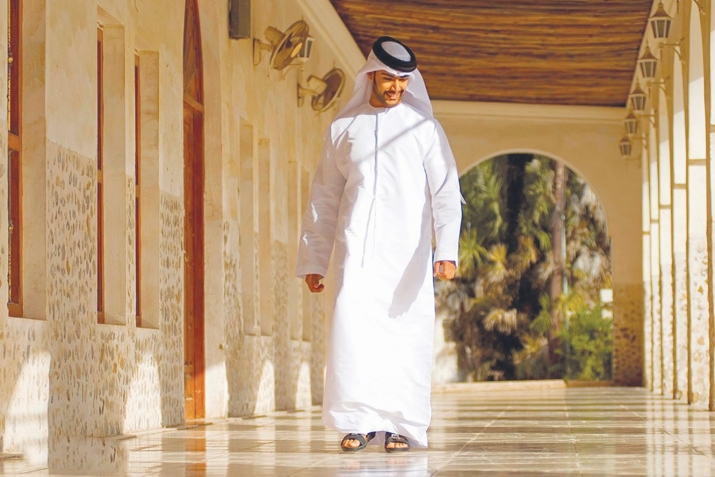
Many of us who have visited Arab countries, in particular the United Arab Emirates, have noticed that local men wear a long white robe with a white scarf on their heads. Women often wear a black dress, but now we are talking about men. What is the secret of such clothing of the Arabs, who have never adopted the European style?
No, of course, the residents of the Emirates wear a classic suit or jeans, but most often they do this abroad. National clothing is so comfortable for them that they do not part with it even when traveling around the world. This everyday traditional clothing of the Arabs is dictated by the peculiarities of their way of life, its history goes back many centuries.
Kandura - dress of Arab men
The territory of residence of the Arab tribes was located in a hot climate, which dictated its own conditions. Frequent sandstorms, temperatures reaching +45 degrees. Hence the long, floor-length dress made of natural fabrics worn by Arab men, which can protect the body from sand, wind and sun rays. It is called a kandura.
Its colour - white - is dictated by both climatic features: white reflects light better and does not heat up and by a religious factor: white is one of the preferred colors in the religion of Islam. At the same time, Arabs wear kanduras of other shades, for example, blue or beige, most often in cool seasons.
Unlike past centuries, today knitwear has become quite affordable and a modern resident of the Middle East can have at least 50 kanduras in his wardrobe. Arabs are very careful about their appearance and can change clothes 2-3 times a day.
At the same time, the kandura is not worn on the naked body. Undershirt and trousers are worn underneath.
Modernity has made its own adjustments to the traditional kandura, which resulted in a small pocket and a stand-up collar.
In addition, high-ranking officials of the state wear a black cape (bisht) with gold threads embroidered along the edges over the kandura during ceremonial receptions and other official events. Other citizens do not have the right to wear this outfit with the exception of grooms at a wedding ceremony.
Gurta - a scarf of Arab men
The appearance of Arab men is inextricably linked with the scarf on their heads. But under it they also wear a cap (gafiya), usually white. The scarf is called a gurta and its wearing is also historically associated with the Bedouin way of life. The fabric protected the entire head, as well as the neck, from sandstorms and the heat of the sun. In modern life, much of which takes place in cool rooms under air conditioning, the gurta has lost its former role and is worn as a tribute to tradition.
The gurta is worn in two ways. The first, most common, involves hanging the ends of the scarf along the body. According to the second method, the edges of the hem are thrown over the head, and no hairpins or pins are used to hold it in place. Arabs who have been wearing the hem since childhood have the necessary skill and experience for this.
The headscarf on the head of Arab men is often pulled together by a black braided ring called an igal.
The igal also has a history from the past. Bedouins tied the legs of camels with it during overnight stays and also used it as a whip. And to keep the rope at hand the rest of the time, they tied it around the head.
Today, the igal has survived only as a decorative part of the national headdress of the Arabs, it also helps to hold the hem so that it does not blow away in the wind.
Danat Zaripov
Islam.ru website writer
