

The Miracle of the Koran: Mountains
The Miracle of the Koran: Mountains
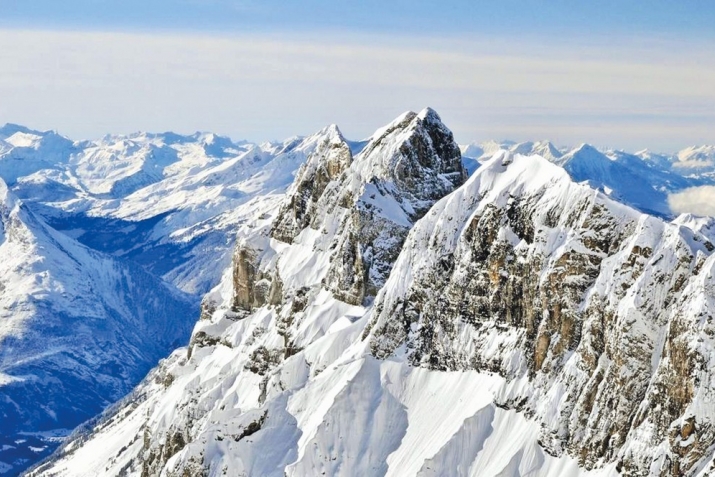
It has been proven that mountains have deep roots underground, and these roots can exceed their height above the earth’s surface several times. Agree that the most appropriate word to describe mountains based on this information is “peg”.
And here is the description of mountains in the Koran (meaning), “Have We not smoothed out the earth (like a bed), and (made) the mountains as (its) pegs?” (Sura An-Naba, ayah 6-7). As is known, the theory of mountains having deep roots was presented in science only in the second half of the 19th century. The modern theory of plate tectonics also believes that mountains play an important role in the formation of the earth’s crust, stabilising tectonic processes and preventing earthquakes.
Almighty Allah says in the Koran (meaning), “He has placed into the earth firm mountains, so it does not shake with you, as well as rivers and pathways so you may find your way.” (Sura An-Nahl, ayah 15). This knowledge about the role of mountains as stabilisers for the earth became available to people only in the late 1960s. Could anyone at the time of the Prophet Muhammad ﷺ know the true size of mountains? Could anyone imagine that a solid, massive mountain actually extends deep into the earth and has roots, as scientists say? And now modern geology has confirmed the truth of the verses of the Koran!
In this regard, an excerpt from an interview with a geologist regarding the suras of the Koran about mountains strengthening the earth’s surface is of great interest, “I believe that the knowledge contained in the Koran is extremely interesting and I believe that it is impossible for it to have been written by man. I firmly believe that whatever you say, you are telling the truth, therefore, what is said in this book (in the Koran) is of great value – I agree with you.” (Professor Syavda, a world-famous Japanese scientist specialising in the field of ocean geology).
