
Historic mosques in Medina add to the Islamic glory of the city
Historic mosques in Medina add to the Islamic glory of the city
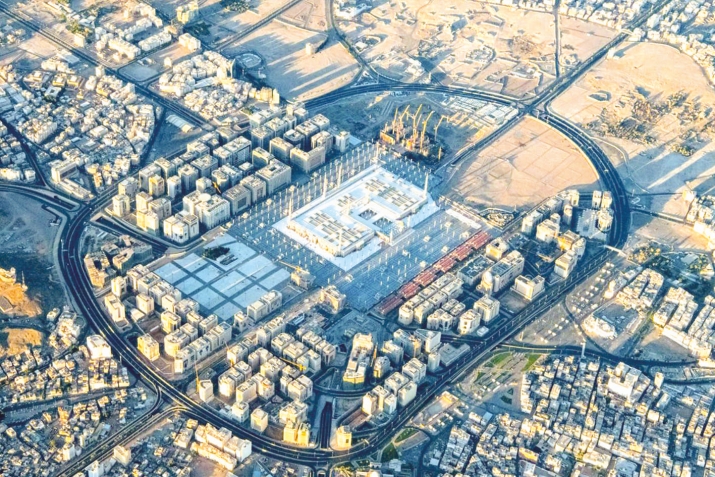
Al-Madinah Al-Munawwara is a place of historic and spiritual density. The landmarks that mark this landscape are so numerous, they can hardly be mentioned. Yet each and every mosque and area of this holy sanctuary symbolises an event in Islamic history that is too significant to let pass.
Besides the Mosque of the Prophet, initially built by the Prophet Muhammad (peace and blessings be upon him) himself and one of the largest mosques in the world with a capacity of up to 1 million people during the Hajj season, there are over 30 mosques where the Prophet Muhammad (peace and blessings be upon him) and his companions, prayed in Medina.
The Masjid Al-Juma is where the Prophet (peace and blessings be upon him) prayed his first Friday congregational namaz after he left Quba village for Medina.
It was also known as the Bani Salim Mosque and the Wadi Mosque, as the area was part of the Wadi Al-Ranouna. Another name for the same mosque is Atikah Mosque.
Of strong significance is the Al-Qiblatain Mosque, which stands in the village of Bani Salma. Traditions hold that it is from this mosque that the Prophet Muhammad (peace and blessings be upon him) was ordered to turn to the Kaaba as the direction for prayers.
The word “Qiblatain” means two prayer directions. It was in this mosque that the Prophet (peace and blessings be upon him) and his followers, who initially prayed facing the “Beit Al-Maqdis” in Jerusalem, changed their direction in the midst of their prayer to the Kaaba following the revelation of a verse.
Masjid Al-Fatah is one of the group of mosques known as “the Seven Mosques” which include the Salman Al-Farsi, Abu Bakr Al-Siddiq, Umar bin Khattab, Ali bin Abi Talib and Saad bin Muadh Mosques.
Another ancient mosque is the Sajdah (Prostration) Mosque. It was where the Prophet (peace and blessings be upon him) made a lengthy prostration of thanks.
The Al-Suqya Mosque is close to an ancient well and now within the walls of an abandoned railway station.
The Al-Sheikhain Mosque is located on the road between Medina and Uhud Mountain and its historical importance lies in the fact that Muslim soldiers camped the night there before the Battle of Uhud took place against Abu Sufyan’s Makkan forces.
Another famous ancient mosque is Masjid Al-Ijabah or Banu Muawiyah situated north of the Al-Baqi graveyard.
The Dhul Hulaifah Mosque, where the Prophet (peace and blessings be upon him) sat under a tree, carries other names such as Masjid Al-Shajarah, Masjid Al-Ihram, and Masjid Abyar Ali.
Islam Muslimov, As-Salam correspondent
Source: Agencies