
Better to give
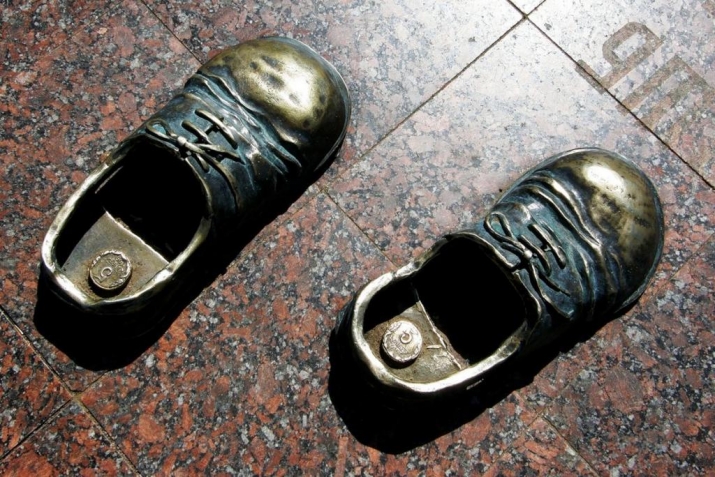
A young man, a student in one of the universities, was one day taking a walk with a professor, who was commonly called the student’s friend because of his kindness to those who waited on his instructions.
As they went along, they saw lying in the path a pair of old shoes, which they supposed belonged to a poor man who was employed in a field close by and who had nearly finished his day’s work. The student turned to the professor, saying: “Let us play the man a trick: we will hide his shoes, and conceal ourselves behind those bushes and wait to see his perplexity when he cannot find them.”
“My young friend,” answered the professor, “we should never amuse ourselves at the expense of the poor. But you are rich and may give yourself a much greater pleasure by means of this poor man. Put a coin in each shoe and then we will hide ourselves and watch how this affects him.”
The student did so and they both placed themselves behind the bushes close by. The poor man soon finished his work and came across the field to the path where he had left his coat and shoes. While putting on his coat he slipped his foot into one of his shoes, but feeling something hard, he stooped down to feel what it was and found the coin. Astonishment and wonder were seen upon his countenance. He gazed upon the coin, turned it around, and looked at it again and again.
He then looked around him on all sides, but no person was to be seen. He now put the money into his pocket and proceeded to put on the other shoe; but his surprise was doubled on finding the other coin. His feelings overcame him; he fell upon his knees, looked up to the heavens and uttered aloud a fervent thanksgiving in which he spoke of his wife who was sick and helpless and his children without bread, which this timely bounty, from some unknown hand, would save from perishing.
The student stood there deeply affected, and his eyes filled with tears. “Now,” said the professor, “are you not much better pleased than if you had played your intended trick?” The youth replied, “You have taught me a lesson which I will never forget. I feel now the truth of those words, which I never understood before, “It is more blessed to give than to receive.”
Abdullah bin Abbas reported that the Prophet Muhammad said that encouraging good, prohibiting evil, relieving the burden of a weak person and removing an offensive thing from a path are all acceptable prayers to God. (Narrated by Ibn Majah).