
The advantages and divine grace of Mawlid
The advantages and divine grace of Mawlid
An outstanding alim, Abu Baqr Uthman ibn Muhammad al-Bakry, commented on the book “Fath ul-Mubin”: “Al-Hasan al-Basri, who is one of the known tabi’un, may Allah have mercy on him, said, “I would like to have as much gold as the size of Mount Uhud, so that I could spend it on reading the Mawlid of the Prophet Muhammad ﷺ”.
Junayd al-Baghdadi, may Allah have mercy on him, said, “Anyone who visits a place where the Mawlid of Allah’s Messenger ﷺ is read and honours him is a true believer”.
Ma’ruf al-Qarhi, may Allah have mercy on him, said, “If anyone cooking on the day of the Mawlid of Allah’s Messenger ﷺ invites brothers in faith, dresses smartly and perfumes his house, thus showing respect for the Prophet’s birthday ﷺ Allah will raise him on Judgment Day together with the Prophets, peace be upon them, and grant him the highest levels of Heaven”.
Al-Yafin al-Yamani, may Allah have mercy on him, writes similarly.
As-Sariyu as-Sakaty, may Allah have mercy on him, said that a person who visits a Mawlid of the Prophet ﷺ is truly seeking Eden, because he goes there only out of love for the Prophet of Allah ﷺ. Allah’s Messenger ﷺ said, “The one who loves me will be right next to me in Heaven”.
The imam of those who knew Allah Jalaludin as-Suyuti affirms in “Al-Wasail sharhu ash-Shamail” that angels and Allah’s mercy surround any place, house and mosque where people recite Mawlid.
Truly, I wrote this article to urge people to read the Mawlid of Allah’s Messenger ﷺ and to rejoice at his birth. This is because his arrival is a mercy and he freed people of deceit. Allah says in Quran, “And We have not sent you, [O Muhammad], except as a mercy to the worlds” (Surah Al-‘Anbya’, ayah 107). Do not pay attention to the words of people whose hearts are blind. They cannot tell the really hateful and forbidden in Islam from the desirable and permitted!
If anyone seeks for the truth about that mentioned above, let them follow the given links and read the biographies of the people mentioned. This is so that the seekers can be aware of their knowledge, authority in Sharia studies, their devotion and godliness, their care of Islamic sciences and compliance with the Sunnah of Prophet ﷺ. This is because they are leading figures in Islamic sciences and hafizes of the Quran and of the Prophet’s hadiths ﷺ.
We do not need imam Shafii or any other imam to have performed an action to validate it. It is enough that they laid down the foundations in relying on the Quran and sunna of the Prophet Muhammad ﷺ. All the innovations that rose up after their times and the times of the Prophet’s companions must be compared to the foundations which they left us. When these innovations correspond to the foundations, then are they permissible. However, if they contradict the basic principles, they are forbidden.
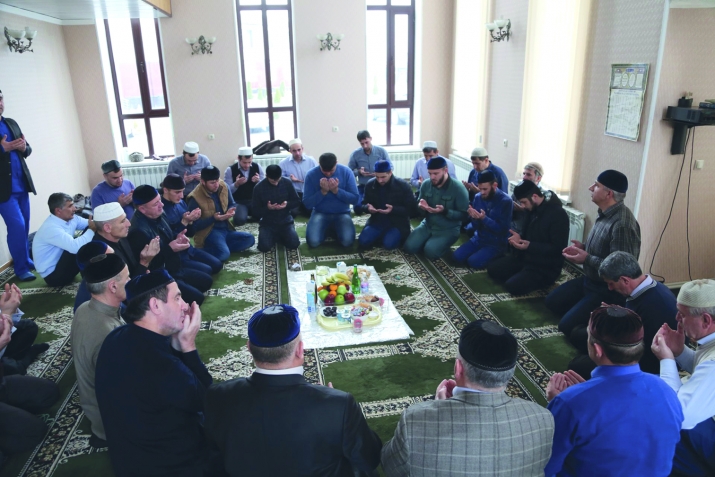
For a better understanding of this question I will give an example. Once men gathered together in a Dagestani country mosque to celebrate Mawlid. And there were some worshipers who left the place quoting the words of the Prophet ﷺ that all innovators go to hellfire. This made those who do not know much about the religious matters [except for the obligations like salah and fasting] began to hesitate. In fact, the ones who left disrupted the Muslim community of the village.
What was taking place in the mosque? At first men collectively performed the evening salah, then they pronounced three times the witness of the monotheism (shahada) and repented of the sins (tauba) saying “Astagh-firullah”. After that the believers remembered Allah by reciting dhikr “La ilaha illa Llah”. Two of them then read then a poem about the night journey (Miraj) of the Prophet ﷺ. The congregation recited the salawat of Allah’s Messenger ﷺ at the beginning and end of the meeting. The imam of the village and some especially invited theologians were present at this gathering. These ulama preached on different topics calling to the good, explaining the principles of Islam and the importance of observing them, disclosing the advantages of remembrance of Allah (dhikr) and reciting salawat of the Prophet ﷺ. Everyone said their prayers to Allah (recited du’a) and thus ended the meeting. Those who could afford to give alms did so. People called this meeting Mawlid and held it on the night of the night journey of the Prophet ﷺ.
Now let us think over all this without disputing words and names, if we have a will to discover the truth- and no matter whom are we hearing this truth from. Is there anything this community performed that could be called an innovation forbidden in Islam and which could disrupt Muslims? Does not Islam impel us to pray collectively? Does not it impel us to repent of sins (tauba), remember Allah (dhikr), praise the Prophet ﷺ? Do we not need to learn the history and events which occurred to Allah’s Messenger ﷺ? Or is there in Islam permission to for incompetent people to preach? And finally does not Islam caution against disruption of Muslims? We can list many actions approved by religion, all of them are based on the Quran and Sunna of the Prophet ﷺ. We are not going to list these actions here, because they are so common that anyone to some extent acquainted with Islam knows them.
Here arises a question - did the Prophet’s companions celebrated Mawlid the way we do today? Here is the answer – there are so many deeds they did not perform. But then the bands of Islam expanded and they saw that there appeared something that was not practiced in the times of the Prophet himself ﷺ and of his companions. They did not hasten to forbid it, but compared it to the norms of the Quran and Sunna. If they found something contradictory, they would correct it and say it was forbidden or was permissible but you must eliminate this and that. Thus imams defined different types of innovations and were able to find different solutions according to their correspondence with the principles of Islam.
Today we organize events called Mawlid to at least retell people the story of the Prophet Muhammad ﷺ and to make them think about meaning of being, repent of sins (tauba), remembrance of Allah (dhikr) etc. Were the companions and their followers in need of all this? Did anyone need these special events like our modern contests for motivating people [and especially youngsters] to learn the life of the Prophet ﷺ? Did they not know it to perfection? Their times were free of such a mass lack of knowledge of Islam and the story of the Prophet Muhammad ﷺ. They spent their time serving their Lord and studying their religion. The whole of their lives was worship.
But who are the people visiting our Mawlids? Most of them are engaged in worldly business and their attention is away from Allah. They visit mosques only on Fridays and festive days. They usually miss both the desired and obligatory deeds. The reason for this is lack of knowledge, zeal for Islam and its propaganda and imperfection of their faith, as though this was “something they should know, but not us.” It is possible to go on with the topic but everyone already knows who we are and what the times are - and that the main problem of our community is ignorance. So let us call to stay away from everything contradicting Islam. No matter at what place or time or during whatever gathering it happens – a funeral, a wedding, Mawlid etc. And let us leave as is everything that satisfies Islamic demands.
May Allah give us the proper understanding of Islam and may He grant us the Intercession (shafa’ah) of Prophet Muhammad ﷺ on the Judgment Day! Amen.