
Al-Quba: the first mosque in Islam
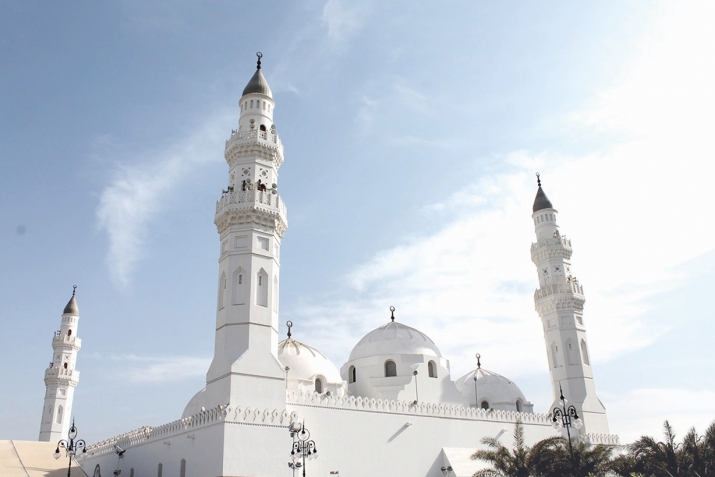
Al-Quba Mosque is the first mosque in the history of Islam. It was built by the Messenger of God ﷺ himself and his companions. They built the mosque, laying the foundation with piety and this is where the Islamic calendar began.
Quba is a place located 4-5 km south of Medina. It was here that the Prophet ﷺ stayed during the migration from Mecca to Medina in 622 according to the Gregorian calendar. Here He ﷺ spent several days waiting for several of his companions, including Ali. The Prophet ﷺ left Ali in Mecca to return the property entrusted to him for safekeeping to the people. Having distributed everything that was entrusted to the Prophet ﷺ for safekeeping, Ali joined them on the third day along with infirm Muslims (who had remained in Mecca).
Here in Quba the foundation of the first mosque was laid. The Prophet ﷺ participated in the construction of the house of Allah along with his companions.
Many commentators of the Koran claim that the 108th ayah of Sura at-Tawba was revealed in honour of the al-Quba mosque. In particular, in the tafsir al-Muntakhab it is written, “Indeed, a mosque founded on piety in the name of Allah and for the sake of His favour, like the al-Quba mosque, is more worthy for you to perform prayers (namaz) therein. In it are those who wish to purify their souls and hearts, standing for prayers and sincerely worshiping Allah. Indeed, Allah loves and rewards those who strive to come closer to Him by cleansing themselves from sins in body and soul!”
Visiting the al-Quba Mosque is a very important sunna. If possible, it is visited on Saturday, if not, then on any other day. For ziyarat, the intention is made to come closer to Allah through this ziyarat and by performing namaz there.
A hadith says, “Prayer performed in the al-Quba Mosque is equal to performing Umrah.” (Narrated by Imam At-Tirmidhi). A hadith reported by imams Al-Bukhari and Muslim says, “The Prophet ﷺ would come to the al-Quba Mosque on horseback or on foot and perform two rak’at there.” Another tradition states that “The Messenger of Allah ﷺ would come there every Saturday.” (“Izaah”, pp. 450-455).
To be continued...