

‘IT’S ARABIC’
‘IT’S ARABIC’
MUSLIN
Muslin is a lightweight cotton cloth in a plain weave that came from Mosul in Iraq, where it was first manufactured. The city gave its name to the cloth which the Italians called mussoline, and the French mousseline.
COTTON
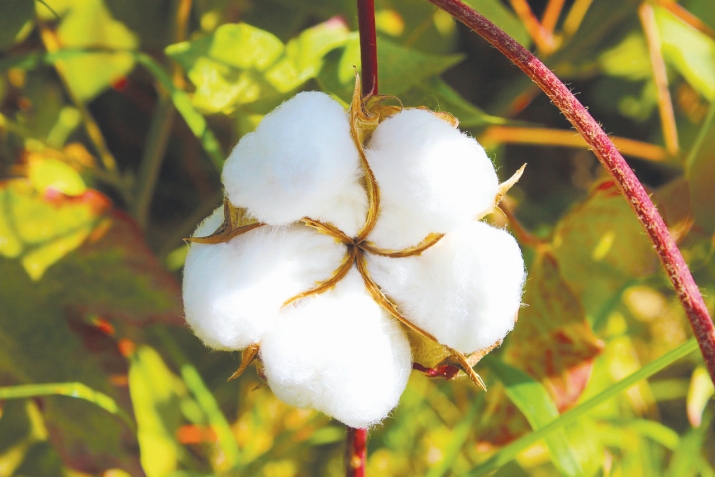
Cotton comes from the Arabic qutn, which came to the Arab world from India after Alexander the Great opened up the markets in 300 BC. When the medieval Arabs traded cotton into Europe, it was so soft it was assumed that it must be an animal product like wool.
PARROT
Parrot finds its origins in the Arabic babbagha, which arrived in Old French in the 1100s as papegai, as the ‘B’ in babbagha swapped to become ‘P’ as frequently happens (like in other Arabic origin words like apricot, calipers, julep, and syrup).
HAREM
Harem is a direct transliteration of the Arabic hareem, meaning women’s quarters in a large household, although the root is the Arabic haram meaning forbidden which indicated the fact that men were not allowed into the women’s area.
CARAT
Carat is a unit of weight for precious stones, and may well come from the Arabic world qirat, defined as the weight of one twenth-fourth of a medieval Arab gold dinar, or the weight of four barley seeds. But the Arabic word seems to have its origin in the Greek keration which may also be an origin for the English carat.
SAFARI
Safari is a Kiswahili word to describe a trip into the wilds of Africa to watch (or hunt) animals, which started in the 1800s in Kenya. The Swahili took the word directly from the Arabic safra, to travel, and is one of many Arabic words used in East Africa.
GHOUL
Ghoul is a terrible ghost, which comes from the Arabic ghool, and first appeared in Europe in 1712 in a French translation of the Arabian Nights. By the 1800s ghouls were frequently popping up in English translations of Arabian Nights, and became part of the language.
CANDY
Candy is a general word for any sweet, but it only arrived in English in 1600s, from the Arabic qand, meaning a hard crystalised mass of sugar, which in turn came from Persian, and in its turn from Sanskrit since cane sugar was developed in India.
GIBRALTAR
Gibraltar is an Arabic name, Jabal Tariq, meaning Mountain of Tariq, after the famous Omayyad general, Tariq Bin Ziad, who led the first Islamic conquest of Spain in 711. Until the Arabs got there, Gibraltar was known as Mons Calpe, one the Pillars of Hercules.
MAGAZINE
Magazine is a military store, and it comes from the Arabic makhazin, based on khazan (meaning to store) with the ma- prefix indicating a noun of place. It was first recorded in Marseilles in 1228 as a general store house, but English has always used it as a military store for gunpowder or bullets.
