

Reliving Ramadan traditions
Reliving Ramadan traditions
Muslims from around the world observe Ramadan in their unique ways. Every community welcomes the holy month with its distinctive traditions and practices. With the holy month coming to an end, we take a look at some interesting Ramadan customs in different parts of the world:
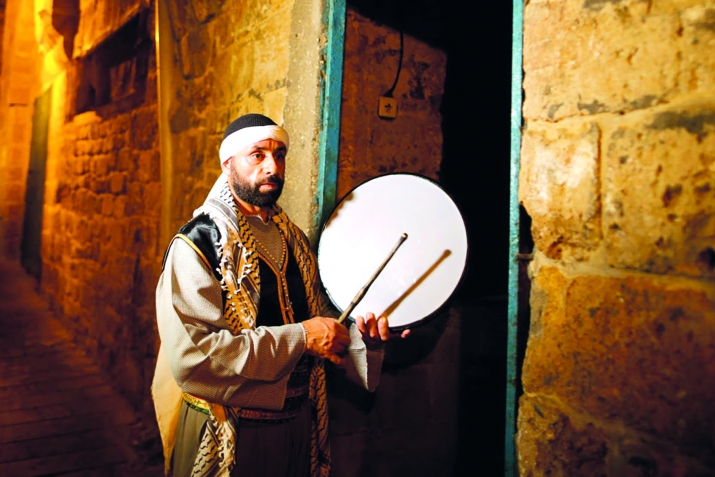
During the dawn hours in Ramadan, the Musaharati is a common sight in many parts of the Arab world, especially in Lebanon. A Musaharati is a drummer, also referred to as a dawn awakener, who beats his drum just before dawn to wake Muslims for sahoor. Thanks to the Musaharati, people are able to sleep peacefully knowing that they will not miss their sahoor meals.
The history of the Musaharati in the Hijaz dates back many centuries. It seems that his function was part of the social life in the Islamic eras, particularly during Mamluk and Ottoman times.
He has a remarkable voice that fills the air at dawn, calling people to get up, partake of sahoor, prepare for the Fajr prayer and start a fresh day of Ramadan.
Fawanees (Ramadan lanterns)
The Fawanees is mainly an Egyptian tradition, which is now practiced in other Muslim countries as well. The custom has origins in legends and ancient folklores. Many tales of the origins of the lanterns have been narrated.
One story articulates that the Fatimid Caliph Al Hakim Bi Amr Allah wanted to illuminate the streets of Cairo during the magnificent Ramadan nights. So, he ordered all mosque imams to hang lanterns from the minarets of every mosque at iftar as an indication to Muslims to break their fasts and to brighten up the streets. Since that day, the Fawanees have become a regular custom.
Ramadan cannon
The firing of a cannon is a beloved Ramadan tradition carried out yearly in Mecca. The cannon is located on a mountain during the month of Ramadan. A canon ball is shot alerting Muslims at dawn to observe the fast and at nightfall to break their fast.
The origins go back to the 15th century. One story traces the custom to the Hijri year 859 (around 1455), when a Mamluk sultan of Egypt wanted to test a new cannon that he had just received. He fired a ball that exactly coincided with Maghreb time during Ramadan. People then thought this was the sultan’s way of telling them it was time to break their fast.
Egg fights
In Afghanistan, the arrival of Eid is rejoiced in a rather distinctive way. Muslim men and boys gather in parks on the last day of Ramadan and indulge in the game of egg fights, where each participant tries to crack other members’ hard-boiled eggs. In recent times, egg-fights have become less popular than they once were.
Source: Agencies
