

Lisbon’s Muslim traces
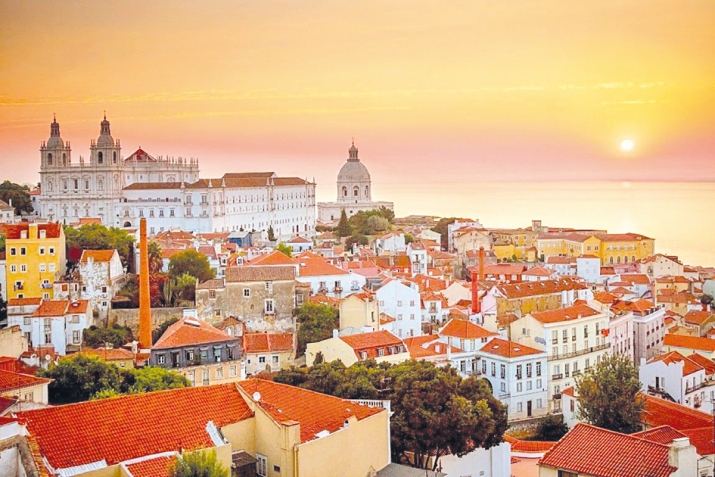
When we think of Lisbon, Portugal’s capital city, brightly coloured trams, fado, pastel de nata, and ancient cathedrals immediately come to our mind.
But few people know that long before that, for almost 450 years, Lisbon was a Muslim city. In the Middle Ages, it was called al-Ushbuna, and it was an important centre of Islamic culture in al-Andalus (Spain).
Alfama: from a hot spring to soulful streets
The Moors fortified the city by expanding the ancient Roman walls, fragments of which can still be found among the alleys of Old Lisbon. The settlement then occupied only one hill where a thermal spring flowed. It was called al-Hamma, hence the name Alfama. Today, it is the most authentic neighborhood of the city: conversations still emanate from its windows and its winding streets seem to evoke a time gone by.
Mouraria: a new home in an old place
After the capture of Lisbon in 1147 by Christians led by Afonso Henriques, a cathedral was built on the site of the main mosque and Muslims were ordered to move outside the city walls. This new neighborhood was named Mouraria, “land of the Moors”, and, surprisingly, this name has remained to this day!
Today, life is very busy here: the main street, Rua do Benformoso, is lined with Bangladeshi eateries, hairdressers and shops selling aromatic spices. And, as a symbol of return, a mosque will soon be built here again. You will agree, that there is something touching about the fact that after centuries, the neighbourhood is once again becoming home to Muslims, albeit in a new guise.
Moors, salad, and nicknames
Although only the ruins of the old wall and the Castle of São Jorge remain from the Moorish past, the Islamic cultural imprint runs much deeper. Almost 14% of the Portuguese population has North African roots and Portuguese contains hundreds of words of Arabic origin. And one more detail: Lisbon residents are still jokingly called alfasinhas – “little salads”. This is said to be due to the abundance of greens grown outside the city walls during the reign of al-Ushbuna. Incidentally, in Porto, they were even nicknamed “Moors”!
