

Virtues of the Righteous
Verily, one of the greatest ways to improve and purify the nafs is to have control over what the nafs says and orders its owner to do. Thus - if you have authorised someone to represent you who is capable of self-discipline, you will not check up on him. But, if he is one who is not able to control himself, then you will admonish him. And so it is with your deeds, which should be dedicated only to Almighty Allah. When you execute some action or other, you must not think that the Almighty will not inquire about it.
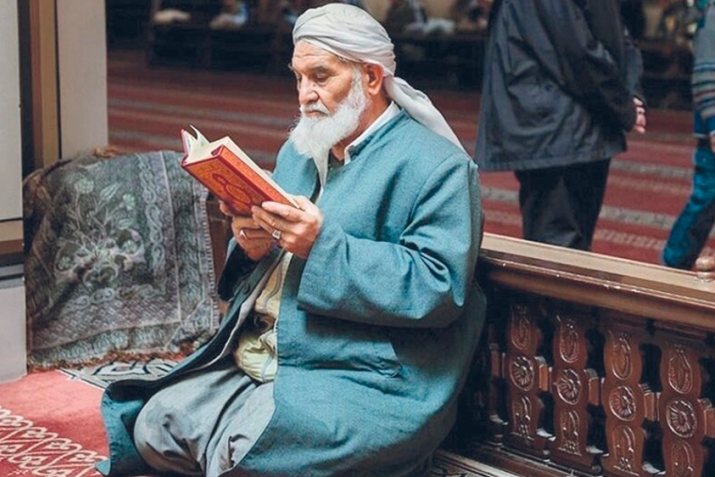
Self-control
Such a method of self-discipline was a tradition of great persons who achieved a level of knowledge of Allah. Sheikh Makinuddin al-Asmar [quddisa sirruhu], who was one of the seven budala [1] (one of the great righteous ones), said, “At the beginning of my journey I worked as a tailor. At that time I started to count how many words I uttered in the course of a day. When night fell, I analysed them and found my speech to be not so very verbose. For the good words I rendered thanks to Allah and praised him. And for the remainder I offered repentance to Allah and asked for his forgiveness.” He did this until he became one of the budala.
Abu Hafs al-Haddad an-Nisaburi [quddisa sirruhu] said that, “the nafs of man is absolute darkness. And the lamp of his nafs is his secret (sirr).” By the words “the lamp of his nafs is his secret (sirr)”, the scholar implies the secret which is between a slave and Almighty Allah. And this secret is the seat of his sincerity, thanks to which a slave recognizes and realizes that all that happens does not occur by itself and is not implemented by himself but comes only from Almighty Allah. Thus, a slave himself disclaims having any sort of power or strength for the performance of good or the abandonment of evil. And then through the support of Allah a person is rid of the evil of his nafs [2].
This is why the sheikhs said, “He who has no secret will persist in sin.”
The most effective means of enabling the self-control of a slave is the awakening of his nafs by instructing and reminding him of his outcome, aiming to rectify it. One of the righteous, addressing his nafs said, “Oh my nafs, do you really take no notice of previous generations and the way they built and fitted out their homes and then left this world and all this behind them? And how the Almighty left their lands and buildings to their enemies? Cannot you see how people accumulate what they do not eat and how they build where they do not live and dream of that which they can never achieve? Oh my nafs, how amazing your doings are! Why do you not see these evident facts? Oh my nafs, may be you are intoxicated with love for high status in society and because of your conceit you do not understand this? Do you really not realise that the objective of ambition is solely the desire to gain the esteem of others and for them to bend their hearts to you. Even if all the people on earth would obediently bow submissively before you and obey you, do you really not comprehend that in fifty years neither you nor any who dote on you will still exist? After all, the time will come when they will not even remember you. So how, oh nafs, can you swap the eternal for that which will disappear in some fifty years?
Oh nafs, are you really not ashamed? You adorn your appearance for the sake of people but secretly act against Almighty Allah and commit sins. Woe to you! Is Allah indeed for you the most unworthy of those who look at you? [3] Woe to you, oh nafs! If only you knew that in fact you reveal yourself for what you really are, you would understand that all the troubles and misfortunes descend on one only because of one’s malignance! It is astonishing that you take enjoyment in the growth of your worldly wealth but do not grieve for the lessening of the days allotted you! What is the use of increasing wealth when your life is becoming ever shorter.
The struggle with nafs
Devotion to one’s desires and the rejection of submission to the Almighty are two qualities of nafs which impede achievement of any kind of blessing. This is precisely why the fractious nafs is so prone to anger. The best opposition to such a nafs is the acquiring of a good moral temperament that is able to tame the power of anger, extinguishing its fire with its placidity and gentleness. That is, one must break the nafs that allows us to commit sins; one must fight it. And for this it is necessary to demean the nafs through punishment and impressing on it its contemptibility, baseness and the abhorrence of its actions.
The righteous Zun-Nun al-Misri [quddisa sirruhu] said, “Spiritual perdition and the decline of people’s morals arose for six reasons: the first – weakness of resolve in committing deeds for akhirah (eternal life); second – people’s bodies have become hostages to their desires; third – they are overwhelmed by distant dreams and aspirations even though death approaches; fourth – people prefer the contentment of people to the contentment of the Creator; fifth – they pursue their passions, forgetting the Sunna (path) of their Prophet and sixth – to justify their sins, people reсall minor errors and faults of past righteous ones, forgetting the multitude of their achievements. [4]
There are many methods and ways of fighting nafs which are discussed in authentic books of the great sheikhs. So that those who strive for the satisfaction of Allah may always remember them, we provide some of their observations.
- One of those who knew Allah said, “We embraced Sufism not because of certain words and expressions but thanks to hunger, the renouncing of worldly delights, abandonment of bad habits, fulfillment of the decrees of Allah and avoidance of His prohibitions.
- Another great sage was asked, “With what shackles is it necessary to restrain one’s nafs?” He replied, “Hold it down with hunger and thirst, demean it by quenching desires and the striving for fame and greatness and break it by renouncing the attributes of the wealthy.
- It is transmitted from Abu Yazid [quddisa sirruhu]: “In a dream I saw the Lord, Famous and Great, and asked Him, “Oh, my Lord, can you show me the pathway to knowing You?” Almighty Allah replied, “Abandon your nafs and come to me.”
- One of the sheikhs said, “Our path (tarikat) is based on three rules: eat only when feeling hungry; go to sleep only when drowsy and talk only when really necessary.
- Another spiritual mentor said to his disciple. “Misfortune occurs for three reasons: a bad disposition, the relentless following of fashions and bad associates.” The student asked, “What does a bad disposition mean?” The mentor replied, “This is the consumption of that which is haram (forbidden).” The student then asked, “What does the relentless following of fashions mean?” The mentor replied, “That is gazing on that which is haram, the enjoyment of that which is forbidden and a propensity to profanity (hul).” The student asked again, “And what does bad association mean?” To that the mentor replied, “That is the pursuit of desires every time they kindle in the soul.”
- One of the famous theological scholars said, “It is our obligation not to retaliate against those who have upset us, but rather to ask forgiveness and apologise to them while at the same time showing modesty and simplicity. In order to cleanse the heart of enmity for someone, you see, it is necessary to show goodness to him.” Thus, for he who cherishes his nafs, religion is contemptible. But, on the contrary, for he who cherishes his religion, his nafs is contemptible. Ordinary people try to improve their deeds but the chosen ones instead try to purify their spiritual qualities (ahval). To endure hunger and night vigil in the worship of Allah is easily done. But to heal one’s morals and cleanse them of pernicious habits, that is very arduous.
- One of the categories of close servants of Allah, who completely forsook worldly pleasures. There are a strictly specific number of them on earth.
- The nafs of a slave is absolute darkness. His lamp is the secret that exists between a slave and his Lord when the slave does not perceive any strength or power in himself and acknowledges his sinfulness and weakness. After his acknowledging this to Almighty Allah in secret he receives the support of Almighty Allah which (also) protects him from the evil of his ego. All is based on that secret in which a slave acknowledges to his Lord his frailness and then on the support which Allah shows the slave.
- That is to say, you put in order that which people look upon but that which Allah looks at – your inner world – you leave mired in sins.
- Thus, for example, they justified themselves by using the disagreement which occurred between Ali and Muawiyah (may Allah be pleased with them), distorting facts while disregarding their wonderful virtues and meritorious qualities.
