
Escape from silence
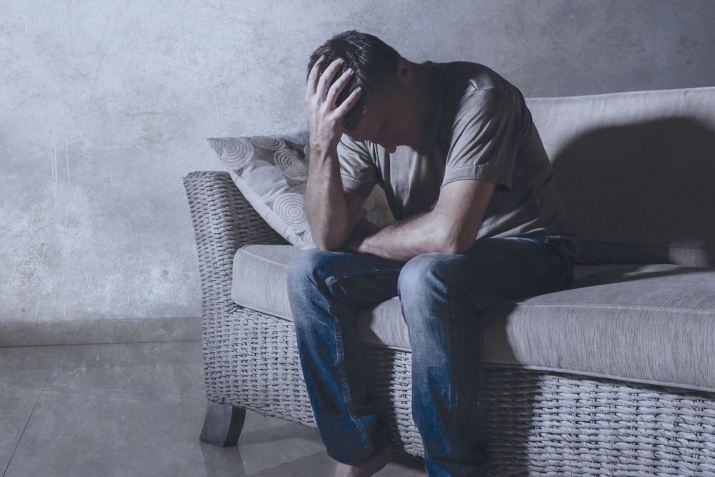
Why when we alone, we immediately reach for our phones, turn on a series, or other stuff, or do anything to avoid encountering our own thoughts? What are we so afraid of hearing in that silence, and how can we learn to bear it in order to finally hear our true selves?
This is not just a habit or simple boredom. It is a deep, almost primal reflex: to plug the inner void with external clamor. Because when all sounds fade, when the background music of daily life comes to an end, the moment of encounter arrives. And this encounter is with everything we have diligently pushed away from ourselves throughout the day, the week, our lives. Silence lays things bare. It is like an empty room where all the creaks of the floorboards, all the whispers behind closed doors, suddenly become audible. But instead of floorboards, there are our unresolved questions, and instead of whispers, there is the voice of the inner judge who has been sitting quietly until now because we have been feeding it with our busyness.
External noise is the perfect buffer between us and our own depth. It creates the illusion of dialogue, movement, life. But that is life on the surface. The deeper currents, the ones that define our true state, remain in the shadows. And when we drown out the silence, we are essentially telling ourselves: “I am not ready to hear this. I am not ready to meet what is there.” And there could be anything: accumulated fatigue we have been denying because we “had to work”. Quiet shame over some long-ago action or, conversely, over inaction. There is a vague feeling that we are living not our own life, but someone else’s script or we simply experience a frightening emptiness that we mistake for our own inadequacy, not understanding that it is merely unfilled space, not a verdict.
We are afraid that silence has something in store for us. That it may force us to acknowledge what we do not want to acknowledge. That it will turn out to be a judge, not a friend. And this is a fundamental misconception. Because silence does not judge. It simply exists. We are the ones projecting our own inner court, our fears, our expectations onto it. Silence is just a mirror. And we are afraid not of it, but of our own reflection in it. Of seeing ourselves without embellishment, without social masks, without today’s list of achievements, or simply seeing there just an ordinary person: vulnerable, tired, sometimes lost, but alive.
Yet it is precisely here that liberation lies. Because as long as we run, this judge, these fears remain indistinct and, therefore, all-powerful shadows. They rule the roost because we refuse to look at them in the light. To let silence in means to bring these shadows into the light. Not to immediately fight them, but simply to see: ah, so this is what you look like. It turned out that you are not such a monster after all. It is simply a part of me that is also afraid of something, also tired, also in need not of condemnation, but of attention.
Learning to bear silence does not mean heroically forcing yourself to sit in complete muteness for half an hour. It means to start with something small. With a conscious pause. With one deep minute a day when you turn everything off and simply listen: to your breath, the beating of your own heart, the noise outside the window. And when a swarm of thoughts inevitably floods your mind, do not immediately grab your phone, just note to yourself: “Yes, it is the thoughts. They exist.” And return to your breath. This is training of presence. You are not trying to conquer or fill the silence. You are simply allowing it to be. And allowing yourself to be within it.
Gradually, very slowly, something beyond fear begins to emerge in this silence. At first – just a sense of space, and then – lightness. Then clarity may come, an insight you vainly tried to find in a thousand pieces of external advice. And most importantly, in the depths of this silence, you begin to discern not the voice of the critic, but another, quieter, deeper voice, the voice of your own intuition. It is your very “true self” that knows the answers but was always drowned out by the louder, imposed voices of the world. It is you who speaks not with the words “must” and “should”, but with a quiet feeling of “this is mine”, “here is the truth”, “this will be right”.
This voice does not shout. It whispers. And it can only be heard in silence. When the escape stops, the return begins. A return to yourself. To whom you are when no one is evaluating you, including yourself. To the one who simply lives, breathes, and feels. And at this point you meet not emptiness and not a judge, but a home. The very one you have been escaping from all this time.