

TREASURY OF BLESSED KNOWLEDGE
TREASURY OF BLESSED KNOWLEDGE
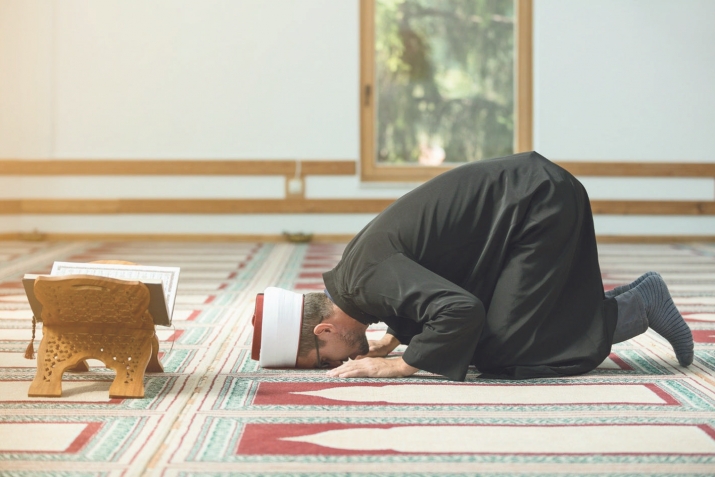
Worldly blessings diminish when you share them with others, but Allah's mercy does not diminish. If we take a bag of ten fragrant apples and distribute them to ten people, then each will get an apple. If we let a million people taste the flavor of the same apples, then it will no be less, and the resulting effect will be that everyone will be equal and no one will be deprived. Not taking a fee for reading the Quran is a very sincere quality and according to the opinion of Imam Abu Hanifa [1], taking a fee is forbidden. However, it is still permissible. The admissibility is determined on an individual basis.
The gist of the above explanation is that for both the living and the dead, a person can be hired to read the Quran for a fee. In this case, both the one who reads and the one for whom he reads will receive a reward, especially if the reader needs this payment and is unable to support his family otherwise or intends to spend the received payment on good deeds. However, if there is a goal of profit in the intention, then it is forbidden to charge a fee for reading the Quran. The meaning of the sacred hadith, which says that one person cannot pray and fast for another, is that if someone prays for another, this will not compensate for an obligatory prayer that was missed. But this does not mean that the reward for perfect prayer, fasting, large or small pilgrimage and alms cannot be transferred to another person and that he will not receive what was transferred to him. In general, according to the people of the Sunna, the reward for a good deed, starting from any ordinary good deed and ending with prayer or fasting, can be transferred to another, whether deceased or alive, and they will receive a reward for this.
The meaning of the Arabic text quoted here is as follows. Imam Ahmad [2] and Imam al-Nawawi [3] are allowed to read the Quran at the grave. Also the famous Imam-qadi Hussein says that the Quran can be read over the grave of a deceased for a fee. There are some things that were inadmissible at the dawning of Islam but which later scholars from subsequent generations (muta'ahhirun), depending on the conditions and dictates of the time, declared to be permissible. These include, for example: permission for theologians to visit chiefs and officials, go to other villages in search of food, charge fees for teaching religious sciences and the Quran, for work as an imam [4] and as a muezzin [5] and greet in a Muslim way those who gather in places where the unlawful occurs (ma'siya).
And there is a reason for this. For example, if there is no Muslim budget or treasury (bayt ul-mal), then from what then will salaries to muezzins, imams and teachers be paid? And it is forbidden not to pay for labour according to Islam. If you do not greet those who engage in the unlawful, then dislike and discord between people could arise. In general, prohibitions, such as those listed above, which may lead to a worsening of the situation in Islam, are being lifted. These days, especially, there are many such omissions that have to be corrected. For example, a young man is going to get married and goes to the imam for the wedding (nikah). Often, young people do not only not understand the meaning of the shahada but cannot even pronounce it correctly. What is the imam to do in such a case? Send the groom away without performing the nikah? Will this solve the problem? It would be most expedient in this case to perform the nikah in order to avoid a worst outcome.
Earlier we talked about the fact that you cannot perform a memorial prayer for a person who has introduced an unlawful innovation and that you cannot participate in his funeral and visit him in case of illness. In the struggle against unbelief and sin, the lowest degree of manifestation of faith is the disagreement of a person's heart with what is happening. We cannot do anything beyond that today. If someone voluntarily abandons prayer, then this person, according to the Sharia, must be sentenced to death. Now such times have come that even parents themselves cannot punish their children for not fulfilling the obligatory prayers. If someone starts to blame or scold them, they are ready to run off just anywhere. Eventually, things can become even more complicated than they were. May Allah ﷻ help children to listen to their parents!
Can a Muslim who is in debt for obligatory prayers perform desired ones?
For those who are in debt for obligatory prayers, desired prayers (Sunna) are subdivided into those that are allowed and those that are forbidden.
Those with debts are allowed to perform desirable prayers which are associated with a certain time, in connection with a special reason and also together with obligatory prayers, that is ratibat (Sunna prayers), which are performed before or after obligatory prayers. Prayers in connection with a specific reason are, for example, those performed in connection with an eclipse of the sun or moon or prayers with a plea for the sending down of rain. Prayers related to time are such prayers as az-zuha [6], at-tasbih [7], at-tahajjud [8] and aw-wabin [9]. All these prayers are not forbidden to be performed by those who have debts for obligatory prayers. It is especially good to perform the ratibats associated with obligatory prayers, since they cleanse one from mistakes made when they were committed. Their value is emphasized by the following words:
There are other desirable prayers in addition to those listed called sunnah-mutlak [10]. Just as a person can pray during the day, he can also read the Quran and perform dhikr all day. It is servitude of Allah ﷻ when a person performs prayers that are not related to any specific reason and time. But the prayers called mutlak cannot be performed by one who has debts for obligatory prayers. Instead, he should make up for missed obligatory prayers. According to the madhab of Imam ash-Shafi-i [11], no specific order is required to compensate for missed prayers. You can repay as many prayers as you like and at any time. You can also reimburse one after each obligatory prayer.
Try to make up for every prayer you missed, in whichever order you choose - never leave them uncompensated! May Allah ﷻ help you!
If there is a debt even for one obligatory prayer, which was missed without a valid reason justified by the Sharia, then the Almighty ﷻ justly punishes the person (‘adl) to stay in Hell for seventeen years!
A person who has appropriated even one-sixth of a dirham from someone else's property will be deprived on the Day of Judgment of the compensation for seven hundred prayers accepted by Allah ﷻ as compensation for the appropriated one. Look - beware of the misappropriation of someone else's property!
For those who have debts for obligatory prayers, instead of forbidding desirable ones, it would be better to say, “Do not seek permissible benefits more than needed to feed your family. Instead, devote your time to making up for missed prayers.”
A person who may spend a whole day in search of worldly goods and does not attach any importance to their permissibility, is unlikely to benefit from being excluded from a desired prayer which takes only two or three minutes.
_______________________________________
[1] Abu Hanifa an-Nu'man (699 – 767 CE) was a theologian, faqih, muhaddis and founder of the Hanafi madhab.
[2] Ahmad ibn Hanbal (780 – 855 CE) was a theologian, faqih and founder of the Hanbali madhab.
[3] Al-Nawawi was an outstanding scholar of hadith (muhaddith) and jurisprudence (faqih).
[4] An imam is the head of a Muslim community.
[5] A muezzin is a person who calls to prayer through the adhan.
[6] Az-zuha is a prayer of 2 to 8 raka’at, performed one and a half hours after sunrise before lunchtime.
[7] At-tasbih is a prayer of 4 raka’at, which it is desirable to perform at least once in a lifetime.
[8] At-tahajjud is a prayer of 2 raka’at or more, performed at night after sleep and before the time of the morning prayer.
[9] Aw-wabin is a prayer from 2 to 6 raka’at performed between the evening and night prayers.
[10] Mutlak is a prayer performed voluntarily at one’s discretion and at any time.
[11] Abu Abdullah Muḥammad ibn Idris Ash-Shafi'-i (767-820 CE) was a faqih, muhaddis and founder of the Shafi'i madhab.
FROM THE BOOK “TREASURY
OF BLESSED KNOWLEDGE”
BY SHEIKH SAID-AFANDI AL-CHIRKAWI
