
A teacher ahead of his time
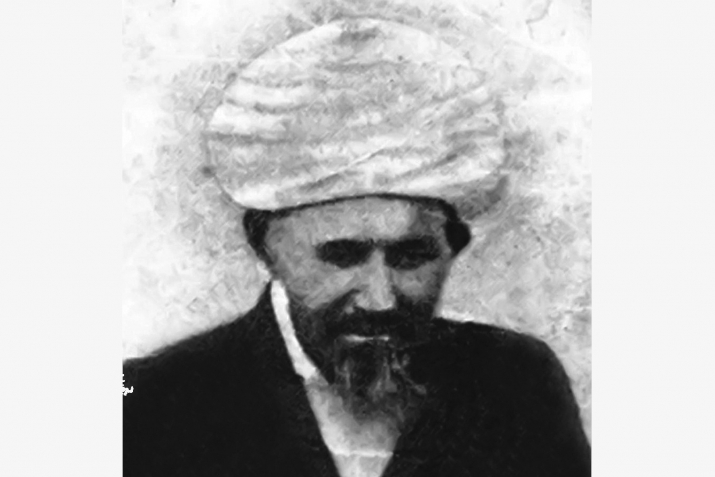
Zainullah Rasulev is an outstanding religious figure, spiritual mentor and educator. His name is firmly inscribed in the history of Islamic education in Russia. In difficult times, during a period of social change, he was able to create a system of Muslim education that combined Sharia, Sufi philosophy and secular knowledge.
One of the main achievements of Zainullah ash-Sharifi was the creation of a new type of madrasah. He paid special attention to the organization of the educational process, striving not only to convey religious knowledge but also to form a broad outlook, spiritual maturity and critical thinking in his students.
An important feature of Zainullah-ishan was that he followed the hadith of the Prophet Muhammad ﷺ: “The best of you is the one who is most useful to people.” Therefore, he taught his followers not to distance themselves from society but, on the contrary, to use their knowledge and talents for the benefit of society.
Zaynullah ash-Sharifi inspired his students to find their purpose and reveal their abilities. In his madrasah, the education system was based on the fact that along with Islamic sciences, native, Arabic, Persian, Turkish and Russian languages were studied. This gave students the opportunity to interact with representatives of other cultures and read modern works of scientists. The curriculum included mathematics, pedagogy, psychology, history, economics, as well as natural sciences such as geography, physics, chemistry, zoology, etc. Students also became familiar with the works of ancient Greek philosophers Plato and Aristotle, became acquainted with the works of al-Farabi, Avicenna, al-Ghazali, Ibn Rushd and read the poetry of Omar Khayyam, Rudaki, Firdausi, Nizami, Rumi, Saadi, Hafiz. After school hours, students organised literary and theatrical performances. One of the unique features of Zainullah-ishan’s educational system was the creation of a workshop equipped with machines, where students mastered working professions. This emphasised his belief that labour is the most important element of education. In addition, craft specialties gave graduates the opportunity to earn a living. This approach provided students with not only spiritual and intellectual but also economic self-sufficient development.
Let us note the key principles that Zainullah Rasulev followed when organizing the educational institution. They produced excellent results and contributed to the fact that its graduates became not only theologians but also scientists, writers, doctors and public figures.
Progressiveness and foresight
Zainullah ash-Sharifi understood that it was necessary to train not only experts in the Koran but also people capable of adapting to a changing world. Because of this, he introduced secular disciplines into the curriculum and introduced students to modern sciences.
Practical benefits of knowledge
Zainullah bin Habibullah believed that religion should not tear a person away from life, but, on the contrary, should help him in it. Therefore, he developed an education system where knowledge had practical value.
Synthesis of the spiritual and material
Zainullah-ishan was a supporter of the student being developed both intellectually and physically, possessing high moral standards and being able to provide for himself.
Thus, today, in the conditions of a rapidly changing and information-saturated society, the ideas of Zainullah ash-Sharifi remain relevant, as they resist destructive tendencies, preserving the spiritual meanings of traditional Islam. Using the example of the Rasuliya madrasah, Zainullah-ishan showed that religion and secular philosophy, religious and scientific worldviews can coexist and together contribute to spiritual development, help protect traditional values.
Zainullah Rasulev’s activities became the embodiment of the true feelings, thoughts and actions of a righteous Muslim, an example of philanthropy and striving for good. After exile, instead of becoming embittered or withdrawing into himself, he returned and began to work even more actively for the benefit of society. He did not just teach, but developed Muslim education and educated the population.
The example of Zainullah-ishan shows that Islam is not about becoming an ascetic or limiting oneself to laws but a harmonious combination of Sharia norms and an active contribution to society. It is this approach that reveals a person’s potential, helping him to be not just a believer but also an activist capable of changing the world.