

Healing Foods
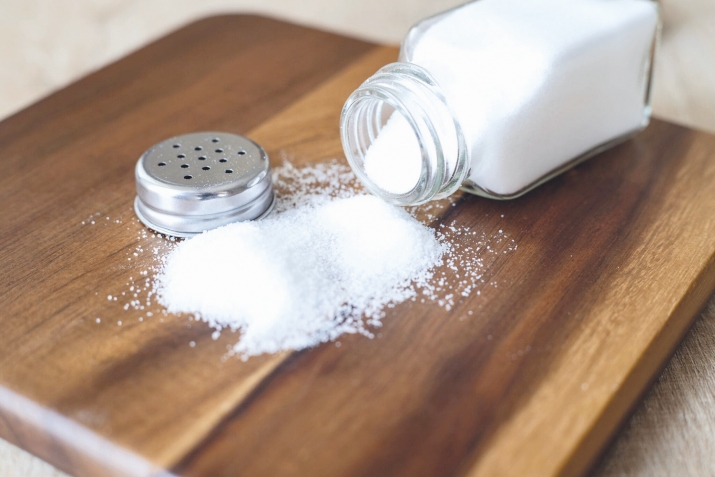
Salt has a hot and dry substance. A hadith from Anas reports that the Prophet ﷺ said, “The master of seasonings is salt.” (Narrated by Ibn Majah).
Ibn Umar reported that the Messenger of God ﷺ said, “Almighty Allah has sent down four blessings from heaven: iron, fire, water, and salt.” (Narrated by Al-Baghawi, “Ma’alimu Tanzil”).
One day, the Prophet ﷺ was bitten by a scorpion (on his big toe). He said, “Bring me something we add to liquids.” The Companions brought him salt. The Prophet ﷺ put three pinches of salt in his mouth and the same amount on the bite, after which the pain subsided.
Another version of the hadith, narrated by Ibn Abu Shaybah, states that he placed his foot in a salt-water solution and recited Suras Al-Ikhlas, Al-Falaq, and An-Nas and the pain subsided.
Salt cleanses teeth and strengthens gums, improves food, protects meat and other foods from rotting and spoilage, and cleanses and strengthens the body.
It is reported from Aisha: “Whoever consumes salt before and after any food, Allah will protect him from three hundred and thirty types of calamities, the least of which is leprosy.” (Narrated by Al-Daylami).
The book Tashilu al-Manafi states: “Up to 10 grams of salt can be consumed per day. Consuming more than this can lead to illness. If salt did not remove excess moisture, our body would perish.” The most beneficial is loose salt, not hardened like stone; this salt is suitable for adding to food and is beneficial for the body.
Drinking boiled water with salt dissolved in it removes choleric, phlegmatic, and melancholic mixtures. Salt cleanses wounds and removes harmful phlegm (fluid) from the body.
Applying olive oil with salt to joints relieves fatigue, weakness and pain. Salt can be used with black cumin and honey to treat phlegmatic diseases. For nosebleeds, placing a bag of salt on the head can be beneficial.
Muhammad Dibirov
Theologian, specialist on Islamic medicine
