

What birds can teach us?
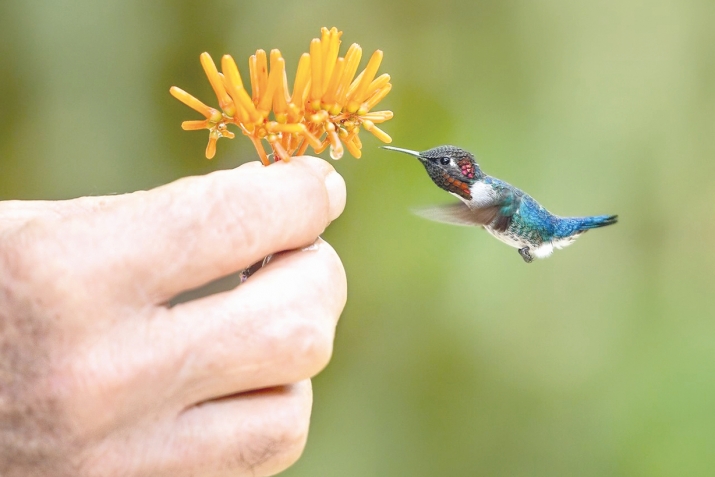
A bird represents free flight, lightness and fragility combined with incredible strength and courage, true trust and confidence in the will of the Almighty - sincerity and purity.
Spring marks at least three dates dedicated to these amazing creatures: International Bird Day falls on April 1st; May 4th is the children’s holiday “Bird Day” in the United States, concluding an educational programme dedicated to birds in the wild and their protection; and finally, the second Saturday in May (and also in mid-October, during migration periods) marks World Migratory Bird Day, the purpose of which is to draw attention to global environmental changes that are destroying bird habitats, as well as the negative impact humans have on their migration process. All of these are occasions to remind us not only of the need to protect birds and preserve their habitats, but also of what we can learn from the creations of the Almighty.
The Holy Koran (Sura Ta-Ha) quotes Prophet Musa (Moses) (interpretation of the meaning of the commentary to ayah 50), “Our Lord is He Who created all things and then guided them.” In another ayah of the Koran, the Creator says (interpretation of the meaning), “Have they not seen above them the birds, spreading their wings and folding them? Nothing holds them except the Most Merciful. Indeed, He is the All-Seeing.” (Sura Al-Mulk, ayah 19).
A bird is an expression of the Creator’s power, Who has given many birds a unique appearance, guided them (by which they orient themselves in space without error) and sustains them in the sky.
Billions of tiny, fragile, yet incredibly brave creatures fly annually in the autumn to warmer climates and return in the spring, some covering distances of 15,000–20,000 km, using the fat stored in their bodies as an energy source. They fly across seas and oceans, battling external difficulties.
The birds reach their destinations without compass, radar or astronomical equipment, guided only by divine power. Birds thus symbolise sincere humility and complete trust in the Creator, who provides sustenance to His creation. The Prophet Muhammad ﷺ said, “If you had placed your trust in Allah ﷻ properly, He would certainly have provided for you, just as He provides for the birds, who fly away in the morning with empty bellies and return (at the end of the day) with full ones.” (Narrated by At-Tirmidhi).
At the same time, birds remind us that we should not claim to rely on God’s will without putting in any effort, for even they do not sit in nests awaiting their fate but fly away in the morning and return at the end of the day.
The Messenger of God ﷺ cites birds as an example when answering the question of what the heart of a sincere believer should be like, “Those whose hearts are like the hearts of birds will enter Paradise.” (Narrated by Muslim). Birds possess inner freedom, are unattached to worldly things and rely entirely on the Creator. Their hearts are distinguished by their gentleness, incapable of anger and malice and feelings of self-interest. They treat all creations without prejudice or judgment. Without a doubt, people with a disposition similar to that of birds deserve Paradise by the grace of the Almighty.
Birds are repeatedly mentioned in the Holy Koran. In Sura Al-Ma’idah, a raven is used by the Almighty to show Qabil (Cain), the son of the Prophet Adam, how to bury his brother, whom he had killed. Ayah 31 of Sura Al-Ma’idah states (interpretation of the meaning), “And Allah sent a raven, which began to dig into the earth, to show him (Qabil) how to bury the body of his brother. [Seeing how a living raven buries a dead one,] he said, “Woe is me! Could not I have done like this raven and buried the body of my brother?!” Thus, he began to regret [having carried the body of his dead brother on his back for so long].”
Sura An-Naml tells of the Prophet Suleiman’s entire army of birds, including the hoopoe, which played a special role in guiding the Sabaean Queen Bilqis. In this context, the hoopoe’s ability to travel significant distances and deliver important messages to the Prophet of Allah himself is mentioned, as well as the Prophet Suleiman’s ability to understand the language of birds.
It was the birds that the Almighty revived at the request of the Prophet Ibrahim (Abraham), who wanted to see with his own eyes how Almighty Allah revives the dead (not because of doubts, but “so that the heart would be at peace”), as narrated in the 260th ayah of Sura Al-Baqarah (the meaning of the commentary), “… He (Allah ﷻ) commanded: ‘Take four birds, tame them [and then slaughter them, divide them into pieces] and place a piece on each mountain. Then call them, and they will immediately come to you. And know that Allah is Mighty and Wise.’”
Sura Al-Fil describes how a flock of birds, by the will of the Almighty, destroyed the army of Abraha, the ruler of Yemen, who intended to destroy the Holy Kaaba. Remarkably, the entire army of this powerful ruler was struck down by small birds, resembling sea swallows, with pebbles in their beaks and feet. This emphasizes that outward displays of power and superiority are not necessary for the fulfillment of the Creator’s plan and His punishment comes instantly. And no matter how powerful a person may be, they remain only a slave of God.
These are just a few examples of episodes related to birds mentioned in the Holy Scriptures.
Since ancient times, pigeons, with their amazing ability to return home from any distance, have been used to deliver messages. Furthermore, the art of falconry is still practiced in a number of countries (now primarily for the preservation of cultural heritage and for pest control in agriculture).
Birds have inspired inventors to develop flying machines and artists to create beautiful works of calligraphy, painting and architecture. Finally, contemplating these amazing creations of God brings joy and encourages reflection on the Almighty.
