

The divine science of Archeology
The divine science of Archeology
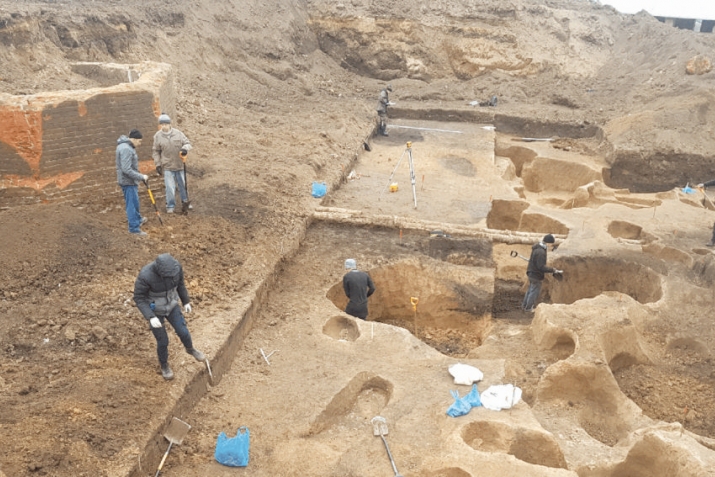
Our land is fraught with many unknowns and the amazing science of archeology helps to lift the veil of secrecy, shedding light on the great events of the past.
From the moment Adam and Eve settled on our planet, humanity inhabited different lands, cities and settlements were built and destroyed and great masterpieces of architecture were created to be later consigned to oblivion.
Archaeologists have revealed to us many secrets of the past and a huge number of historical monuments. In a number of countries August 15 is considered Archaeologist’s Day. Lovers of scientific discoveries, adventures and mysterious mysteries hidden in the depths of our planet, in the waters of the seas and oceans, in permafrost, in forests, swamps, caves and other hidden corners celebrate their professional holiday on this day.
Archaeology is a special science that helps to restore the events of the past through the study of materials and comparison of data obtained through excavations, diving under water and other modes of exploration and research
Archaeologists themselves are, for the most part, romantics, selfless and purposeful people who do not lose hope that they will be able to discover something completely unique and change ideas about the history of mankind or confirm the most incredible myths and guesses.
History knows the names of such great archaeologists as Heinrich Schliemann, who was fascinated by the works of Homer from childhood. He became an archaeologist and began searching for his childhood dream at age 46. As a result, Troy was found.
Arthur Evans, following his childhood dream of discovering legendary monuments from myths and legends, organized excavations on the island of Crete and in 1905 found the Knossos Palace of King Minos.
Hiram Bingham organized an expedition to search for ancient Incan cities. At the top of one of the Andean mountains in 1911, Hiram and his team found the famous Machu Picchu.
Howard Carter went down in history as the discoverer of Tutankhamun’s tomb.
The contribution of archaeologists is invaluable. They have made thousands and thousands of discoveries, including confirming the truth of the events described in the Koran, the Bible and the Torah.
Archaeologists have established the disappearance of many civilizations and peoples, the punishment and death of which are spoken of in the sacred scriptures.
An ancient civilization that disappeared overnight was that of the people of the prophet Lut (biblical Lot), who lived in the area of the modern Dead Sea. The punishment that befell the inhabitants of Sodom and Gomorrah is also mentioned in the Bible.
The bottom of the Dead Sea is located in a tectonic depression. Archaeologists have found that as a result of a strong earthquake in this area, the land subsided and the cities of Sodom and Gomorrah were turned upside down and buried in the bowels of the earth and this depression was filled with salty waters.
The Koran describes the history of the punishment of another very developed civilization - the ancient city of Iram, in which there lived a powerful and despotic people - the Adits. In the early 1990s, between the states of Yemen and Oman, amateur archaeologist Nicholas Clapp found this city with tall columns, buried under a twelve-metre layer of sand as a result of a severe sandstorm. The ruins of the discovered city became the main evidence that this was the capital of the people of Ad, mentioned in the Koran.
During excavations carried out in Southern Yemen, utensils were discovered that belonged to the Thamudians, another destroyed population mentioned in the Koran, to whom the prophet Salih was sent.
There are many such examples and archaeologists have yet to make many new discoveries that shed light on the life of the children of Adam and Eve on planet Earth.
Muhammad Alimchulov
As-Salam correspondent
