
Koranic and Prophetic Inimitability in Ecology
Koranic and Prophetic Inimitability in Ecology
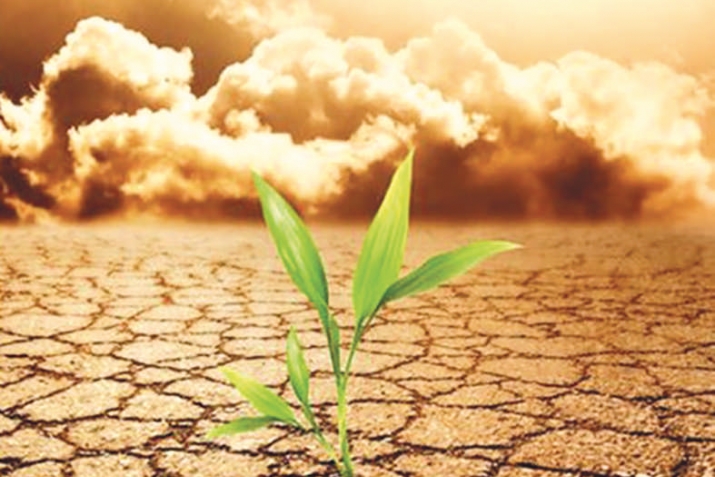
The mercy of Prophet Muhammad (peace and blessings be upon him) has included man, animals, birds, and plants in addition to the environment which is one of the divine graces that we should conserve and should not abuse. God has created and made the earth for humans to live happily on it. Thus we should not pollute, exhaust or abuse it, for this will have bad consequences. In fact, this is what is happening today with pollution, global warming, desertification, and climate change none of which was known before. God the Almighty says in the Holy Koran (meaning), “Do not mischief on the earth, after it hath been set in order, but call on Him with fear and longing (in your hearts): for the Mercy of God is (always) near to those who do good.” (Sura Al-A’raf, ayah 56)

Scientists have proven that the earth was polluted thousands of years ago and then it became viable which is in consistent with the Koranic ayah above: “…After it hath been set on order…” i.e. God the Exalted made the earth’s atmosphere pure after carbon dioxide prevailed on the earth.

Western scientists acknowledge the Prophet Muhammad (peace and blessings be upon him) as a pioneer of the environment and modern ecology because his teachings include many hadiths, sayings, which command man to preserve the environment and not to abuse the earth or overexploit it. Francesca De Chatel, a researcher, says it could be said that the Prophet Muhammad (peace and blessings be upon him) is a pioneer of environmental protection because “a closer reading of the hadith reveals that he was a staunch advocate of environmental protection and he was ‘“environmentalist avant la letter” and a pioneer of conservation, sustainable development and resource management, and one who constantly sought to maintain a harmonious balance between man and nature.” As we all know that the teachings of this merciful prophet organised people’s lives with their environment harmoniously, as the Prophet Muhammad (peace and blessings be upon him) commanded us to take care of the roads and streets because in one of his sayings, hadith, he commanded that harm should be removed from roads and considered this as an act of charity. The Prophet Muhammad (peace and blessings be upon him) said, “Removing harm form roads is an act of charity.” (Narrated by Al-Bukhari and Muslim)

In her book, “The Prophet Muhammad (peace and blessings be upon him). a Pioneer of the Environment,” Francesca De Chatel says about the Prophet: “He (peace and blessings be upon him) was a strong proponent of the sustainable use and cultivation of land and water, proper treatment of animals, plants and birds, and the equal rights of users. In this context the modernity of the Prophet’s (peace and blessings be upon him) view of the environment and the concepts he introduced to his followers is particularly striking; certain passages of the hadith could easily be mistaken for discussions about contemporary environmental issues.” It could be said that the time of the Prophet Muhammad (peace and blessings be upon him) was a time when ignorance prevailed, as people looked on animals as creatures with no value, feelings or emotions. The Prophet Muhammad (peace and blessings be upon him), however, commanded believers to take good care of creatures; he even called one of his great companions “Abu Hurairah” and hurairah in Arabic means kitten and the Prophet Muhammad (peace and blessings be upon him) called him Abu Hurairah to encourage and support him for taking care of cats and treating them kindly. Thus, Prophet Muhammad (peace and blessings be upon him) is worthy of being described as the Prophet of mercy to mankind and all creatures. God the Exalted says (meaning), “We sent thee not, but as a Mercy for all creatures.” (Sura Al-Anbya, ayah 107)

It is stated in “The Prophet Muhammad (peace and blessings be upon him) a Pioneer of the Environment” that the Prophet highly respected plants and that “the Prophet’s (peace and blessings be upon him) environmental philosophy is first of all holistic: it assumes a fundamental link and interdependency between all natural elements and bases its teachings on the premise that if man abuses or exhausts one element, the natural world as a whole will suffer direct consequences.” It further states that “the Prophet (peace and blessings be upon him) considered all of God’s creations to be equal before God and he believed animals, but also land, forests and watercourses should have rights.” The Holy Koran honoured plants centuries ago and described them as noble. God the Almighty says (meaning) “Do they not look at the earth, how many noble things of all kinds we have produced therein?” (Sura Ash-Shu’ara, ayah 7)
God the Exalted also says (meaning), “He created the heavens without any pillars that ye can see; He set on the earth mountains standing firm, lest it should shake with you, and He scattered through it beasts of all kinds. We send down rain from the sky, and produce on the earth every kind of noble creature, in pairs.” (Sura Luqman, ayah 10)
Today, scientists call on the significance of environmental conservation through taking care of the cleanliness of streets and cities, an attitude that has a positive impact on the safety of man, plants, and animals. Francesca De Chatel says that the Prophet Muhammad (peace and blessings be upon him) took care of the environment, and especially the land, for “he emphasized the sacred nature of soil as a pure entity” and in fact science has proven that soil contains antibiotics that kill germs. The Prophet Muhammad (peace and blessings be upon him) said, “The earth has been created for me as a mosque and as a means of purification.” In this hadith, there is a great prophetic indication about the purification of the earth’s soil and the necessity of its conservation because believers prostrate on it and thus it is our duty to preserve the earth and not to misuse it.