

Islamic clothing is an aspect of modesty
Fashion as we identify it today means the wearing of classy, stylish and trendy clothes, or we can say the wearing of branded and expensive clothes. Fashion is also not only restricted to clothes, but before using or buying anything like shoes, cosmetics, purses, furniture, television sets, mobile phones, computers etc., we first check whether it they are in or out of fashion.
According to the Oxford Dictionary, the word ‘fashion’ means ‘manner or way of doing something’. Actually there is no such thing as «out of fashion» because fashion is only a means of one's expression.
In every individual, a unique expression of his or her style, personality and character are reflected. Therefore, fashion is both an appearance and a sort of means of communication. However, fashion is always unique and distinctive to one and all.
First of all, there is a need to redefine the term ‘fashion’. Fashion is not restricted to any single area of life, i.e. costume or appearance, but has a very wide range in almost all fields of life, such architecture, fine art, dance, communication styles, commercial trends, management, politics, medicine, etc. Thus, we may easily say that fashion is social.
Fashion in its real meaning is not the wearing of trendy, expensive and attractive clothes. Instead fashion is a style - an appearance. So, whatever one is wearing must suit him or her. Frankly, fashion is not wearing what others wear but rather not to copy others.
However, before following or adapting any type of fashion, especially a dress code, do we ever consider this from the Islamic point of view? An important aspect of religion that must be observed is the Islamic code of clothing for both men and women. The appearance is a symbol of what one has in his or her heart.
Sadly, today’s modern society is madly and blindly running in the pursuit of fashion. In fact, we see that vulgarity has been introduced and injected into our society in the name of fashion and style.
The unique Islamic dress code is one of the many things that differentiates Muslims and non-Muslims. Islam does not restrict anyone from wearing good clothes or practicing fashion. What it restricts is the wearing of clothing that does not cover the body in a decent manner.
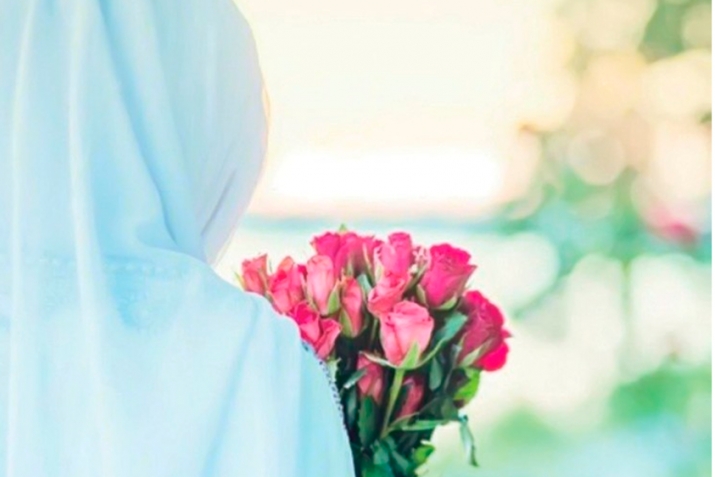
Today the veil - better known as the «hijab’ - is no longer regarded as simply a black piece of cloth used to cover the body by Muslim women across the world.
Perhaps today the majority of women reveal the neck and parts of the body: they hence fail to fulfill the essence of what it means to be veiled.
Stylish earrings popping out of the headscarf, lots of make-up, odd combinations of colours and skin-tight clothes wrapped around the body are now common among many veiled women.
The hijab or scarf is not supposed to stand out; it is supposed to be simple and plain. However, nowadays many hijabs and scarves are layered with colourful patterns and with lots of appliqued decoration to make them stylishly distinct and attractive and to match the latest fashion.
In fact the hijab itself does not mean a specific thing, although perhaps the hijab style does. Hijab is becoming no longerasignofreligiosity.Unfortunately, it has become fashionable to copy the Khaleeji hijab style, in which women layer their scarves, using hair clips to create a big camel hump in order to make themselves more attractive.
Not only has the head scarf become a fashion statement for youth, but the niqaab has too: now we hardly see women in black niqaab anymore. It has all of a sudden turned into bright pinks and blues, accompanied by smokey eye- shadow, and high heels which attract unwanted attention with the noise they make and the way they make the hips sway. Furthermore, they give the illusion of greater height than is natural to a person. All this is done just to follow or to be in fashion.
Our Prophet (peace and blessings be upon him) said, “Whoever bears arms against us is not one of us and whoever cheats us is not one of us.” (Sahih Muslim p.70 v.1).
If we consider the matter properly, we all know that such stylish, colourful and so-called trendy clothing does not in fact suit the Islamic code of dressing, but is rather a way of making one’s appearance stand out from that of others.
Islam allows fashion but within certain limits and provisions. Those women who wear transparent or tight- fitting clothes should reflect on the Prophet's (peace and blessings be upon him) remark that such women are in fact uncovered, and they will not even smell the fragrance of paradise. Even if transparent and netted scarves are worn, the display of one’s hair deliberately is not allowed in Islam.
Almighty Allah says in the Holy Koran, “O Prophet, tell your wives and your daughters and the women of the believers to bring down over themselves [part] of their outer garments. That is more suitable that they will be known and not be abused. And Allah is ever Forgiving and Merciful.” (Sura Al-Ahzab, ayat 59).
Hence our dress must cover our body properly and decently. The design of our dress must avoid three grave sins: showing off, arrogance and self- indulgence. Also clothing should not be worn for the purpose of gaining reputation or increasing one's status in society.
Ibn «Abbas said, “Eat what you like and wear what you like as but avoid two things: extravagance and arrogance.” (Narrated by Bukhari).
Islam inspires people to be proud of whom they are. Muslims should look like Muslims, and not like mere imitations of people of other faiths around them.
The Koran describes, “Oh children of Adam! We have bestowed upon you clothing to cover your private parts and as adornment. But the clothing of righteousness - that is best. That is from the signs of Allah that perhaps they will remember”. (Sura Al-A'raf , ayat 26).
Clothing worn by Muslims should be clean and decent, neither excessively fancy nor ragged. One should not dress in order to increase the admiration or sympathy of others. The overall appearance of a person should be dignified and modest.
Our clothes should cover the body adequately with dignity and good looks. They should not fail to satisfy the requirements of adequate covering of the body. Nor should they be so ugly and awkward that instead they do the opposite of enhancing beauty, but degrade a person’s appearance.
It is a personal choice to submit to Allah rather than the fashion of society. It is a choice to be beautiful in front of Allah, rather than to people. And it is a choice to cover and dignify the body Allah has blessed us with, rather than give in to a culture that shows women only as a sex object.
However, Islamic clothing is just one aspect of modesty. More significantly, one must be modest in behavior, manners, speech and appearance in public. One’s outfit is only one aspect of one’s total being and merely reflects what is existing in an individual's heart. Moreover, the hijab should not just be seen as a cloth one puts on herself. The hijab is a symbol of our worship and subjection to our God. It is a symbol of modesty that is not just about our attire; it reflects our whole way and manner of life. An additional piece of cloth will not be more favorable to Allah than what is in one's heart and mind.
Clothes should be considered a great bounty of Allah, and one should wear them properly and decently, always expressing thanks to the Almighty.
Thus we should wear clothes according to the Islamic code of dressing and to please Allah. This is a manifestation of ibadah (worship) and striving to the nearness of Allah - “And only Allah gives divine guidance and He is the True Helper.”
MARYAM HEDAYAT
