
Index

Muslim Inventions that Changed the World: Degree-Granting Universities

Early on in Islamic history, mosques doubled as schools. The same people who led prayers would teach groups of students about Islamic sciences such as Koran, Islamic jurisprudence (fiqh) and hadith. As the Muslim world grew however, there needed to be formal institutions, known as madrasas, dedicated to the education of students.
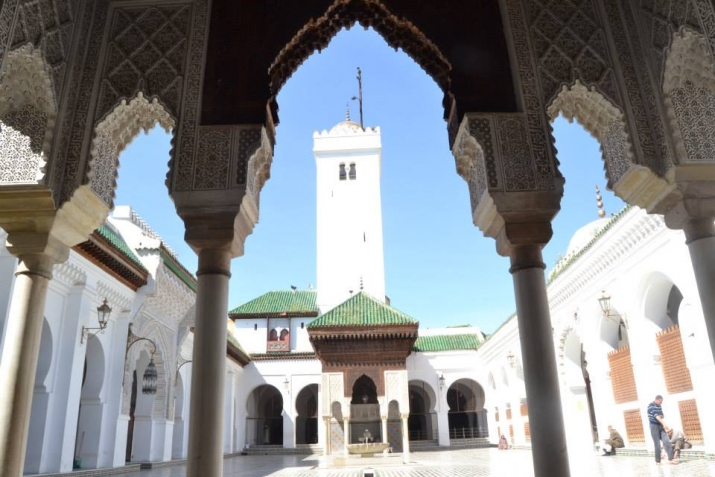
Muslim Inventions that Changed the World: Degree-Granting Universities

The first formal madrasa was al- Karaouine, founded in 859 by Fatima al-Fihri in Fes, Morocco. Her school attracted some of the leading scholars of North Africa, as well as the land’s brightest students. At al-Karaouine, students were taught by teachers for a number of years in a variety of subjects ranging from secular to religious sciences. At the end of the program, if the teachers deemed their students qualified, they would grant them a certificate known as an ijaza, which recognizes that the student understood the material and is now qualified to teach it.

These first degree-granting educational institutes quickly spread throughout the Muslim world. Al- Azhar University was founded in Cairo in 970, and in the 1000s, the Seljuks established dozens of madrasas throughout the Middle East. The concept of institutes that grant certificates of completion (degrees) spread into Europe through Muslim Spain, where European students would travel to study.

The universities of Bologna in Italy and Oxford in England were founded in the 11th and 12th centuries and continued the Muslim tradition of granting degrees to students who deserved them, and using this as a formal measure of a person’s qualifications in a particular subject.

SOURCE: AGENCIES

2026-04-01 (Shawwal 1447) №4.


Healing Foods

Salt has a hot and dry substance. A hadith from Anas reports that the Prophet ﷺ said, “The master of seasonings is salt.” (Narrated by Ibn Majah). Ibn Umar reported that the Messenger of God ﷺ said, “Almighty Allah has sent down four blessings from heaven: iron, fire, water, and...


A Persian slave who loved the Koran

“There was no one among the Companions who knew the Koran better than Abu al-‘Aliya, followed by Said ibn Jubayr.” (Narrated by Abu Bakr ibn Dawud).   Rufai ibn Mihran, who bore the kunya (nickname) of Abu al-‘Aliya, was one of the most famous and distinguished...


It is faith that changes character and attitude toward the world

From resentment to forgiveness and patience Life is full of injustice, grievances and trials. The common human reaction is anger, rancor, revenge or despondency. Islam offers a different, higher strategy, based on the concepts of sabr (patience) and ‘afw (forgiveness). Patience in Islam is...


The Islamic Agricultural Revolution

The centuries-old traditions of science and research in the Islamic world formed the foundation for our modern understanding of many fields of knowledge, including biology.   Islamic scholars developed a profound worldview based on the principles of systematic study and research, often aimed...


How to start a family reading tradition: cozy evenings with books

It is a quiet evening outside. The room is warmly lit. A cup of fragrant tea is on the table, and in their hands, a book that is about to begin a new adventure.   The children sit close, holding their breath in anticipation of the story. This is not a scene from a movie, it could be your...