
Woman’s dress drawing attention
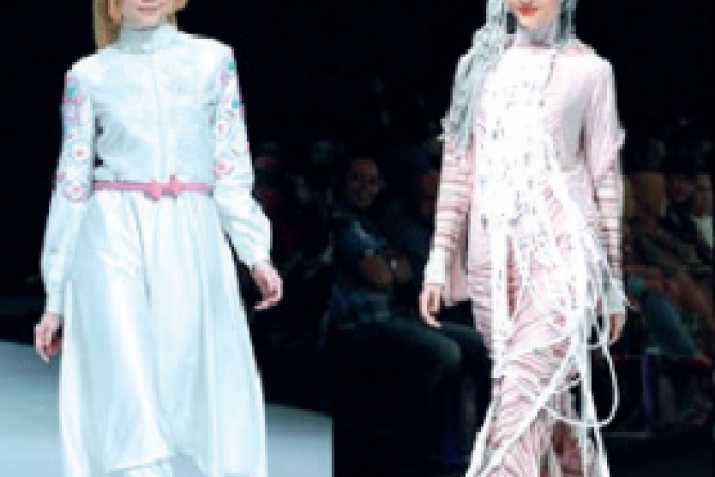
Is it permissible for a woman to leave the house, dressed up and putting on jewelry?
A woman is forbidden to go out in clothes that attract attention and looks from strangers.
These include clothing that does not completely cover or reveals a woman’s awrat, as well as clothing made of thin fabric that reveals the body’s outline and highlights its forms.
It is forbidden to wear jewelry on top of clothes thus displaying them draws attention to oneself.
Argumentation: It is transmitted that Aisha, may Allah be pleased with her, said, “My sister Asma, may Allah be pleased with her, went to the Messenger of Allah (peace and blessings be upon him) dressed in a thin robe. Allah’s Messenger (peace and blessings be upon him) turned his back on her and said,
‘O Asma, for a girl, upon reaching the age of the first menstrual cycle (menarche), it is forbidden to flaunt anything other than this’, and he pointed to the face and hands.” [1]
“It is a great sin for a woman to wear revealing thin transparent clothes that do not hide her skin colour and show off her attractiveness.”
Imam Al Zahabi says: Deeds for which a woman which deserve the curse of the Almighty include displaying jewelry of gold and precious stones from under her clothes, perfuming herself with incense such as musk when leaving the house, and also leaving the house dressed up with shiny items of gold and silver, silk pants and clothes with wide long sleeves.
All these acts are meant for adornment and dressing up for show, and a person who shows off falls under the wrath of Almighty Allah in this and the next world. [2]
References:
- Sunanu Abi Dawud, vol. 4, p. 231, No. 4104
- Ibn Hajar al Haythami, Az Zawajir, v. 1, p. 224