
Increase in head volume under the scarf
Increase in head volume under the scarf
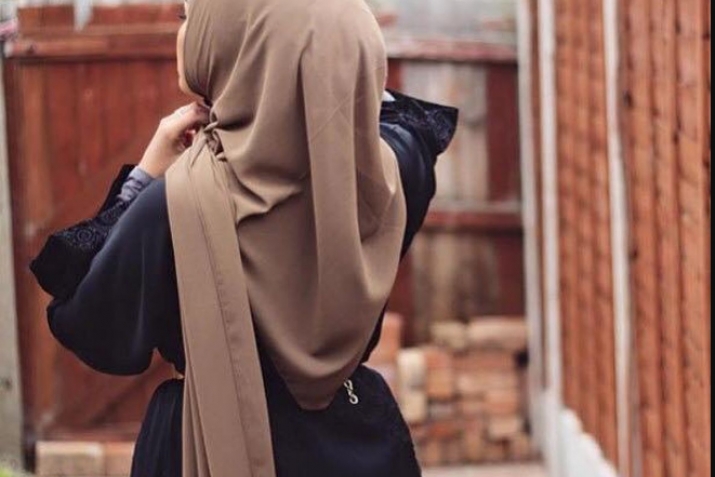
Is it permissible to collect hair under a scarf so as to increase the volume of the head?
Imam al Nawawi, in his comments on Sahih Muslim, writes, “There are two types of people from the inhabitants of the Fire, whom I have not seen (that is, they were non existent at that time). The first is people with whips like cows’ tails with which they beat people. The second is women who are dressed and at the same time naked, leaning and bending over others. Their heads are like hanging camel humps. They will not enter Paradise and feel its scent, although it extends to a distance.”
This hadith is a Mu’jizat (miracle) of the Prophet (peace and blessings be upon him), as he himself did not see these people but they appeared later and now exist.”
Here, according to one of the versions of the scholars, the words “dressed and at the same time naked” refer to women covering only part of the body and baring the other. According to another version, they wear thin, translucent clothes, through which one can distinguish skin color.
According to one of the versions, the word “leaning” means women who brush themselves so that their hair, pulled and whipped at the crown, rolls over from side to side, like those of loose women. The word “bending” refers to women who make such a hairstyle for others.
“the meaning of the words ‘their heads are like camel humps’ is that they will increase the (volume) of the head by wrapping a turban or another material around it, etc.” [1]
Ibn Hajar al Asqalani in his book “Fath al Bari” writes, “They compared their heads with camel humps, because women gather their hair at the top for beauty and showing off.” [2]
Ibn ‘Allian al Siddiq in his book “Dalil al Falihin” write, “The expression ‘like a camel’s hump’ implies the habit of women to collect hair at the top of the head and to curl it to give it olume so that it hang on the sides of the head, like the humps of camels.” [3]
From the foregoing it is clear that it is forbidden for women to increase the volume of the head from above by using cloth, rubber bands and even their own hair. However, it is not forbidden to increase the volume of the occipital part of the head by collecting hair there, etc.
Sources:
- [1] Sharh Sahih Muslim, Hadith No. 2128
- [2] Fath al Bari, p. 387
- [3] Dalil al Falihin, vol. 8, p. 473