
THE GREAT SHAMIL, IMAM OF DAGESTAN AND CHECHNYA, SHEIKH OF THE NAQSHBANDI TARIQAH
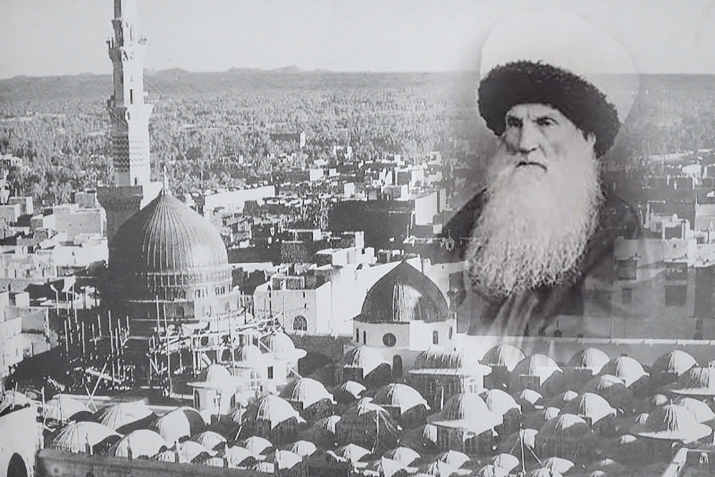
The great commander
Europeans monitored the Caucasus war campaigns. They were surprised at how it was possible that such a strong country with the Russian Tsar’s army, which had destroyed Napoleon’s army, could not win over such a small guerilla-like army. They knew that the Russian Tsar sent twice as large an army against Imam Shamil than he had sent against Napoleon himself. “There was not such a great commander as Imam Shamil in world history”, writes a famous Turkey historian Albay Yashar. He continues, “If Napoleon were a coal of the war then Imam Shamil was the fire itself.” The Russian generals gave Imam Shamil very high merits. They called him a war genius. They were surprised by his skills in battle tactics and the way he managed to win without material resources, money, lack of medicine and weapons and with a small number of people. The Tsar’s generals were surprised. For instance, the Russian army lost 33,000 soldiers in the battle for Ahulgo while Imam Shamil lost only 300 murids. There is evidence that the Russian army lost about five thousand soldiers in the Ahulgo battle in a single day. Sometimes a general returned from a battle with only two soldiers. But unfortunately there were many betrayers among the closest people whom Imam Shamil trusted. Once in despair the Imam versified Imam Shafi’I’s words:
Those who have promised to save me
Have suddenly united with my enemy,
And the arrows of those whom I trusted entirely
Turned back and finally pierced my chest.
Was Imam Shamil taken captive?
Dear brothers, The Imam was not taken captive. It could be hardly possible that Imam Shamil allowed the non-believers to imprison him. “On the mountain of Gunib, in the last hour Imam came up to each murid and asked to them to fight till the end - to a shahid’s death. But everybody refused and asked the Imam to accept the Russians’ offer to negotiate and make a peace treaty”, writes Muhammad-Tahir al-Karahi. This is exactly what we should know. The Imam was not taken captive. There are other proofs. First of all, when the Imam came out to the Tsar’s troops, he was fully armed! And we know that captives came carrying no weapon but the Imam and even his murid Yunus from Chirkey were both armed. Secondly, the Imam put forth his terms for ending fighting that were mandatory for the ending of the war. And the Russians accepted his terms and a peace treaty which went into effect.
The demands accepted by the Russians were as follows:
- Islam in Dagestan must have free development;
- It is forbidden to spread Christianity in Dagestan;
- High moral standards must be abided;
- It is forbidden to recruit mountaineers into the Russian army;
- It is forbidden to promote conflicts among the various populations of the people of Dagestan and set them against one another.
Besides these terms there were many other conditions and all of them were recognized. When the Imam was in Russia he was treated respectfully and once he said, “Thanks be to Allah who gave me the Russians to have jihad with them while I owned strength so that they could respect me when I became old and my strengt left me.” When Abdurahman Sughuri heard these words he said, “This praise for Allah (shukr) can be compared with the twenty five year-long jihad.”
The Imam in Turkey and Medina
When the Imam arrived in Turkey, he was received by Abdul-Aziz, the Turkish Sultan. The Imam rebuked him for his broken promise to provide financial aid. The Sultan replied, "Shamil! You fought with non-believers for 25 years, how did you survive? Or maybe you did not participate in the battles and sent only your murids?". Imam Shamil angrily stood up, unclothed his body and the Sultan counted above and below the waist more than 40 scars. Then Abdul-Aziz started to weep and pointed to his throne with the words that this is the place the Imam rightfully deserves.
In Turkey the Imam was asked what he most regretted. The Imam said, "My biggest regret is about those heroes who died in the mountains, each of whom was worthy of an entire army." Sheikh Badruddin-Afandi, recalling the Imam, mentioned that on having arrived in Medina he immediately visited the Mosque of the Prophet ﷺ. The people of Medina learnt about it and gathered in the Mosque of the Prophet ﷺ to meet the Imam. On meeting the crowd the Imam’s first thought was who would be the first be welcomed, i.e. these people or the Prophet ﷺ? And the Imam went first to the tomb of the Prophet ﷺ, wept and said: "Assalam `alayka, ya Rasul Allah!", and they say that the Messenger of Allah ﷺ stretched his hand out the holy grave in holy light and shook the hand of the Imam with words, “Wa `alaika assalam, ya Imam-al-mujahidin!"
During his stay in Medina, there was a direct descendant of the Prophet ﷺ, Naqib Sadat, a tariqat murshid and well-known ‘alim. He was already in his old age. He was so sick and hardly able to move that he asked his children to arrange the meeting with the Imam. At the sight of the Imam, the old man, a descendant of the Prophet ﷺ fell to his knees and kissed Imam’s feet. Shamil immediately helped him up. The old scholar told the Imam that he saw in a dream that the Prophet (sallallaahu `alaihi wasallam) said that there would be an honourable guest who should be treated with high respect (adab).
Death of the Imam
Imam Shamil passed away on the 10th of Dhul-Qadha, 1287 (Hijri calendar). Many people came for the funeral prayer (janaza). Many tried to touch the Imam and those who could not, lay on the ground hoping that the body of the Imam would be carried over them. He is buried in the Baqiya cemetery in the city of Medina.
They also say, that when the body of the Imam was laid next to the grave, it sat up, leaned over the grave and said: "Oh, my grave! Be my consolation and a paradise garden, don’t be my abyss of hell!". Seeing this, witnesses lost consciousness. He is buried next to `Abbas, uncle of the Prophet ﷺ. Ahmad Rifa`i, a great ‘alim of that time, inscribed on the tombstone, "This grave belongs to the murshid close to Allah who fought in Allah's way for 25 years, to the Imam who followed the path of truth, to the great ‘alim, the ruler of Muslims, Sheikh Shamil-Afandi from Dagestan. May Allah purify his soul and multiply his good deeds!" Many of those who previously disliked the Imam but later on seeing his honourable treatment by the Russian tsar, the Turkish sultan and the ruler of Mecca, and on learning of the sacred place where the Imam was buried, wept and made repentance [tawbah].
Sheikh Saifulla Qadi in a letter to Hassan-Afandi wrote, "You should know, my brother!... It is authentic, without doubt and without speculation, that truly Dagestan is one of the rare places on Earth where religious values have been preserved and where the source of light of Islam has remained!" He further continued that its reason lies in the baraka of both Imams Ghazi Muhammad and Shamil.
May the Almighty make them honourable inhabitants of Paradise. Oh Allah, strengthen Dagestan with the foundations of faith and piety! And do not deprive us, O Allah, of the baraka of Imam Shamil and extend the lives of our scholars! Amen!