

Pride of the ummah: Marjani
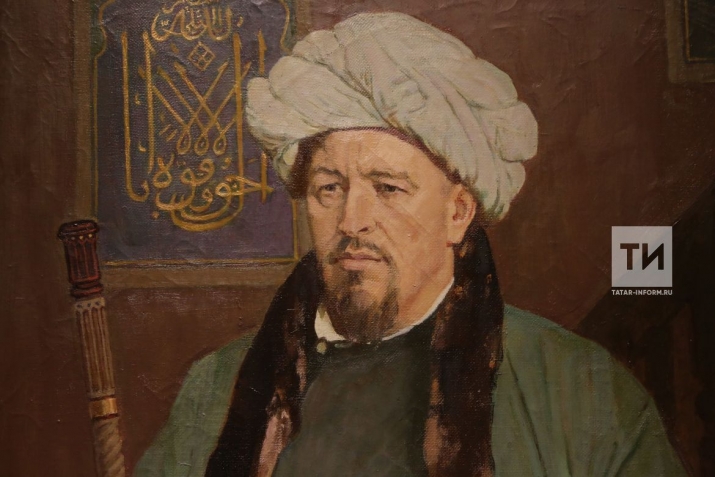
Marjani is a religious figure, an educator, a philosopher, a historian. However, the above definitions do not fully cover all aspects of his multifaceted activities. He was also an ethnographer, archeographer, orientalist and an educator. The encyclopedic nature of his knowledge can be compared with the encyclopedicism of the French enlighteners of the eighteenth century - Diderot and Rousseau.
But how was Marjani's way to recognition, the heights that allowed Gabdulla Tukai to describe him as «the champion of thought, knowledge and progress, who made the first step to enlightenment» Shihab ad-Din (Shihabuddin) b. Baha ad-Din b. Subhan b. Abd alKarim al-Mardjani was born on 16 January 1818 in the village Yabynchi of the present Atninsky district of Tatarstan.
The ancestors of Marjani from the side of the father and mother belonged to the families of famous imam-mudarris. The first insight into the history Shihabuddin received his first insight into history from his grandfather Subhan b. Abd alKarim, who spoke Arabic and Persian. Marjani's grandfather on his mother's side, Abd al-Nasir, taught him to read the Koran, Sunnah and Fiqh (Islamic law).
Mardjani's father, Baha adDin, was educated in Bukhara and one of the respected people who the Emir of Bukhara, Haydar b. Masum, invited to his majlises (meetings). With his father he studied Arabic, logic and kalam (a section of theological science).
At the age of five, Marjani lost his mother and then was raised by his stepmother in a rather harsh environment. He received his primary education in a madrasa in the village of Tashkich, where his father taught.
Young Shihabuddin did not limit himself to studying the subjects taught there but he also studied independently in the library at home. At the age of seventeen he had already begun to teach in this madrasa and, being unsatisfied with a textbook on the morphology of Persian, made up his own.
Both his grandfather and father, as educated people, possessing an extensive knowledge of eastern history, philosophy and religion, managed to instill in young Shihabuddin the desire for learning and knowledge. However, the education he received did not satisfy Marjani, who constantly strove to obtain new knowledge. In 1838, he went to Bukhara to continue his education.
In Bukhara, dissatisfied with the system of training in the madrasas, being mainly independently, he involved himself in study in local libraries rich in valuable manuscripts. He earned money by training the children of wealthy people.
Although the scholastic training in Bukhara no longer corresponded to modern societal needs and did not satisfy Marjani, his sojourn there was not without benefit for him: he met with wellknown, progressive scholars of his time (although there were not many of them) and became more and more convinced of the need to change the old system of Muslim education. In 1843, Marjani went to Samarkand - one of the ancient centres of culture in Central Asia.
There he studied at the Shirdar Madrasa and met a well-known historian, Qadi Abu Said al-Samarkandi (d.1848-49), who, according to Marjani, was the reason why he «began to be interested in historical science and began to study books of history.»

In Samarkand, already possessing certain knowledge, Marjani felt the need to better understand the views of his predecessor and compatriot, Abu Nasr al-Kursawi (1776- 1812). He had read a text of Kursawi at about the age of twenty for the first time and it had a significant influence on the formation of his scientific views; in particular, on the concept of «opening doors of ijtihad» (making one’s own judgment on social and legal issues of Muslim life in the absence of direct instructions or recommendations in the Holy Koran or the Sunna - Ed.).
If the views of Marjani were formed in Bukhara as a religious figure who did not agree with the orthodox system of instruction, then in Samarkand under the influence of Qadi Abu Said, Marjani began to engage in historical studies. In 1845 he returned to the Bukhara madrasa of Mir-Arab. It was there that Marjani began a serious study of the culture, history, philosophy of the East.
He devoted his first works to the history of the Turkic peoples of Central Asia. In 1848, after eleven years of absence and with new knowledge, Marjani returned to his homeland and in March 1850 was appointed as imam-mudaris of the 1st Kazan Mosque.
In 1867-68, the Spiritual Assembly of the Muslims of the Volga and Ural regions appointed him to the post of Akhund and Muhtasib of Kazan (one of the most honorable religious posts of the region), which was an undeniable recognition of his activity on the part of the Muslim leadership.
Marjani also had positive contacts with the official secular authorities. He fulfilled separate assignments of the Kazan provincial government and supervised the publication of the text of the Koran in the Kazan printing press (subsequently publishing a book dedicated to the history and principles of the publication of the Koran in Russia), organized the collection of money for Caucasian peoples affected by the earthquake, reported on births, marriages, deaths of Muslims for state institutions and participated in court hearings in swearing in Muslims.
Over time, the name Marjani becomes famous far beyond Kazan: in 1870 his book «Nazratul-haq», with religious and reformist ideas new for his time, was published, and brought the author wide popularity not only at home but also in the Muslim East.
He became a prominent ideologue of religious reformism, which continued and deepened the traditions of his predecessors A. Kursawi and A. Utizimyane in the new historical conditions.
Marjani's religious and reformist views included the concept of «opening the doors of ijtihad», as well as an appeal to the times of the Prophet Muhammad (Quran, Sunna, words of the mujtahids) to «purify» Islam of new «layers» as well as the reform of teaching in madrasas, he considered that referring to the times of the Prophet Muhammad was «renewal of faith.»
His «return to the past» was to «clear» Islam from later «layers», to make it accessible to be comprehended in the new socio-cultural situation that arose in the Kazan region in the second half of the 19th century. However, in the eyes of conservative religious figures such an approach was not a «return to the past.»
In «Nazratul-haqi fi fardiyatil- `isha ma lam yaghib ashshafak» (Review of the truth about the obligation of night prayer before dusk) - one of the most famous of his writings, Marjani wrote not so much to explain the deception of the clause about the insignificance of the night prayer in the Kazan area, as to present his new understanding of the basic tenets of the doctrine, reformatory in fact.
«Nazratul-haq» gained wide popularity not only in the Volga region, but also in the Near and Middle East. This work of Marjani was highly appreciated by famous Muslim scholars of India of that time, Sadiq b.
Hasan al-Kinaudji and Abd al-Hai al-Laknawi, the Syrian scholar Jamal addin ad-Dimashqi, the Tunisian scholar Sheikh Muhammad Bayram. The 1870s and 1890s were a time of Marjani's close acquaintanceship with Russian culture and the scholarsorientalists of Kazan University. Marjani knew Professor I. Gotwald, Academician V. V.
Radlov, Professor Kazembek, the first woman orientalist, O. S. Lebedeva and many other Russian scientists. Through his student H. Faizkhanov, he established cooperation with V. Velyaminov-Zernov and Sheikh At-Tantawi, both well-known St. Petersburg orientalists. Marjani was the first Muslim scholar to be elected to the Society of Archeology, History and Ethnography at Kazan University and actively participated in its activities.
To be continued…
AIDAR YUZEYEV
