
A Persian slave who loved the Koran
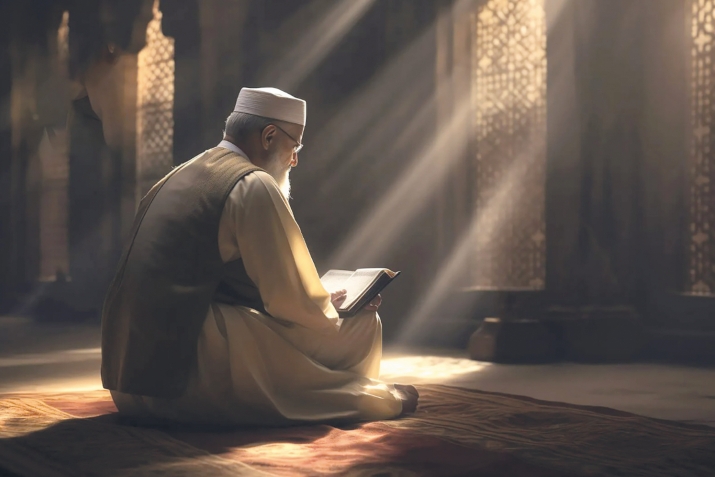
“There was no one among the Companions who knew the Koran better than Abu al-‘Aliya, followed by Said ibn Jubayr.” (Narrated by Abu Bakr ibn Dawud).
Rufai ibn Mihran, who bore the kunya (nickname) of Abu al-‘Aliya, was one of the most famous and distinguished Muslims. He was an excellent reciter of the Koran and an expert in the hadiths of the Messenger of God ﷺ.
He knew the Book of Allah ﷻ and the hadiths of His Messenger ﷺ better than many of the followers of the Companions (Tabi’een). He understood the Divine Scripture better than many, and he was able to penetrate its depths. He stood out among the rest for his exceptionally deep understanding of the meaning of the Koran’s verses.
Let us tell you about his life from the very beginning, for it is full of wonderful and amazing episodes, and many important lessons can be learned from it.
Rufai ibn Mihran was born in Persia. During the Muslim campaigns against Persian lands to guide the locals to the path of true faith, Rufai was among the young men captured. He fell into the caring hands of the Muslims and travelled with them to their blessed lands.
Very soon, he and the other captives became acquainted with the greatness and wisdom of Islam, and they had the opportunity to compare it with their idolatry. After this, they began to embrace the religion of Allah ﷻ in droves, diligently studying the Book of Allah ﷻ and the hadiths of the Messenger of God ﷺ.
Rufai himself recounted his life before and after: “I was captured by the Muslims along with several of my fellow tribesmen, and we arrived in Basra as slaves. Very soon, we came to believe in Allah ﷻ and began to memorise the Book of Allah ﷻ.
We read the entire Koran every night, but over time, this became difficult due to the work we had to do during the day and the sleepless nights. Having met several of the companions of the Messenger of God ﷺ we complained to them about the difficulty we had in reading the Koran at night. They said, “Read it completely within a week.” We followed their advice. We read the Koran part of the night and slept the rest. After this, reading the Koran at night ceased to be difficult for us.”
Rufai ibn Mihran was given to a woman from the Tamim tribe. She was a respectable and intelligent woman, very pious and deeply religious.
He ran her errands for part of the day and rested the remaining part. In his free time, he learned to read and write flawlessly and acquired some religious knowledge, all the while exemplarily respecting his mistress’s rights and fulfilling his duties to her.
One Friday, Rufai performed his ablutions in the best possible manner, after which he asked his mistress for permission to go.
She asked, “Where are you going, Rufai?”
He replied, “I want to go to the mosque.”
She asked, “Which one?”
He replied, “The one where Friday prayers are held.”
She said, “Let us go together.”
They went there together and entered the mosque along with the others entering. Rufai, however, had no idea what his mistress was about to do.
As soon as the mosque was filled and the imam had ascended the minbar, she said, “Bear witness, O Muslims, that I free this slave of mine, seeking reward from Allah ﷻ and desiring to find His forgiveness and pleasure.”
Then she looked at Rufai and said, “O Allah ﷻ! Make him my provision for the Day when wealth and children will be of no use.”
And after the prayer, Rufai went his way, and his former mistress went hers.
From then on, Rufai ibn Mihran began to frequent the mosque of the Messenger of God ﷺ in Medina. He was fortunate enough to meet Abu Bakr as-Siddiq shortly before his death. He also had the opportunity to communicate with the Commander of the Faithful, Umar ibn al-Khattab, read the Koran before him and prayed under his guidance.
Rufai, who was called Abu al-‘Aliya by his kunya, diligently studied the religion of the Most High and began to listen to hadith from those followers of the Companions of the Prophet ﷺ whom he met in Basra.
However, he soon felt he desired more. He began traveling to Medina from time to time to hear hadith from the Companions themselves, wanting to have only one person in the chain of transmission between himself and the Messenger of God ﷺ – a Companion.
He listened to hadith from Abdullah ibn Mas’ud, Ubayy ibn Ka’b, Abu Ayyub al-Ansari, Abu Hurairah, Abdullah ibn Abbas and many others.
Abu al-‘Aliya did not limit himself to listening to hadith from narrators living in the radiant city of Medina. He seized every opportunity to listen to hadith from various narrators, wherever he went. Whenever he learned of a person of knowledge, Abu al-‘Aliya would immediately travel to him, no matter how far away he lived. Upon arriving, he would first pray under that person’s guidance. If Rufai saw that the person he was visiting was not performing the prayer properly and not observing its rules, he would turn away, saying, “Truly, he who neglects the prayer is even more neglectful of everything else.” He would then pick up his staff and return to where he came from.
Abu al-‘Aliya attained such heights of knowledge that he surpassed all his peers.
One of the companions said: “I once saw Abu al-‘Aliya performing ablution, with water dripping from his face and hands, and every organ of his body shining with purity. I greeted him and said, ‘Indeed, Allah ﷻ loves those who repent and loves those who purify themselves.’ He replied, ‘My brother, those who purify themselves are not those who cleanse themselves from impurity with water. They are those who purify themselves from sins with piety.’ I reflected on what he said and realized that he was right. So, I said to him, ‘May Allah ﷻ reward you with good, and may Allah ﷻ increase your knowledge and understanding.’”
Abu al-‘Aliya encouraged people to acquire knowledge. He gave them advice and showed them the correct path to gaining knowledge. He said, “Train yourself in the pursuit of knowledge and ask questions often in order to acquire it. And know that knowledge does not bow its wings to the overly shy or the arrogant. The shy does not ask because of his shyness. And the arrogant does not ask because of his arrogance.”
Abu al-‘Aliya was not just a teacher. He was also a mentor. He filled his students’ minds with useful knowledge and nourished their hearts with good advice. He often combined knowledge and guidance.
He was not only an active scholar and not only a mentor teaching the right path. He also strove diligently in the path of Allah ﷻ and spent part of his time on the battlefields, as well as at the borders, among those who guarded the borders.
One day he visited Abdullah ibn Abbas, who was then the governor of the Muslim ruler Ali ibn Abu Talib in Basra.
Ibn Abbas received him very warmly and seated him on his right. At that time, a group of Quraysh were sitting with him and began whispering.
They said to each other: “Did you see how Ibn Abbas seated this slave next to him?!”
Ibn Abbas understood their exchange of glances and, turning to them, said, “Truly, knowledge adds honor to the noble, elevates its possessor among the people, and places slaves on the throne.”
Abu al-‘Aliya was so God-fearing and so meticulously prepared for the Day of Judgment and his meeting with God that he had already prepared a shroud for himself during his lifetime. Once a month, he would wrap himself in this shroud and then replace it.
In the month of Shawwal, 93 AH (the Muslim calendar), Abu al-‘Aliya departed this mortal world – God-fearing, convinced of the mercy of Allah ﷻ, and eager to meet His Messenger ﷺ.