
Love, honesty marked the Рrophet’s ﷺ manners
Love, honesty marked the Рrophet’s ﷺ manners
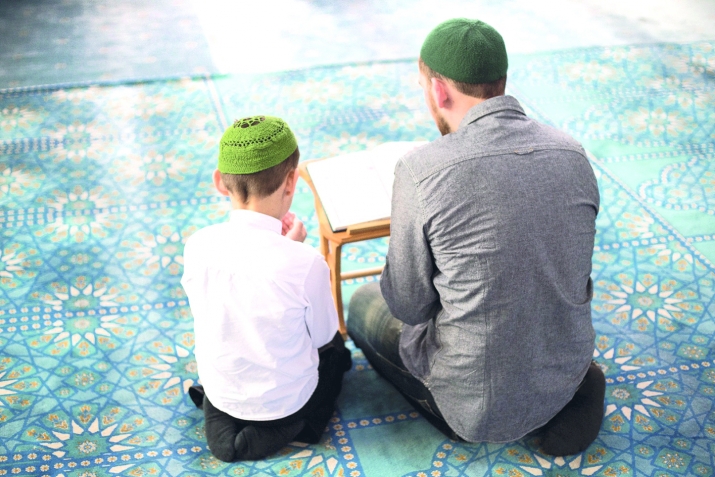
Al Hussain (may God be pleased with him) said, “I asked my father how the Prophet Muhammad (peace and blessings be upon him) behaved in sitting himself, and he said, “the Messenger of God ﷺ never got up or sat down without mentioning the name of God. He forbade designating a certain spot to a person so that he would consider it as his own. He sat wherever he found a spot. He also ordered others to do the same, when they sat down. He divided his time equally and justly among his companions who sat with him.
One who sat with the Prophet Muhammad ﷺ would think that he was the most important and beloved individual to him. If a person came asking him for a certain need, he would not rush him, rather he would allow the person to complete his request and leave of his own accord. The Prophet ﷺ would not let anyone leave empty-handed who asked for something; he would even say nice words to him if he was not able to fulfill his request. He had an open heart and an open mind. He was considered like a kind and caring father to everyone; all people were to him equal. His sittings were sittings of knowledge, perseverance, patience, modesty, and trust.
No one would raise his voice in the presence of the Messenger of God ﷺ. No one talked evil about another in his presence either. Those sitting together treated each other in a humble manner, they respected the elderly, were merciful to the young and respected the stranger.”
He said, “I asked my father how the Prophet ﷺ spent his time in his house, and how he divided his time.” His father replied, “He divided his time in to three portions: One for the sake of God, another for his family and the third he divided between himself and the people. He did not withhold any advice or guidance from any of them. He would spend the portion he allotted for his community by attending to the needs of the people according to their religious status and needs. He would busy these people by teaching them that which would benefit them and their community and by informing them of what they needed. He would say to them, ‘Let those who are present convey (what they have learned) to those who are absent, and inform me of the needs of those who cannot attend our sitting’.”
Abu Qatadah (may God be pleased with him) said, “The Messenger of God ﷺ performed prayer while he was carrying a little girl named Umaamah, daughter of Abul-Aas. When he bowed, he put her on the ground, and when he stood up, he would carry her again.” (Narrated by Al-Bukhari)
Aisha (may God be pleased with her), said, “The trait and characteristic which the Prophet ﷺ hated most was lying. A man would tell a lie in the presence of the Prophet ﷺ and he would hold it against him until he knew that he repented.” (Narrated by At-Tirmidhi)
Even his enemies attested to his truthfulness. Abu Jahl, who was of the harshest enemies, said, “O Muhammad! I do not say that you are a liar! I only deny what you brought and what you call people to.” God the Exalted, says (meaning), “We know indeed that what they say certainly, grieves you, but surely they do not call you a liar; but the unjust deny the verses of Allah.” (Sura Al-Anam, ayah 33)
The Prophet Muhammad ﷺ was well known for his honesty. The pagans of Mecca, who were openly hostile toward him, would leave their valuables with him. His honesty and loyalty were tested when the pagans of Mecca abused him and tortured his companions and drove them out of their homes. He ordered his cousin, Ali bin Abi Talib, (may God be pleased with him), to postpone his migration for three days in order to return to the people their valuables.
Another example of his honesty and loyalty is demonstrated in the Truce of Hudaybiyah, wherein he agreed to an article in the treaty which stated that any man who left the Prophet ﷺ would not be returned to him, and any man who left Mecca would be returned to them. Before the treaty was concluded a man, Abu Jandal bin Amr, had managed to escape from the pagans of Mecca and rushed to join Prophet Muhammad ﷺ. The pagans asked the Prophet ﷺ to honor his pledge and return the escapee. The Messenger of God ﷺ said, “O Abu Jandal! Be patient and ask God to grant you patience. God will surely help you and those who are persecuted and make it easy for you. We have signed an agreement with them, and we certainly do not betray or act treacherously.” (Narrated by Al-Baihaqi)
The Messenger of God ﷺ was merciful, compassionate, bashful, modest, and humble. He was so humble that, if a stranger were to enter the mosque and approach the Prophet’s sitting place and he was sitting with his companions, one would not be able to distinguish him from his companions.
The Messenger of God ﷺ hoped for goodness even for his enemies. Aisha, the mother of the believers (may God be pleased with her), said, “I asked the Messenger of God ﷺ, ‘Did you face a day harder and more intense than the Battle of Uhud?’ He replie,: I suffered a lot from your people! The worst I suffered was on the Day of Al-Aqabah when I spoke to Ali bin Abd Yaleel bin Abd Kiaal (in order to support me) but he disappointed me and left me. I left the area when still quite worried and walked. When I reached an area called Qarn-ath-Tha’alib, I raised my head to the sky and noticed a cloud that shaded me. Angel Jibril (peace be upon him) called me and said, ‘O Muhammad! God the Exalted has heard what your people have said to you, and has sent the Angel in charge of the mountains, so you can command him to do what you please.’ The Prophet ﷺ said, ‘The Angel in command of the mountains called me saying, May God exalt your mention and render you safe from every derogatory thing! O Muhammad, I will do whatever you command me to do. If you like, I can bring the Akshabain mountains together and crush them all.’ The Messenger of God ﷺ said, ‘It may be that the Almighty raises from among them a progeny who worship God alone and associates no partners with Him’.” (Narrated by Al-Bukhari)
The Prophet Muhammad ﷺ would always undertake deeds through which he would seek the pleasure of God. He was harmed and abused when he invited and called people to Islam. He was patient and endured all of this and hoped for the reward of God the Exalted. Abdullah bin Masood, (may God be pleased with him) said, “It is as though I am looking at the Prophet ﷺ talking about a Prophet who was hurt by his people. He wiped the blood from his face and said, ‘O God! Forgive my people, for they know not’!” (Narrated by Al-Bukhari)