

A day with the Prophet Muhammad ﷺ in Ramadan
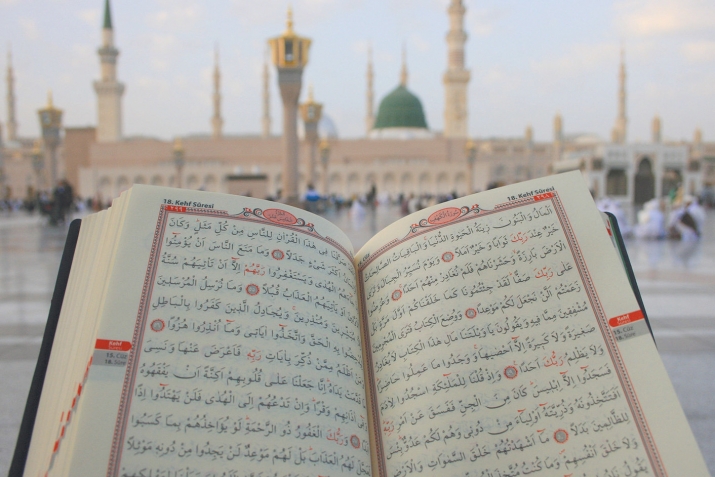
Have you ever wondered what an ideal Ramadan is like - or at least something close to it? This question is especially relevant this month.
The answer to this question can be found in one of the ayah of the Koran, which says (meaning), “And indeed, O believers, you have in the Messenger of God ﷺ an excellent example in his words and deeds.” (“Safwat al-Tafasir”, Sura Al-Ahzab, ayah 21).
The Koran teaches us that the Prophet Muhammad ﷺ and his life are a role model, a beacon illuminating our path and a guiding star leading us from darkness to light.
But how did the Prophet ﷺ fast and break his fast? How did he spend his most ordinary day in Ramadan? Let us mentally transport ourselves to the radiant Medina of 14 centuries ago and spend one day with the Prophet Muhammad ﷺ in the month of Ramadan.
The day of the Messenger of God ﷺ in Ramadan began, as it does for many of us, with suhoor (the pre-dawn meal). The Prophet ﷺ never neglected this Sunna and strongly recommended it to us: “Eat before dawn, for indeed, there is blessing in eating before dawn.” (Narrated by Al-Bukhari, Muslim).
The Prophet’s ﷺ suhoor could be quite limited and formal: a sip of water or a few dates. By this, he taught us that the important thing is the act of waking up, not turning suhoor into an ‘iftar feast’.
The Prophet ﷺ observed suhoor in the company of one of his wives or a companion. Congregational suhoor is something unaccustomed in our practice and unfortunately an almost forgotten Sunna of the Prophet ﷺ.
After Bilal called to prayer (called the adhan), the Prophet ﷺ would perform the ratibat prayer at home and only after the iqama would he come to the mosque and perform the dawn prayer in congregation.
After the prayer, the Prophet ﷺ did not leave the mosque but remained there until sunrise. He spent this entire time in remembrance of the Almighty (performing various forms of dhikr) and at about a quarter of an hour after sunrise, he would perform the zuha prayer.
Staying in the mosque from the dawn prayer until sunrise is another crucial and, in some cases, forgotten Sunna of the Prophet ﷺ. Why not revive it this Ramadan?
The Prophet ﷺ spent his daytime in Ramadan differently, depending on the circumstances. He spent this time preaching, performing dhikr, reading the Koran, meeting with various Arab delegations, visiting the sick and accompanying the deceased on their final journey. In short, he participated in the social life of Medina and was an active member of Muslim society.
Ramadan also included military campaigns. In the very first Ramadan, in the second year of the Hijra, the Prophet ﷺ took part in the Battle of Badr, and six years later, also in Ramadan, the triumphant capture of Mecca took place.
If the Prophet ﷺ was not in Medina, he would visit his wives one by one and spend time with them. Despite fasting, the Prophet ﷺ was courteous to his wives, caring for them and was friendly and cheerful.
The Prophet ﷺ spent the time before iftar in supplication and remembrance of Allah. This is a very blessed time, when the supplications of those fasting are answered. Take note.
Immediately after the time for evening prayer, the Prophet ﷺ would break his fast with one of his wives. It is important to note that the Prophet’s ﷺ Sunna is to eat immediately, even before the prayer.
The Prophet ﷺ would break his fast with fresh dates; if none were available, then with dried ones; and, if none were available, then with water. Only a very attentive reader will notice the expression: “If none were available”. How can this be?
In the house of the Messenger of God ﷺ, who could have had all the riches of the earth if he so desired, were there no dried dates? How can this be? Any of us have the choicest dates at our disposal, while Allah’s beloved broke his fast with water? Well, that is how it occurred. The Prophet Muhammad ﷺ taught detachment from worldly goods and was himself among the foremost of those who were detached. Furthermore, the Prophet ﷺ was an extremely generous man, and during the month of Ramadan, his generosity knew no bounds.
After iftar, the Prophet ﷺ would go to the mosque to perform the congregational prayer and then return home. The Prophet ﷺ spent the time before the night prayer with his family.
The Prophet ﷺ, of course, performed the night prayer in congregation with Muslims but he only performed the taraweeh prayer three times with them. A few days into Ramadan, the Prophet ﷺ stopped attending the taraweeh prayers. This was for the sake of the Ummah, for our sake. He feared that taraweeh might become an obligatory norm, placing an unbearable burden on us. But this does not mean that the Messenger of God ﷺ did not perform the taraweeh prayer at home. According to the Prophet’s ﷺ wife, Aisha, the Prophet ﷺ performed 11 raka’ahs (including the witr prayer), and these raka’ahs were long, sometimes lasting several hours.
After the night vigil, the Prophet ﷺ went to bed. The next day of Ramadan began like the previous one – with suhoor.
Thus, we have tried to spend a day with our beloved Prophet ﷺ during the month of Ramadan. I am sure each of us experienced a unique and indescribable feeling.
We felt a special closeness with the Prophet ﷺ, lived that day with him, and visited his city – the radiant Medina. Do words even need to be said after that? Keep these emotions within you. This is faith, the truest faith.
