
History Of Islam In Russia
About the good “harm” of soap
The only ulus, given by the mighty conqueror Temujin (Genghis Khan) to his sons, where its rulers declined Islam, was that of the Ugedei ulus. At the time when the ruler of the latter was the Temujin’s grandson Gadahn (Kadagan), he fell ill one day with a severe skin disease. No healers could help him, except one, a Buddhist monk, who managed to cure the mysterious illness and the thankful ruler ordered his people to practice Buddhism. The interpreters of this legend, being familiar with Mongolian life and Jasa, the code of Temujin, which strictly prohibited washing, argue that the miraculous cure was just a piece of ordinary soap. Perhaps, this is the first example of using inventions, made by Muslims (in this case soap), against Islam.
The spread of Islam in the land of Ugedei was permanently stopped. Some known facts from the history of one of its successors, the Jungar Khanate, may illustrate this fact. One who killed an animal according to the Shariat, must be executed in the same manner. Even individual tribal groups, particularly former Muslims, having come to Jungaria, had to renounce Islam. Among them was the Khotan-Kipchak group, which came to Altai from East Turkistan and maybe the Altai Naimans and Kipchaks.
The population of the western regions of the Mongol Empire (Juchi, Jagatai and Tuluy) was large and both sedentary and nomadic, with comparatively few travelers from Central Asia (later in this region we become aware of the existence of Mongolia and the surrounding areas of modern Russia and China. These comers, Mongol and Turk in origin, despite their insignificant numbers, would play a very important role: it is they who were the feudal nobility – in modern language, the generals, upper officials and the administers. Moreover, the policy of Islamisation, which Uzbek Khan led, having proclaimed Islam as the religion of his power, was especially focused on them.
What were the results? The Mongolian tribes, settled in the Juchi ulus, as we know, were, for example, the Keraits, Kongirats, Katakins, Jalairs, Mangyts and many others. It is worth mentioning the Turkic tribe of Naimans, who also came with Temujin. Most of them were Tengrians and shamanists and some (Naimans and Keraits) – Nestorians. Today the Mangyts-shamanists or Tengrians do not exist, neither among the Jalairs and Katakins. There are quite few Kongirats-Buddhists and many Kongirats-Muslims among the Kazakhs and Uzbeks. Among the Tatars they were also many but they were no longer divided by tribes. Among the Naimans there are no Nestorians – all are Muslims (the Kazakhs, Bashkirs, Tatars) and there are only few Naymans-Pagans left in Altai, due to the policy of the Jungars. All Mangyts, Tatars, Nogais, Kazakhs and Uzbeks were Muslims. (Being an ambitious tribe, they formed a substantial layer of the feudal aristocracy; This resulted in the terms “mangyts” and “the Golden Horde aristocracy” in the Tatar historical tradition: from those Mangyts came the dynasty of the Bukharan Emirs.) There is no trace of Nestorians in the modern Keraits – the Bashkirs, Nogajs and Tartars but they gave their names to the great dynasty of the Gireys of Crimea, who ruled over a vast territory from the boundaries of the Astrakhan Khanates to modern Romania.
Islamisation, declared by Uzbek Khan, influenced the indigenous nomads of the ulus – the Kipchak and Bashkir tribes, which had been long living on this land. Having begun as far back as in the pre-Mongol epoch, they emerged with new strength. In the 14th century, Husain-bek, a disciple of Sheikh Khoja Ahmad Yasawi spread Islam among the Bashkirs. Over the centuries, the tomb of Husain-bek near Ufa has been the subject of respect for this man, who brought the light of Islam to many hearts. Though certain Muslims among the Bashkirs were mentioned by Ibn Fadlan much earlier, the massive adoption of Islam by the Bashkir tribes began in the 14th century and is connected with the name of Uzbek Khan.
Islam in Siberia
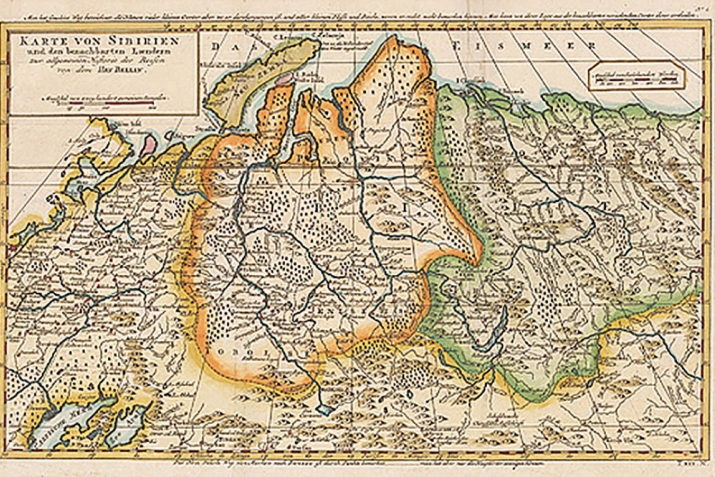
At the end of the 14th century, governors of the lands, which were later called the Siberian Khanate, invited 360 Naqshbandi sheikhs from Maverannahr (Central Asia) to explain Islam to their subjects. Not everyone in the da`wah of these sheikhs was immediately understood, some of them died while explaining Islam to people. The place of their deaths, around the aul of Astana in the South of the Tyumen region; is still revered by people. Some of the sheikhs returned to their home but the descendants of those who remained there are highly respected by Muslims in Siberia. From them originated our great compatriot, the Siberian Tatar Abdur Rashid Ibrahimov, who would spread Islam in Japan in the early 20th century and build the first mosque there. Thus, Islam started to spread over the large areas of the modern Sverdlovsk region in the West to Tomsk and the North Kemerovo region in the East, from the edge of the barren lands to the South and further into the boreal forest to the North.
The lands of Omsk and southern Tyumen were the ethnic core. With the growth of trade exchanges, in addition to the local Turkic population, Finno-Ugric peoples, the Khanty and the Mansi, were gradually involved in the orbit of Islamic civilization. Some authors state that Islam caused divisiveness between the Turks, who became Muslims and the Finno-Ugrians, who remained pagans. So how does one explain the existence of Tatar villages in Siberia of Khanty origin, which have retained their life-style and domestic traditions. Some of these villages were formed later but their foundation was laid back in the 14th century.
One of the traditional occupations of the Siberian Tatars was exchanging goods with their northern neighbours, right up to the Arctic Ocean, and the eastern ones to the Yenisei River and farther. In the course of trade contacts, the peoples of taiga and tundra were gradually coming adopting Islam. Another interesting fact: some traces of influence of Muslim culture are found in the indigenous people of Taymyr, the Nganasan. Among the pantheon of their spirits is mentioned "Iblis". There may be other evidences of Islamic influence, but it demands serious consideration, also even among the cultures of other Northern peoples.
Why did Uzbek stop?
Frequently asked question is why did Uzbek Khan not go further and spread Islam among the Slavs and the Finno-Ugrians. The latter made up not less than half the population of the Kazan Khanate, most of the Kasimovski Khanate and, in the opinion of many historians, most of the population of Vladimir-Suzdal Russia, Novgorod region and the land of Ryazan.
Moreover, under Uzbek Khan and his son Janibek Khan, very active missionaries of Islam in the inner areas of the Horde, the positions of orthodoxy in Russian principalities increased. There might be two reasons:
First - in Uzbek Khan’s opinion the population under his power consisted of two unequal groups, those “at the top” and all the rest. Cavalry was the foundation of his power and its position determined the fate of the country. It is not without reason that the lands directly subordinate to the Khan (“Takht Ile” – «country of the throne») were lands of nomad tribes. And it was here where imams of da`wah (Da`i), educated in the madrasas of Bulgar and Khoresm were directed, and if there was a shortage of them, "foreign ones" would be invited from Maverannahr (the Jagatai ulus). Maybe these great khans-warriors, also famous for their consolidation of state power, simply ignored, as nothing serious, from their point of view, the Christian and pagan population. However, such an arrogant approach was to soon produce a very negative result.
Second - maybe Uzbek did intend the Islamisation of Slavic and Finno-Ugric peoples and others. But he had to strengthen the position of Islam among the equestrian units – the support of his throne. He even went to repressions against his relatives, having executed 70 Chingizids (Genghis Khan’s offsprings) for refusal to adopt Islam. This is why Christianity among the Finno-Ugrians thrived.
If Christianity is considered a transitional stage from paganism to Islam, the Finno-Ugrians could, possibly, grow closer to the adoption of Islam. However, not all the equestrians adopted Islam. One part went to the Slavic lands, protected by the Horde; there they were received and given lands. Another, which was distant from the Islamic centres of culture, preferred to remain in the steppe. Their ancestors are the Don and Zaporozh Cossacks.
All these facts clearly demonstrate that the Muslim community is the most tolerant one. It is important that the active policy of spreading Islam under the Horde only took place during the reign of Uzbek Khan (1312-1341) and his son Janibek Khan (1342-1357). Subsequently the spread of Islam had a folksy character and was of a private, personal nature. However, starting with the Uzbek Khan and up until the mid-16th century, the population of the modern Russian Federation had been living in a Muslim country, and this framed the people's minds. Moreover, Muslim governance spread to the distant provinces and peripheral zones of the Golden Horde.