
The one who was brought up in the house of the Prophet ﷺ
The one who was brought up in the house of the Prophet ﷺ
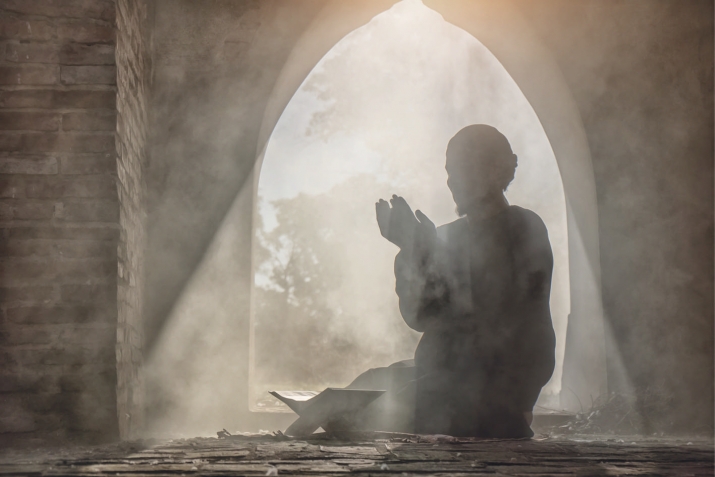
“How can people, among whom is one like al-Hasan al-Basri, be misled?” Maslama ibn Abd al-Malik.
The messenger brought the wife of the Prophet ﷺ, Hind bint Suhail, known as Ummu Salama good news: her maid Khaira endured the hardships of childbirth and safely gave birth to a boy. Joy filled the heart of the mother of the faithful, illuminating her noble face. She hastened to send people to bring the mother and child to her home. Ummu Salama valued Khaira very much and loved her with all her heart. She was burning with impatience, wanting to see her first baby. After a little time, Khaira crossed the threshold of her house with a child in her arms. Looking at the newborn, Ummu Salama immediately felt sympathy for him and became attached to the boy. The boy had a handsome face, his appearance pleased the eye and her heart was filled with love for him. Turning to the maid, Ummu Salama asked, “Khaira, have you already given a name to your son?”
She answered, “No, mother... I have left the choice up to you, so that you yourself could choose the name you want for him.”
Ummu Salama said, “Then let us call him, with the blessing of Allah ﷻ, al-Hasan.”
After that, she raised her hands and turned to the Almighty Lord with good prayers for the newborn. However, the birth of al-Hasan was rejoiced not only in the house of the mother of the believers of Ummu Salama. This joy was shared with them by the inhabitants of another Medina house. This was the house of the noble companion Zeid ibn Thabit, who at one time wrote down the Revelation for the Messenger of Allah ﷺ: Yasar, the father of al-Hasan, was his servant. Zeid valued him and loved him.
Thus Al-Hasan ibn Yasar, later known as al-Hasan al-Basri, spent his childhood in one of the houses of the Messenger of Allah ﷺ and was brought up by Ummu Salama. one of the most intelligent, worthy and determined of women. She had the deepest knowledge in the field of religion and was one of the few women who could read and write. She transmitted 387 hadiths from the Prophet ﷺ.
However, the connection between the happy child and the mother of believers, Ummu Salama, did not stop there. Khaira, the mother of al-Hasan, often left the house on behalf of Ummu Salama, and the baby cried from hunger, and when his crying intensified, she took him in her arms and gave him her breast, thus calming him in the absence of his mother. She loved the child so much that pure milk flowed from her breast into his mouth. The baby drank it and fell silent. Thus, Ummu Salama was a mother to al-Hasan twice: she was both the mother of the believers and his milk mother. Both mothers maintained close contact with each other and their houses stood next to each other. The happy boy could walk from house to house, learning good behavior from his many teachers and to follow the straight path. According to his own recollections, he filled these houses with his tireless movement and intricate games. Jumping up indoor, he tried to reach the ceiling with his hand. Al-Hasan grew up in such a wonderful atmosphere, saturated with the fragrance of prophecy and illuminated by its radiance.
In addition, he studied with the most prominent companions in the mosque of the Messenger of Allah ﷺ. He transmitted hadiths from Uthman ibn Affan, Ali ibn Abu Talib, Abu Musa al-Ash’ari and Abd Allah ibn Umar, as well as Abd Allah ibn Abbas, Anas ibn Malik, Jabir ibn Abd Allah and many others. However, most of all he became attached to the commander of the believers, Ali ibn Abu Talib. Al-Hasan was attracted by the firmness of his faith, his zealous worship and indifference to the goods and adornments of this world. The boy was greatly impressed by Ali’s eloquence, his wisdom and his ability to speak briefly, while putting great wisdom and guidance into his words. The companions of the Prophet ﷺ listened with great enthusiasm to his sermons, which made their hearts tremble. Over time, al-Hasan became like Ali in piety, worship and eloquence.
When al-Hasan was 14 years old and matured, his family moved to the city of Basra (Iraq) and remained there to live. Therefore, al-Hasan was nicknamed al-Basri - after the name of the city. When al-Hasan came to Basra, it was one of the greatest citadels of knowledge in the Islamic state. Its huge mosque was filled with the most prominent companions and their worthy followers who came there. Various circles, whose participants strived for knowledge, gathered in the mosque.
Al-Hasan spent a lot of time in the mosque, becoming a permanent member of the circle of Abd Allah ibn Abbas, one of the most knowledgeable members of the community of the Prophet Muhammad ﷺ. Al-Hasan studied the interpretation of the Koran from Ibn Abbas and adopted from him hadiths and methods of correctly reading the Koran. With Ibn Abbas and other scholars, al-Hasan studied fiqh (Islamic law), Arabic and many other sciences and eventually became a scientist with extensive knowledge in various fields of science. People began to gather around him, learning from him his enormous knowledge and listening to his instructions, which softened hard hearts and made the eyes of sinners cry. They sought to learn from him his wisdom, which captivated minds, and made his life path an example for themselves. Al-Hasan’s fame spread in different areas, and people everywhere began to talk about him.
Khalid ibn Safwan says, “One day I met Maslama ibn Abd al-Malik in Hira, and he said to me, ‘Khalid, tell me about Hasan, who is in Basra. Truly, I have reason to think that you know something about him that others do not know.’ I replied, ‘May Allah ﷻ grant goodness to the leader... I am the best of those who can tell you about him. I am his housemate and his interlocutor at his meetings, and I know more about him than anyone else in Basra.’ Maslama said, ‘Tell me what you know.’ I said, ‘This is a man whose words match his deeds. By inducing what is approved, he himself does it better than anyone else and by holding himself back from what is blameworthy, he himself stays farthest from it than anyone else. He seems to me to be a person who does not need people and is indifferent to what belongs to them, while people, on the contrary, need him and strive to gain what he has...’ Maslama said, ‘Enough, Khalid, enough... How can people among whom there is such a person be misled?’
When al-Hajjaj ibn Yusuf al-Thakafi came to power and began to display injustice and cruelty, showing himself to be a tyrant, al-Hasan al-Basri was one of those few noble men who could openly resist his cruelty and, without hiding, tell people about his bad deeds. Al-Hajjaj built a palace for himself in the city of Wasit. When the construction was completed, he ordered people to gather to admire his mansions and turn to Allah ﷻ with prayers, asking for grace for him. Al-Hasan did not want to miss this opportunity, knowing that a huge crowd would gather.
To be continued…