
The Advantages of Ayat al-Kursi
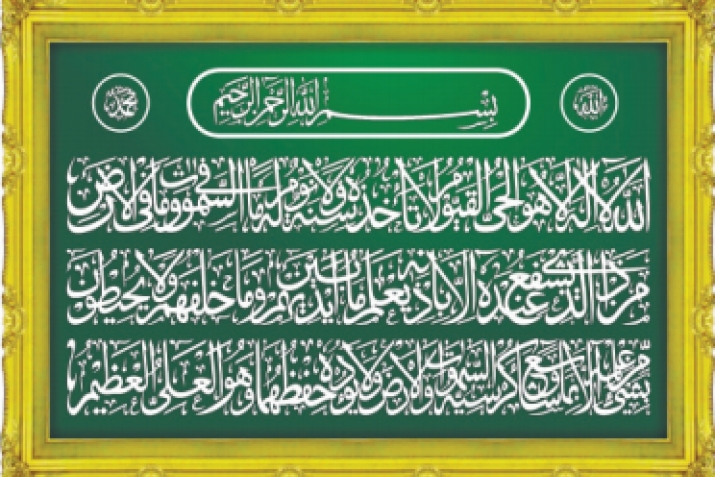
Ayat 255 of Sura alBaqarah (chapter: The cow) in holy Koran is called Ayat al Kursi.
The benefits of Ayat alKursi:
1. Holy Prophet (peace and blessings be upon him) said: “Whoever recites the first 4 ayats of Sura al Baqarah, then Ayat al Kursi and then the last 3 ayats of Sura al Baqarah, will not be inflicted with any kind of difficulty in his wealth or himself, Satan will not come near him and he will not forget the Koran.
2. Holy Prophet (peace and blessings be upon him) said: Koran is a great word, and Sura al Baqarah is the leader of the Koran and Ayat alKursi is the leader of Sura alBaqarah. In Ayat al Kursi there are 50 words and for each word there are 50 blessings and good in it.
3. One who recites Ayat alKursi every morning will be in the protection, safety of Allah until the night.
4. If one ties this to one’s wealth or children, they will be safe from Satan.
5. Our Holy Prophet (peace and blessings be upon him) has said: “These things increase one’s memory: sweets, meat of an animal which is slaughtered in Islamic manner near the neck, Lentils, cold bread and recitation of Ayat al Kursi.
6. For those of our dear ones who have passed away, recitation of Ayat al Kursi and giving it as Hadiyeh to them, gives them light (noor) in the grave.
7. Frequent recitation makes one’s own death easy.
8. When leaving home, if one recites it once, the Almighty has one group of Angels to come and protect you. If recited twice, 2 groups of Angels are assigned to do this. If recited 3 times Allah tells the Angels not to worry as the Almighty himself takes care of him.
9. The Holy Prophet (peace and blessings be upon him) has said: “If one recites Ayat al Kursi before going to sleep, Allah will send an Angel to come and look after you and protect”.
10. When one is alone in the house, recitation of Ayat al Kursi and asking Allah for help will make you remain calm and you will not fear.
11. The Holy Prophet (peace and blessings be upon him) has said: When leaving home, if one recites Ayat al Kursi, then Allah will send 70,000 Angels to do Istighfaar for him until he returns home, and upon his return poverty will be removed from him.
12. One who recites it after every prayer, their salat will be accepted, and they will remain in the safety of the Almighty and He will protect them.
13. Allah told Prophet Musa (peace be upon him): If one recites it after every salat, the Almighty will make his heart a thankful one (Shakireen), will give him a reward of the prophets, and his deeds will be like those of the truthful (Siddiqeen).
SOURCE: ISLAM.RU