
How to Perform the Taraweeh Prayer
Таравих молитва
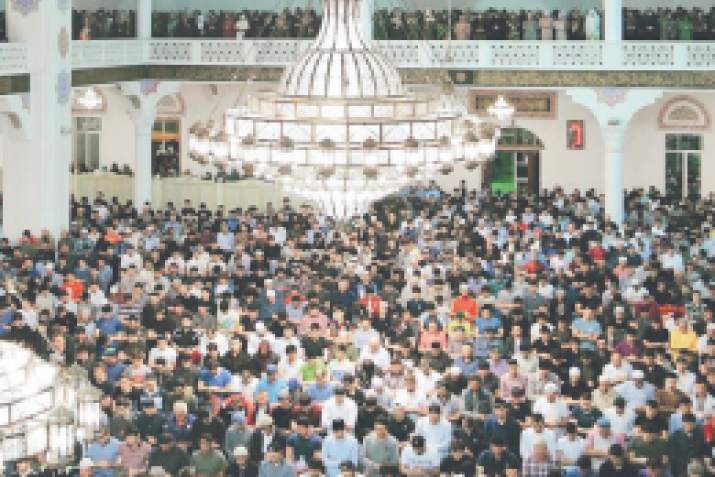
Namaz arawih (or Taraweeh prayer) is the desired (sunna) prayer performed during the month of Ramadan after the obligatory night (‘isha’) prayer. It is performed from the 1st night and ends on the last night of fasting. The Taraweeh Prayer is preferably performed collectively in a mosque. However, if there is no such opportunity, it can be performed at home together with family and neighbors. In extreme cases, it can be done alone.
Usually, eight raka’as are performed: four prayers by two raka’as, but it is better to perform twenty raka’as, i.e. ten prayers. Prophet Muhammad (peace and blessings be upon him) performed as many as twenty raka’as, and sometimes eight raka’as. At the end of the Taraweeh prayer, three raka’as of the Witr prayer is performed (two raka’ahs in one prayer and then one more raka’ah in the following prayer).
The order of performing the Taraweeh prayer:
Taraweeh consists of four or ten two raka’ah prayers and supplications read between these prayers (before and after them). These supplications are given below.
- After performing the obligatory night (‘isha’) prayer and sunna prayer rawatib, the du’a (supplication) No 1 is read.
- The first Taraweeh prayer is performed.
- Recite du’a number 1.
- The second Taraweeh prayer is completed.
- Du’a No. 2 and du’a No. 1 are recited.
- The third Taraweeh prayer is performed.
- Du’a No.1 is recited.
- The fourth Taraweeh prayer is performed.
- Du’a No. 2 and du’a No. 1 are recited.
- Two raka’as of witr prayer is performed.
- Recite du’a number 1.
- One raka’ah of witr prayer is performed.
- Du’a No.3 is recited.
Supplications read between the Taraweeh prayers:
- Du’a No. 1: “La hawla wa la quwwata illa billah. Allahumma salli ‘ala Muhammadin wa ‘ala ali Muhammadin wa sallim. Allahumma inna nas’alukal jannata fa na’uzubika minannar.”
- Du’a No. 2: “Subhana llahi, walhamdu lillahi wala ilaha illa llahu wallahu akbar. Subhana llahi ‘adada khalqihi wariza’a nafsihi wazinata ‘arshihi wa midada kalimatih” (3 times).
- Du’a No. 3: “Subanal malikil quddus (2 times). Subhanallahil malikil quddus, subbuhuhun quddusun rabbul malaikati warruh. Subhana man ta’azzaza bil qudrati wal baqa’ wa qahharal ‘ibada bil mawti wal fana’i. Subhana rabbika rabbil ‘izzati ‘amma yasifun wa salamun ‘alal mursalina walhamdu lillahi rabbil ‘alamin.”
All these supplications are recited loudly by all who perform the prayers.
At the end, the following du’a is recited: “Allahumuma inni a’uzu bi rizaka min sakhatika wa bi mu’afatika min ‘uqubatika wa bika minka la uhsi sanaan ‘alaika anta kama asnayta ‘ala nafsika.”