
Our Children vs. The Danger of Fast Food
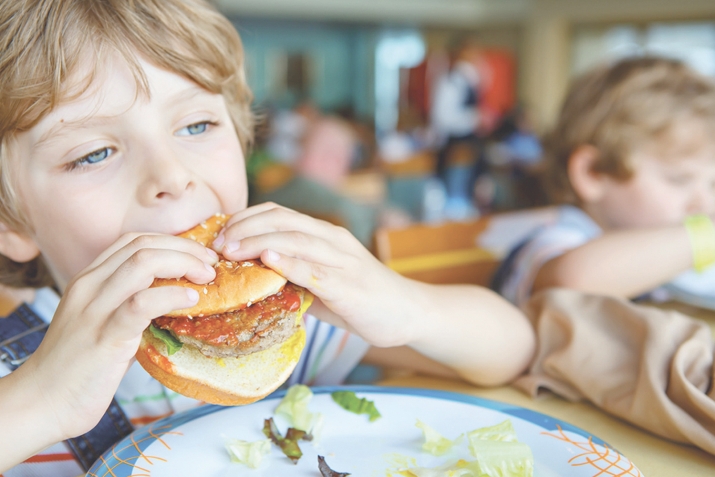
Fast food has undoubtedly become a new phenomenon in our nutritional system. This is, of course, a consequence of globalization, which has engulfed the entire world.
While American culture promotes the cult of a healthy body – slim, fit, and strong thanks to the abundance of food additives produced in abundance by the American economy, such food contains vast amounts of empty calories, is devoid of nutrients, and poses serious health risks.
Health problems
Fast food consumption, saturated with fat and flavor enhancers, disrupts brain chemistry, making children unable to resist such foods, much like smokers unable to quit smoking. Research has shown that frequent fast food consumption abnormally activates the gene responsible for obesity. More than 20 US states have recognized this threat and banned fast food in schools due to its proven link to anemia and high cholesterol, as well as carbonated drinks, which lead to osteoporosis and digestive problems.
Link to obesity
Obesity is one of the most serious health threats, and it is the first consequence of a passion for fast food, especially among children. Scientists have found that children in the UK are particularly susceptible to dangerous diseases due to fast food: 10% are obese, and 20% are overweight, while the infant mortality rate is rising.
Jane Wardle, Professor of Clinical Psychology at the University of London, says: “Thirty years ago, childhood obesity was rare; we did not hear about extreme forms of excess weight. I think something is wrong with these children: either a food hypersensitivity or a malfunction in their fat stores.” She adds: “It is long been known that obesity leads to heart disease and stroke, but we have recently discovered a shocking link between obesity and cancer.”
Other risks
Scientific studies have shown that fast food is more likely to contribute to the development of myopia than a high-protein diet. Scientists have also confirmed that excess starch in the diet during childhood and adolescence increases the risk of vision impairment.
Professor Anthony Septon of the University of Aberdeen found that children who eat fast food and do not get antioxidants from dairy products and vegetables are three times more likely to develop asthma than children living in rural areas who eat a more natural food.
American researchers have also found that excess sugar, fast food, and fat alter children’s behavior: such foods make their minds sluggish and their bodies flabby.
New Scientist magazine recently reported that fats from fast food damage the brain and impair memory by blocking glucose absorption.
Experts believe the root of the problem lies in changing dietary patterns: children are fed high-calorie, fatty foods, and obesity arises from an imbalance between energy intake and energy expenditure.
Social harm
Fast food is also a manifestation of Westernisation, which is destroying our social cohesion and the warmth of the family hearth.
The takeaway culture arose in Western society, where material values are so dominant that spending time eating at home can cost a day’s wages. There, punctuality is not a virtue but a necessity and fast food has become a way to “save time”.
But while observing a routine and family traditions is a blessing in Islam, in the West it is perceived as a burden. Previously, a man ate breakfast, lunch, and dinner at home with his parents, wife and children. Now he eats whatever he can find: on the road, at work, or anywhere else.
The takeaway culture has reduced the time parents and children spend together. Previously, fathers would eat breakfast at home, return for lunch, and the whole family would gather for dinner in the evening.
During these meals, the family would communicate, impart spiritual values to their children, and solve problems. Today, however: long nights in front of the TV, sleeping until noon, rushed preparations for work; breakfast on the run (if lucky) prepared with care and love by the mother; fathers might not even show up for lunch; children dine on fast food with friends, and parents are left home alone.
Thus, we have lost the value of family meals, which once brought us together three times a day. The consequences of fast food culture are not only physical but also social harm, the extent of which is known only to the Almighty.