
DISPELLING MYTHS ABOUT MAWLID
DISPELLING MYTHS ABOUT MAWLID
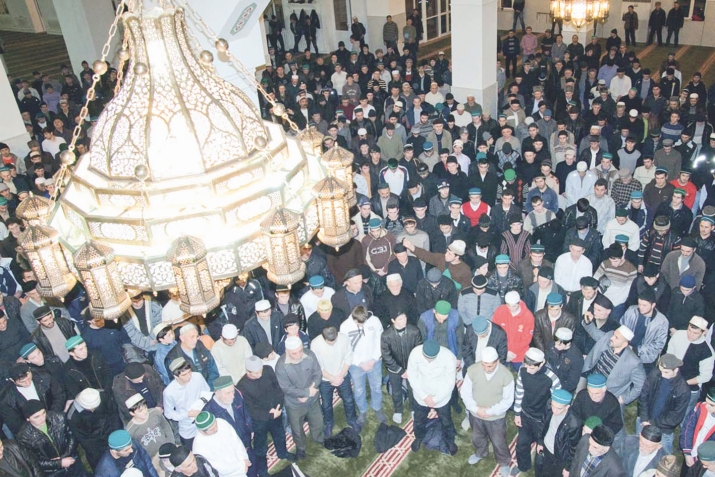
While celebrating Mawlid we should confine ourselves to performing actions expressing our gratitude and praise to Allah. Also remember the things mentioned above like reading Quran, plying people with food, almsgiving, chanting verses praising the Prophet (PBUH) or explaining asceticism, the keeping distant from worldly matters and urging the hearts to do good for the sake of the next life (“Al-Hawi fil-Fatawa”, vol. 1, p. 188).
In the book “As-Sirra al-Halabiya” the outstanding scholar Abu al-Faraj Nuruddin Ali ibn Ibrahim wrote: “It is quite good for most people to stand up when the birth of the Prophet (PBUH) is described on the celebration of Mawlid, thus showing respect and glorifying the Prophet (PBUH). This kind of standing up is an innovation which has no grounds. But it is a good innovation, as not all innovations are hateful. Truly, it was the great scholar of our ummah, imam Takiyuddin as-Subky, whose devotion and understanding of religion are followed by theologians and who stood up at the mention of the Prophet’s birthday (PBUH). And as-Subky’s contemporary ulama took after him”.
“Once many ulama and imam as-Subky gathered together. A cantor of the verses in the honour of the Prophet (PBUH) said, “And the noble raise and draw up in straight lines when hearing praises to the Prophet (PBUH) or kneel down if they are on horseback!” Imam as-Subky, may Allah have mercy on him, heard these words and rose! And also everyone present stood up and received peace of mind. This is already enough for us to take after them” (See vol. 1, p. 123).
Someone chanted this poem (qasida) in front of well-known Islamic judges (qadis) right after the lesson of Sheikh al-Islam al-Hafiz Takiyuddin as-Subky. When the cantors said, “Rise the noble when hearing the praises of the Prophet!...”, Sheikh al-Islam as-Subky stood up in compliance with the text of as-Sarsari’s qasida. It was at this moment that everyone received peace of mind. The son of imam as-Subky, Sheikh al-Islam Abu an-Nasr Abu al-Wahab retold this story in “At-Tabaqat al-Qubra” (vol. 5, p. 345). He wrote the biography of his father in this book. Here is a quote: “The Al-Umawiya mosque in Damascus brought together the great ulama and Islamic judges of the city. Imam as-Subky sat in the mihrab of the Prophet’s companions. And someone chanted imam as-Sarsariya’s poem (qasida) which starts with the words: “Even the praises of the Prophet (PBUH) written in golden letters are not worth him!” And when the cantor came to the words “Rise the noble when hearing the praises of the Prophet (PBUH)!” Imam as-Subky stood up and everyone followed him and they received exceptional peace of mind” (“At-Tabaqat al-Qubra”, vol. 5, p. 345).
In the book “I’anatu at-Talibin” (vol. 3, p. 123) Abu Baqr Uthman ibn Muhammad al-Baqry gives a quote from the book “As-Sirra an-Nabawiya”. The Mufti of Mecca Sheikh al-Islam Ahmad ibn Zayni Dahlan, who knew Allah, mentions rising during Mawlid: “That is a really beneficial action and it is a custom to stand up when hearing [during Mawlid] the description of the Prophet’s birth (PBUH). This is considered a permitted action, because people thus show respect to the Prophet, (PBUH)”.
Many ulama of authority in our Ummah have performed this action. Sheikh Ahmad ibn Muhammad al-Qastalani affirms in “Al-Mawahibu al-Ladunya bi minahi al-Muhammadiya: “[Allah] sent a sura which mentions Abu Lahab (the uncle of the Prophet Muhammad (PBUH), who openly opposed the Prophet). Abu Lahab interfered with the Prophet (PBUH) and was damned forever, together with his wife. Someone dreamed of Abu Lahab after his death and saw him in Hell. They asked him what his condition was and the answer was, “I am in hellfire! But every Monday night the punishment becomes easier. Once a week I can suck water between two fingers”. And he nodded to them. “I get this relief for the manumission of Suwayba. I gave her freedom for bringing the message about Muhammad’s birth (PBUH) and being his wet-nurse.”
Quran reader Imam al-Hafiz ibn Jawzi said, “This kafir who is mentioned in the Quran gets a relief in hellfire just for rejoicing at the Prophet’s birth (PBUH). Then what is the condition of the Muslim, who is a member of Muhammad’s Ummah and believes in the only God, if his heart fills with joy on the day of Mawlid and he spends funds on this day for the Prophet’s sake? Truly, I believe he will get his requital from Allah the Merciful, who will lead him to Heaven” (See vol. 1, p. 89).
Ibnu Kathir writes quoting imam as-Suhayli that it was ‘Abbas, may Allah be pleased with him, who dreamt about Abu Lahab. ‘Abbas is another uncle of the Prophet (PBUH) and is the brother of Abu Lahab.
Imam as-Suyuti writes in “Al-Hawi fil-Fatawa that Tajuddin Umar ibn Ali al-Fakihani”, one of the scholars of the Maliki madhab, said Mawlid was a hateful innovation. He wrote a book on this topic and stated: “These are meetings of men, women and teenagers together in a room or two, but so that they see each other. And they dance bending from side to side and circle around. They speak of nothing forgetting the Judgment Day. Or sometimes it is a separate meeting of women, who raise their voices in congratulations and sing nashids that break the calmness of the heart, recite dhikr and read the Quran in a way irreverent to the Sharia. And they forget the words of Allah, “Indeed, your Lord is in observation” (Sura al-Fajr, ayah 14). And there is no doubt that this is forbidden. No one having a good disposition would ever consider this beneficial, but of ones whose hearts are dead because of great sins. Besides, they believe this was a divine service and not a hateful or forbidden action. Truly, Allah is our Creator and we all will return to Him!”
Imam as-Suyuti commented on this, “Actually he is right. But these meetings are not forbidden because of Mawlid itself. They are forbidden because of these unlawful actions. If similar deeds happened during the Friday prayer, this would also become forbidden. But this would not make performing the Friday prayer in its obligatory form forbidden.
Truly, I have seen people performing these kinds of actions during the gatherings of believers for Taraweeh-prayer on the nights of Ramadan. Do we have a right to forbid a meeting for collective Tarawih-prayer just because someone performs unlawful actions there? Of course not! Quite to the contrary, we say that these meetings are based on Sunna and lead to Allah’s grace, but the unacceptable deeds performed herewith are foul and prohibited. The same way Mawlid is based on the good and if one performs there anything hateful, then the action itself is forbidden”. (See vol. 1, p. 185).
To be continued...