
The Art of Wearing a Headscarf in the Arab World
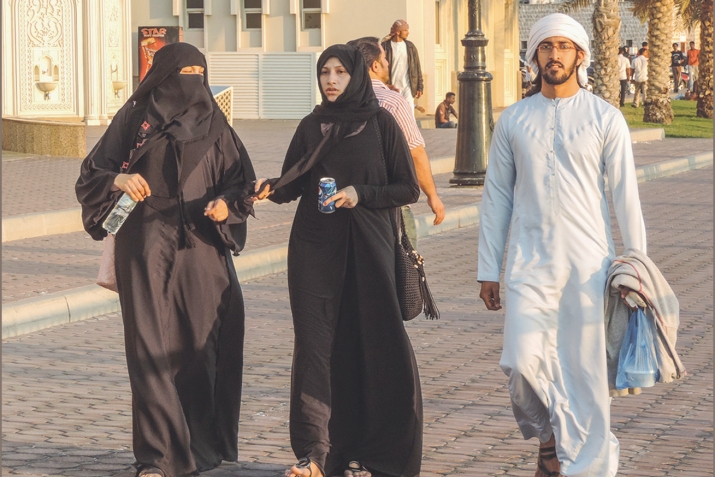
The headscarf that Muslim women use to cover their hair and neck reflects their spiritual values, their desire for modesty and their personal connection to religion. Over the centuries, unique traditions have developed in various parts of the Islamic world, each with its own characteristics and distinctive features. There is no single, mandatory style: each region has its own preferences and traditions.
For example, in Syria, the amira style is popular. This method involves tightly fitting the covering to the head using a special cap that prevents slippage and holds the hair in place. An additional scarf is tied over the cap, neatly covering the neck and upper chest. In other regions, the amira style is commonly used by Muslim women new to wearing the headscarf, as it requires no pins and is very easy to wear.
In Palestine, the head covering is traditionally worn tightly on the forehead but loosely around the neck, making it comfortable and aesthetically pleasing.
The Lebanese style, similar to the Syrian style, is called the sheila. It involves a tightly fitting scarf, with the loose end falling gracefully onto the chest, usually on the left.
Egyptian women prefer looser, more comfortable options. Among these, the khimar, a long scarf-covering reaching to the waist, is prominent. A turban, which covers the hair and is tied at the nape of the neck, is also popular. A loosely draped scarf, creating an elegant, casual look, is also common.
Arab women from Morocco and Tunisia frequently wear headscarves in a variety of vibrant colours, embracing the amira and sheila styles, complementing the traditional look with vibrant accents.
Women from the Persian Gulf states often choose a more formal and covered style. For example, in Saudi Arabia, the niqab is widely worn, while in Qatar, Kuwait, and Bahrain, the traditional black scarf paired with a long abaya is preferred.
In Oman, Muslim women typically cover their heads with thin, lightweight fabrics, pinning them under the chin for comfort in the hot climate.
Yemeni women also prefer a black scarf that tightly covers the head, neck, forehead, and cheeks. This style is especially comfortable in hot weather, as it uses light and airy fabrics.
Regardless of region and style, the headscarf is a profound symbol of faith and identity, reflecting the cultural and spiritual diversity of the Muslim world.