
ISLAM HADHARI IN MALAYSIA
ISLAM HADHARI IN MALAYSIA
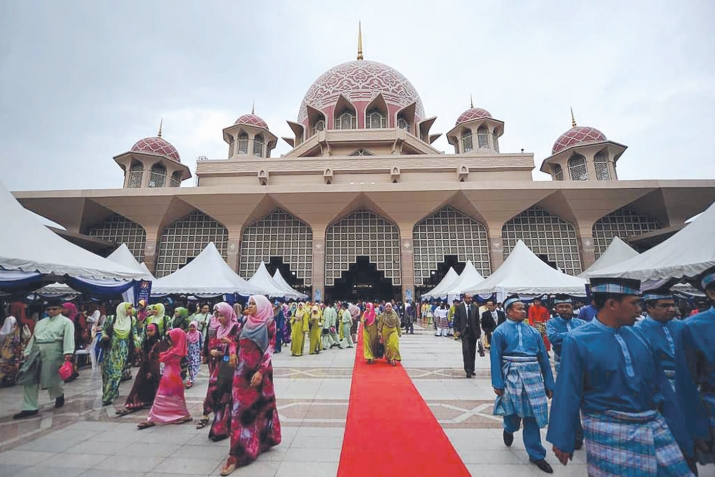
Islam Hadhari is complete and comprehensive, with an emphasis on the development of an economy and civilization capable of building the Muslim Umma’s competitiveness. For a society to prosper, the glorious heritage of Islamic civilization in all its aspects must be used as a reference and should be the source of inspiration.
The concept of Islam Hadhari encourages and guides the Muslim community to work hard towards not only regaining the glory of Islamic civilization but also to move forward and share the emerging economic prosperity and face the challenges of the 21st century. With this, it is believed that the goal of developing a Malaysian society of excellence, glory, and distinction can be achieved.
Wasatiyah, or a balanced life, would be a more precise way to describe Islam Hadhari. Moderation, on the other hand, could imply caution to the point of neglecting traditions. Islamic scholars tend to shy away from using the word ‘moderate’ because it can be manipulated and exploited by external influences. In the same way, scholars are cautious about the word ‘modern,’ which they associate with Western civilization. The word ‘progressive’ could also be used to define Islam Hadhari but wasatiyah is preferable.
“The main objectives that Islam Hadhari is trying to achieve in Malaysia can be summed up in the following eight points: 1) Restoring moderation and embracing the mainstream, which will help strengthen both the people and the state. 2) Valuing good character, which should be central to the society in order to help it become a role model for both the Umma and humanity as a whole. 3) Adopting seriousness and accountability in dealing with society’s main undertakings. 4) Building all social relations upon trust and good morals. 5) Respecting law and order. 6) Cherishing unity, cooperation, and solidarity. 7) Implementing genuine Islamic teachings and realizing the objectives of the Sharia. 8) Empowering the state to be in a leading position, not feeble and weak-willed.
These are the characteristic features of Islam Hadhari that distinguish it from all the other relevant perspectives: 1) Comprehensiveness: It integrates both scripture-based sciences and modern sciences. Another feature is its all encompassing program to deal with the individual, society, and the state. 2) Moderation: This is the main methodology for the perspective, which is based on gradualism and easiness in implementation. Through this implementation, there will be a balance between the interests of all - the individual and the society, spiritual and worldly needs, and ideals and reality. 3) Diversity: The context of Islam Hadhari is wide ranging; it covers a wide range of interests on different levels; it is open to new adjustments and to other human experiments and experiences. 4) Humanity: As a call, Islam Hadhari is focused upon people.
Difference Between Islam Hadhari and Political Islam
According to the writings of the Malaysian scholars, Islam Hadhari works from the bottom up, from the villages, and in a systematic way. Political Islam, which is practiced by some Islamic parties, works the opposite way, from up to down. Often it leads nowhere. Islam Hadhari will focus on improving the quality of life, focusing on four areas as follows: 1. Knowledge: Islam demands a fully literate tradition. More knowledge automatically forces moral responsibility upon a man. “Fear of God is the beginning of wisdom.” 2. Balanced development: Avoiding extravagance in any area - including religion. 3. Wealth (pillar of livelihood): Encouraging earning an honest living to accumulate wealth. 4. Health care: Disability and sickness are not qadar (destiny) and striving to overcome these is on God’s shown path. Avoid decadence - drugs and other activities that destroy health.
It is clear that the Islam Hadhari concept contributes towards overall human progress that is balanced between spiritual and material, between progress and moral values, between religion and worldly concerns.
It is important for the Muslim Umma to be guided in understanding and practicing Islam as a comprehensive way of life, as a means to build a civilization. A wholesome way of life will create the balance between a person’s responsibilities in this world and in the Hereafter. Islam is not merely a ritual, because ritualism is meant solely for the Hereafter. The government of Malaysia has never practiced secularism, which rejects the Hereafter and focuses solely on worldly matters. Islam must be lived as a system that integrates the worldly life with preparations for the Day of Judgment.