
Amazing mosques of Turkey
Amazing mosques of Turkey
World’s first underwater mosque
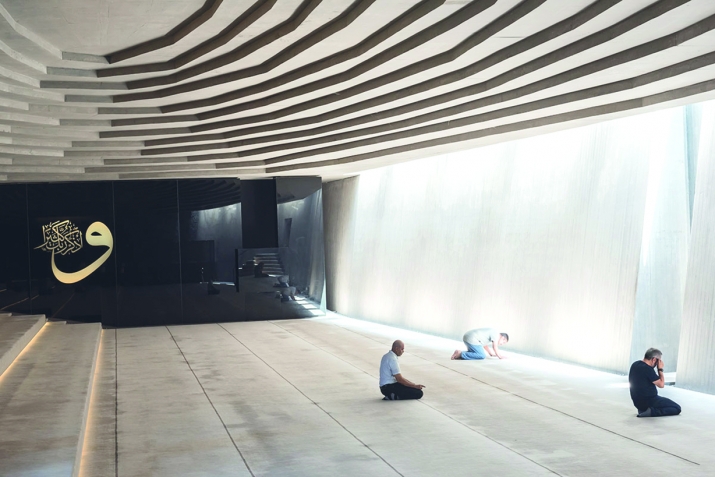
The first underground mosque was constructed in Turkey’s Buyukcekmece district in Istanbul in 2013, the building that has won the first place in the World Architecture Fest competition for religious places. Merging the essence of Islamic and Ottoman designs with modernity, Sancaklar Mosque was inspired by the Cave of Hira, where Prophet Muhammad (peace and blessings be upon him) first received prophecy. Built seven meters beneath the surface, the Mosque was constructed by the Turkish architect Emre Arolat. The mosque, located on 1200 square meters under ground, is enlightened by lead lanes and sunshine to cast a spiritual environment.
Departing from standard mosque designs, the Sancaklar Mosque features a cavernous underground worship hall imbued with a special spiritual reverence. The architects note in their brief that their design “aims to address the fundamental issues of designing a mosque by distancing itself from the current architectural discussions based on form and focusing solely on the essence of religious space.” Offering a place for more than 650 worshippers, the mosque aims to void the shortage of mosques in the district.
Being the world’s first underground mosque, the Sancaklar Mosque was designed without a minaret or a crescent.
In May 2012, the world’s first underwater mosque was built in north-western city of Tabuk in Saudi Arabia.
Green mosque
People around the world have heard of the spectacular Blue Mosque in Istanbul. But there is another mosque worthy of visitors’ attention, for different reasons. The ivy-covered Yesil Mosque, or Green Mosque, in Adana, in southern Turkey, along the Seyhan River, about 20 miles from the Mediterranean Sea

While the Blue Mosque may be more spectacular, the Green Mosque may in its way be more inviting. It is probably the greenest construction in Turkey, with ivy enveloping its walls and a kind of botanical garden full of colourful flowers providing the faithful with a naturally cool place to pray in the midst of the summer heat. Unlike many other minarets which soar into the sky like sleek stone towers, the minaret of Yesil Mosque is completely covered with leaves that completely hide the construction from view. Rather than looking like a building, the mosque looks almost like leafy garden somehow shaped like a mosque.
Known as one of the most beautiful places in Adana, Yesil Mosque charms many visitors. Beyond providing an unusual beauty and a cool place to pray, the ivy serves another purpose: it protects the building. The Yesil Mosque Protection and Sustenance Association is in charge of maintaining the condition of the building. And the integrity of the construction has been maintained without any restoration since 1965, when the minaret was constructed and the previous wooden building was converted into a concrete one.
MUHAMMAD YUSUF