
From China to Kyrgyzstan: the fate of the Dungan people
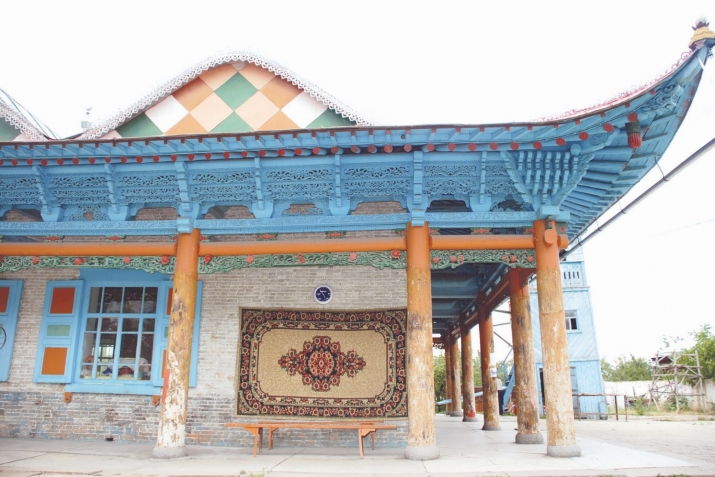
Early in the morning, in a small village in the Chui Valley, the muezzin’s call to morning prayer is heard.
The minaret of the local mosque is decorated with carved wooden ornaments and a curved tiled roof, more reminiscent of a pagoda. Believers in skullcaps and traditional robes gather at its gates.
These are the Dungans - Muslims of Chinese origin, whose fate brought them from the Qing Empire to the land of Central Asia more than a century ago. Their unique culture has absorbed features of both Islam and Chinese tradition. The path of this people runs through a bloody uprising in the 19th century, a great exodus through the Tien Shan Mountains and difficult settlement in a new place.
Today, the descendants of those settlers live in Kyrgyzstan, Kazakhstan and other countries in the region, carefully preserving their faith and identity, intertwining the heritage of their Chinese ancestors with Muslim customs.
Exodus from China
In the second half of the 19th century, the homeland of the Dungans in northwestern China was embroiled in a major uprising. The Dungan (or Hui) Rebellion of the 1860s and 1870s broke out in the provinces of Shaanxi, Gansu and Xinjiang and was driven by the Hui Muslim Chinese, who would later be called Dungans in the Russian Empire.
The rebels resisted the oppression of the Qing Dynasty authorities and fought for their religion and rights. The conflict was monstrously bloody: entire cities and Muslim communities were destroyed. After the Qing army under the command of General Zuo Zongtang brutally suppressed the uprising, the surviving Dungans were faced with a choice: death or flight. Persecution of Hui Muslims thus began, and thousands of families left their homelands to save themselves.
In the winter of 1877-1878, several groups of Dungans (about five thousand people in all) decided to make a desperate crossing of the snow-covered Tien Shan ridges. People driven by fear of reprisals and faith in a better future crossed the border of the Russian Empire from war-exhausted Xinjiang. According to reports, one of these columns was led by an imam named Bai Yanhu, nicknamed ‘Tiger’ for his bravery. Exhausted by the long journey through high mountain passes, the refugees reached the borders of the Turkestan region and were accepted by the Russian authorities. A few years later, in 1881, under the terms of the St. Petersburg Treaty, the Qing troops reoccupied the Ili region and about four thousand five hundred more Dungans took advantage of the right to move to Russian territory. This is how the second wave of migration formed, which occurred in 1881-1883 and replenished the Dungan villages in Semirechye.
Having found refuge under the scepter of the Russian tsar, the Dungans literally saved themselves from complete extermination. The new government treated them relatively loyally: appreciating the hard work of the settlers, the administration allocated them land for settlements and did not interfere with the free practice of Islam. Their main groups of settlement developed in today’s Central Asia - in the south of Kazakhstan and the north of Kyrgyzstan.
In 1878, some of the Dungans settled in the village of Yrdyk near the city of Karakol on Lake Issyk-Kul, others - in the vicinity of the city of Osh. A large community appeared in the village of Karakunoz (now the village of Masanchi in the Zhambyl region of Kazakhstan), there Bai Yanhu brought about three thousand of his followers. Later, the Dungans settled in the Chui Valley: for example, in the 1880s, several hundred families founded villages near the current city of Tokmak and in the valley of the Sokuluk River. In total, according to census, about 10 thousand Dungan-Hui settled in Central Asia. The name “Dungan”, borrowed from the local Turkic-speaking peoples, was assigned to this group of Chinese Muslims: in their new place, their Uighur neighbors called them by that term (literally “returnees” in Uighur). The settlers themselves continued to call themselves “Hui-Hui”, that is, “Muslims”; after all, it was Islam that remained the main sign of their identity.
Loyalty to Islam
Historically, the Dungans profess Sunni Islam, and religion has always been the core of the community for them. It is worth noting that, according to beliefs that are passed down from generation to generation, the progenitor of the Dungan nation was one of the companions of the Prophet ﷺ - Saad ibn Abu Waqqas .
After moving to Russia, the Dungans gained relative freedom of religion. In their new settlements, the first thing they built was mosques: first small adobe ones, and then more substantial ones. The imam became not only a spiritual mentor, but also an informal head of the community; an advisor in all matters.
Over time, the Dungan communities acquired beautiful mosques, where hundreds of believers gathered on Fridays. The architecture of these temples reflected Chinese heritage: they were all built of wood, without nails, with carved decorations and multi-tiered roofs, like pagodas. But inside there was a mihrab, carpets and a minbar, all according to the canons of Islam. A wonderful example is the Dungan Mosque in Karakol, the construction of which was completed in 1910: it was designed by the architect Zhou Su from Beijing and the building combines the style of the Qing dynasty with the functionality of a Muslim mosque.
Practicing Islam side by side with the Turkic peoples of Fergana and Semirechye, the Dungans felt the support of their co-religionists. Muslims also lived nearby: Kyrgyz, Kazakhs, Uyghurs, which made their religious life easier. They celebrated the holy month of Ramadan together, performed collective prayers and traveled to Mecca together to perform the pilgrimage (Hajj). However, the Soviet government that came to power in 1917 soon threw down a new challenge to the religiosity of the Dungans. In the 1920s and 1930s, a policy of atheism began: many mosques were closed or re-purposed. In Karakol, the minaret of the Dungan Mosque was demolished in 1933 and in other villages imams were often persecuted, being declared by the authorities as “a relic of the past”. Some of the youth of that era lost their religiosity under the pressure of official ideology but most Dungan families continued to secretly observe Islamic rituals. The elders taught their children to honor Allah, pray at home and fast. They whispered to their grandchildren how their ancestors miraculously escaped death “thanks to the grace of the Almighty”. These invisible threads of faith did not break during the years of atheism.
When Central Asian countries gained independence in the 1990s, the Islamic renaissance touched the Dungans as well. Mosques opened everywhere – both new and old ones which were restored. In the villages of Aleksandrovka, Masanchi, Yrdyk and others, the adhan began to sound again, and madrasas for children began to be freely organized. Nowadays, the Dungans actively participate in the religious life of the country: their representatives are members of the spiritual administrations of Muslims, work as imams and teach the basics of Islam to young people. Faith, carried through centuries and troubles, still forms the core of their identity.
To be continued…