
Devotion, Dhows and Donkeys: The Island of Lamu, Kenya – a Precious Reservoir of Living Islamic Traditional Culture
Devotion, Dhows and Donkeys: The Island of Lamu, Kenya – a Precious Reservoir of Living Islamic Traditional Culture
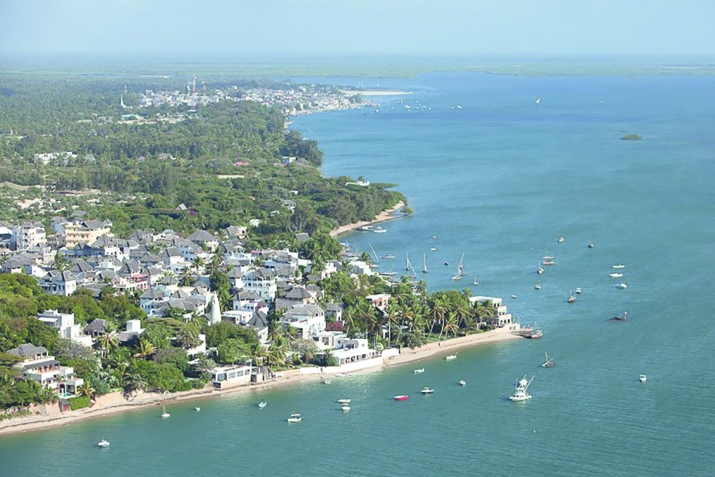
There are a number of smaller communities in the Islamic world, which have largely preserved their traditional townscapes and have sustained their local Muslim cultural heritage, which we present as destinations of special interest to Muslim travelers and others who would like to explore and experience Islamic culture, while enjoying a comfortable tourist experience to the best international standards. The first three to be reviewed in As-Salam have been: Gjirokastra, Albania; Safranbolu, Turkey and Sheki, Azerbaijan.
“Lamu Town seems almost ethereal as you approach it from the water, with its shopfronts and mosques creeping out from behind a forest of dhow masts. Up close, the illusion shatters and the town becomes a hive of activity – from the busy waterfront, with heavy wooden carts wheeled to and fro and where cats wait for scraps from the fishermen, to the pungent labyrinth of donkey-wide alleyways, along which women whisper by in full-length black bui-bui robes. Your nostrils are assaulted with blue smoke from meat grilling over open fires, and the woody scent of the old shutters on houses built of coral stone.”
Thus a recent visitor recorded his impressions of the principal settlement on Lamu, one of a cluster of islands hugging the Kenyan coast near the border with Somalia. The historical core of its old town is the best-preserved Swahili settlement in East Africa and retains its traditional way of life to a remarkable extent. The term “Swahili” (from the Arabic “sahel” – “coast”) refers to the hybrid African-Arab Islamic culture of coastal city states which developed from the early Islamic period onwards and stretched some 3,000 km from Somalia to Mozambique, linked by sea with Arabia, the Persian Gulf and western India by seasonally alternating monsoon winds which enabled regular, predictable communications and trade back and forth across the northern Indian Ocean and along its coasts.

Lamu has been inhabited continuously for over seven hundred years (it was first mentioned by an Arab traveller, Abu-al-Mahasini, who met a judge from Lamu in Mecca in 1441) as an important trading and religious centre. It was invaded by the Portuguese in 1505 in the course of their gaining control of the northern Indian Ocean but in the 1580s the inhabitants of Lamu led a rebellion against them (encouraged by Ottoman Turkish naval raids) and by 1652 the archipelago had become become an Omani protectorate. Portuguese Mombasa subsequently fell to Omani forces in 1698 and the island of Zanzibar a few years later. The East African coast was then ruled from Muscat in Oman until its sultan transferred his capital to Zanzibar, the region’s richest trading centre, in 1840.In the late 19th century Lamu and Kenya as a whole came under British colonial rule, finally gaining political independence in 1963.
Lamu is now the only historical settlement on the East African coast to retain most of original character relatively undisturbed by European colonization and modernization. Its traders served as middlemen in Indian Ocean trade between Arab merchants and the people of the African interior Artisans - boat builders, masons and wood carvers - also flourished here (as they still do today). Lamu Old Town - with its urban fabric of narrow winding streets and dignified whitewashed buildings with palm thatched roofs and plain coral walls concealing courtyards and interiors with intricate plasterwork and massive carved wooden doors - was designated as a UNESCO World Heritage site in 2001. Three kilometres to the south, the smaller town of Shela also preserves its Swahili architectural fabric and general character.

Lamu (population 24,000) has no roads, just urban alleyways and footpaths - donkeys are the principal mode of transportation. Residents and visitors move about on foot or by boat and donkeys are used to transport goods and materials. Dhows with their great lateen-rigged sails dominate the waterfront and are used by fishermen and for the transport of passengers and goods to neighbouring islands and the port of Mombasa further down the Kenyan coast.
Islam is strong in Lamu. As along most of the Swahili coast since the 14th century, its people are mostly Sunni Muslims of the Shafi’i madzab (school of jurisprudence). Their modest, conservative and close-knit society has managed to sustain its traditional values. Children attend Islamic schools to learn Arabic and the Koran. They are imbued with important family values and respect for elders - all intrinsic to Swahili tradition. Outdoors women are covered with a black shuka or bui-bui. Men wear a sarong or a kanzu, a white gown reaching to the feet, and a kofia, a delicately embroidered headcap. Islam is the warp and weft of life here and imbues the community with rich values of equality and mutual respect and welcome to visitors.
With the call to the midday Dhur prayer, all shops close and work ceases. At dusk, the evening call to the Maghrib prayer empties the seafront as men go home to their families via the mosque.There is not much nightlife in Lamu. The dense, labyrinthine alley layout of this traditional Swahili town discourages tourists from penetrating very far – they tend to restrict themselves to the waterfront, the market square and fort, and the main street close behind. Alcohol is banned in public and at home and is only available in a restricted number of licensed tourist facilities.
(to be continued)