
The Arab who opened the way to India for Europeans
The Arab who opened the way to India for Europeans
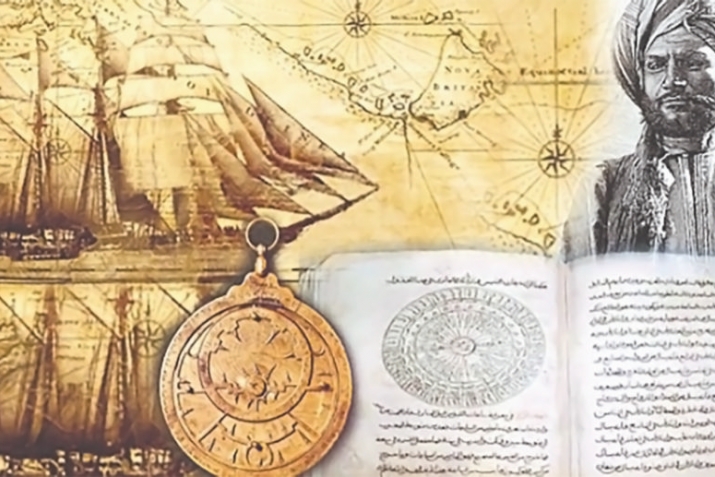
The discovery of a sea route from Europe to India led to tectonic shifts on the political and economic map of the world in the 15th century, becoming a catalyst for many fundamental processes in human history. One of the important participants in this famous discovery was the Arab navigator Ahmad ibn Majid...
The aromas of incredibly expensive Indian spices and legends about the riches of eastern countries long hovered over the cities of Europe and excited the minds of the most daring and far-sighted rulers, merchants and adventurers who dreamed of distant expeditions that promised them endless caravans of ships filled with jewelry.
By the end of the 15th century, European sailors had already reached the southern tip of Africa, and there was only one breakthrough left to make - to open a sea route from the Cape of Good Hope to India itself.
On 8 July 1497, an expedition of three large ships (San Gabriel, San Rafael, Berriu) and a small transport ship loaded with provisions set out from the port of Lisbon. By order of the Portuguese monarch Manuela it was headed by the experienced sailor Vasco da Gama, who was tasked with finding a sea route to India.
On 22 November 1497, the Portuguese rounded the Cape of Good Hope and reached the port of Mozambique in March. Not everyone was happy about the uninvited guests. Moving along the eastern coast of the African continent, Vasco da Gama encountered resistance from local merchants, who quickly realised the consequences of European “geographical curiosity.” In the city of Mombasa they were met with complete hostility. No one was in a hurry to show the way to India and help the Portuguese create competition for local, including Arab traders.
In mid-April 1498, the expedition arrived in the Somali harbour of Malindi, whose ruler was at enmity with Mombasa. It is not known for certain what brought the leader of this Somali port and the Portuguese sailor together, whether it was a common enmity with the ruler of neighboring Mombasa or that Vasco da Gama found more sonorous and significant arguments, but, be that as it may, the European expedition received at its disposal from the new allies the most experienced Arab pilot Ahmad ibn Majid.
It was he who opened the sea route to India to Vasco da Gama, and through him to the entire European world. As Portuguese historical sources of the 15th century testify, Ahmad ibn Majid had extraordinary nautical knowledge, in some cases even surpassing the skill of European navigators. Being a hereditary sailor, Ahmad ibn Majid created a work that became evidence of the high level of ocean voyages between Africa and China.
“The Book of Benefits on the Fundamentals and Rules of Marine Science” by Ahmad ibn Majid, after many centuries have passed, demonstrates the serious level of development of marine science of Arab navigators. This scientific work was translated into Russian and published by scientists of the USSR Academy of Sciences in 1985. The original Arabic version of the book can be found at the Library of Congress, Washington.
On 20 May1498, Ahmad ibn Majid, skillfully taking advantage of the favorable monsoon winds, led a Portuguese expedition to the city of Calicut on the Malabar coast of India. Here Vasco da Gama loaded his ships with spices and by September 1499 returned to Lisbon. On the way, he lost two of his ships and out of 168 sailors, only 55 survived. But, despite this, the profits from the sale of spices paid for all expenses many times over and Vasco da Gama himself was triumphantly greeted by the ruler and, as a reward, received the titles of Don and “Admiral of the Indians.” seas."
The opening of the sea route from Europe to India radically changed the balance of power in the world. Sensing the aroma of profit, the rulers of Portugal began large-scale expansion and the development of new opportunities. Already in 1502, an armada of 20 well-armed ships led by Vasco da Gama again set off for the shores of Indian Malabar and the city of Calicut, where the famous Portuguese sailor had previously shopped, was now devastated by him. Having brutally suppressed local resistance, Vasco da Gamo returned home with huge booty in 1503. The Portuguese established a number of strongholds in the region and in 1524 Vasco da Gama was appointed Viceroy of India.
If Ahmad ibn Majid had known all the consequences of the discovery to which he contributed, perhaps he would have thought twice about becoming a guide. But, as you know, history does not have a subjunctive mood and does not recognize any “ifs”...